
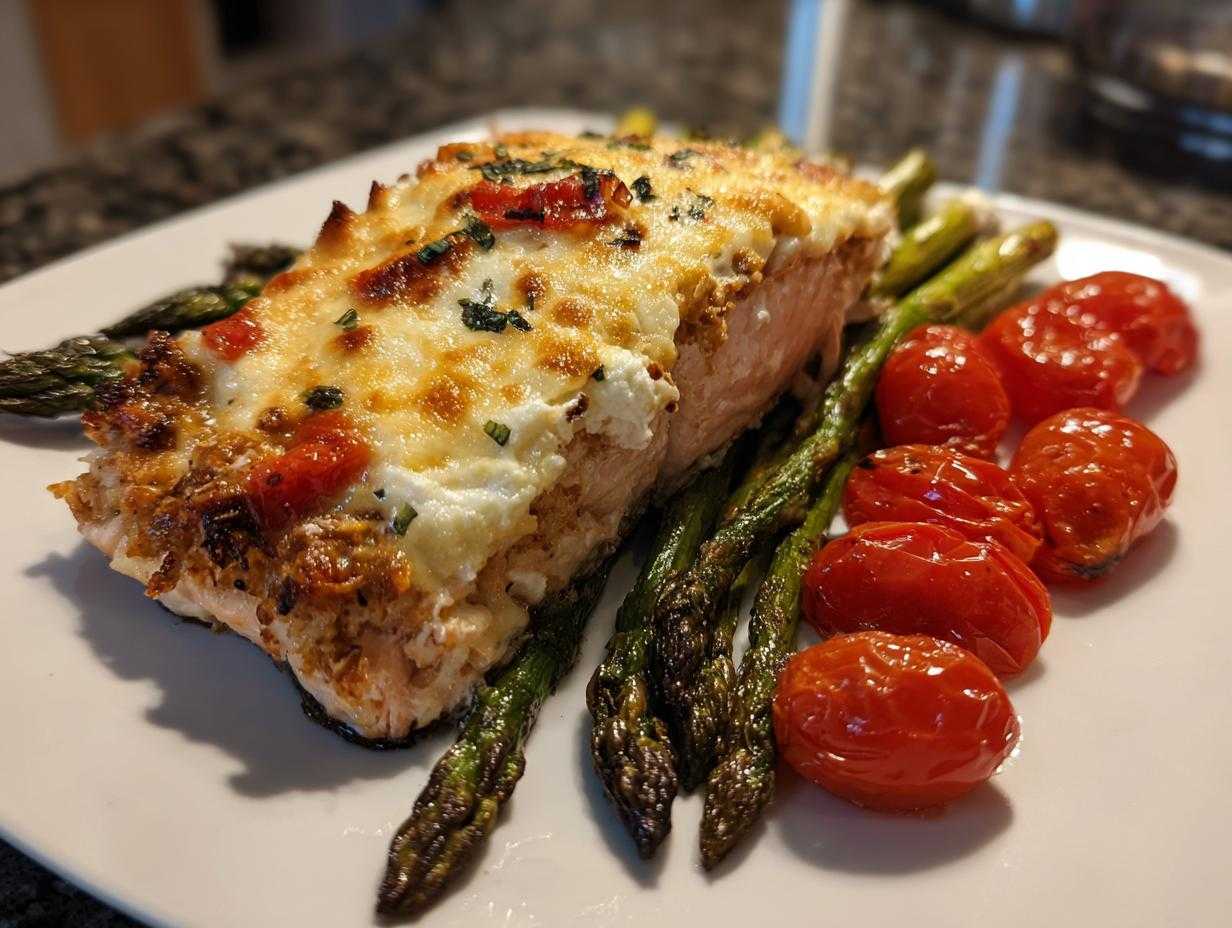
I don’t know about you, but sometimes I need a dinner that tastes like I spent hours making it but only took twenty minutes of actual work. That’s where this amazing **Baked Boursin Salmon** comes in, seriously. It’s pure magic! I struggled for ages trying to elevate simple baked fish without covering it in heavy sauces or drowning it in foil packets. Then I discovered using Boursin cheese as the topping, and now I feel like a gourmet chef on a Tuesday night. Trust me, once you master this incredibly easy seafood dinner, it’s going to be in your rotation weekly, just like how I perfected my recipes for quick one-pan meals around here.
Why This Baked Boursin Salmon is Your New Favorite Quick Weeknight Salmon
If you’re looking for a genuinely quick weeknight salmon option that still feels special, stop scrolling. This **Baked Boursin Salmon** recipe is the answer to my perpetual dinner dilemma! It’s unbelievably fast, and the flavor payoff is huge. We’re talking restaurant-style results with almost zero fuss. I love it because cleaning up is a total breeze, too!
- It’s a fabulous **Easy Baked Salmon Recipe**—seriously, you just spread and bake.
- It delivers on flavor, creating something truly special we call **Creamy Cheese Salmon**.
- This is your new go-to **Boursin Salmon Dinner** when you need something fast.
Perfectly Cooked Salmon Fillets Every Time
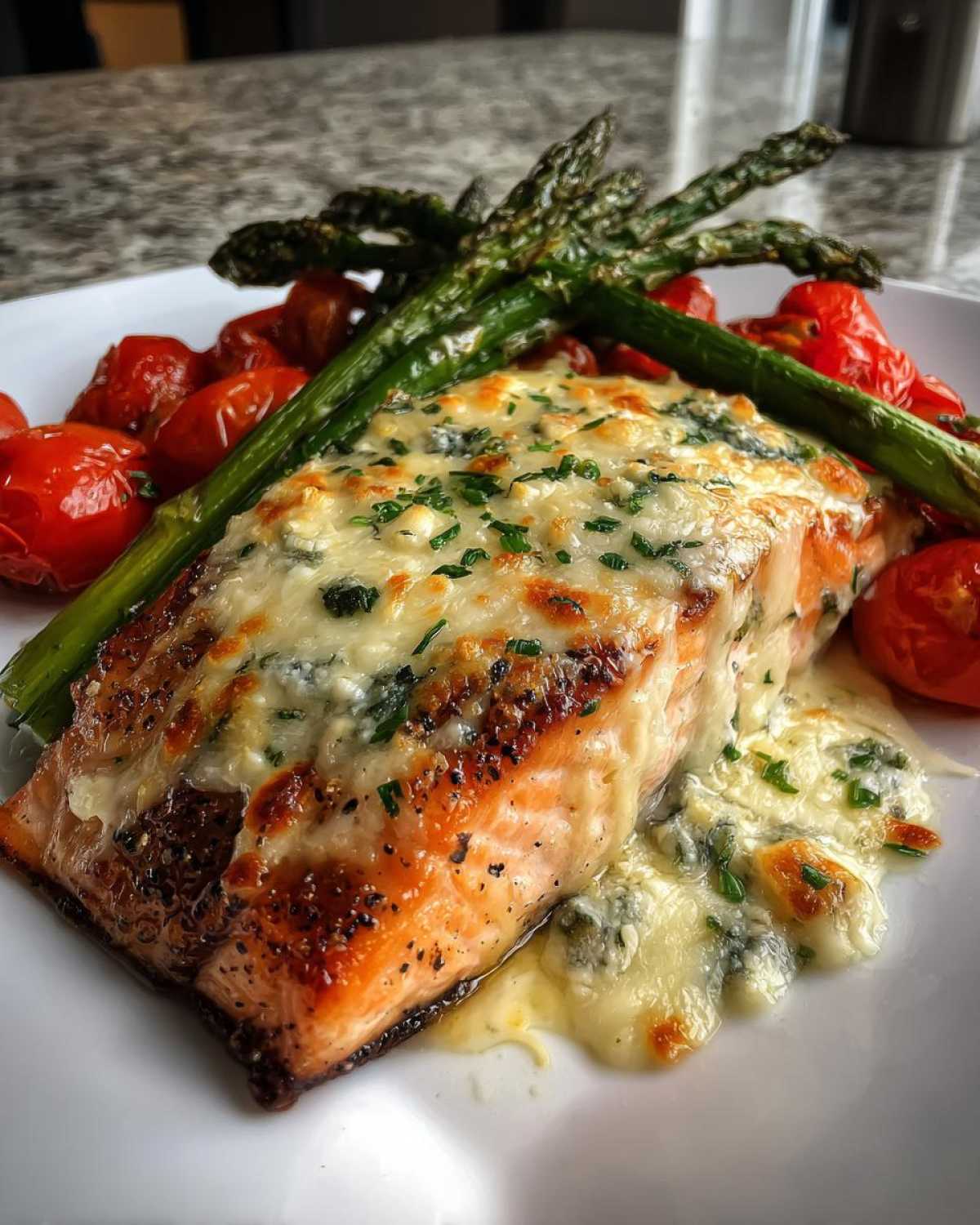
The Boursin acts like this wonderful, rich blanket over the fish. That’s the secret to my moist baked salmon technique! The fat content in the cheese basically self-bastes the fish as it bakes, so you never get that dry, sad salmon texture. It’s foolproof, I promise.
The Secret to Creamy Cheese Salmon Flavor
It’s all about that Boursin, right? Using the Garlic & Fine Herbs flavor just infuses everything—the salmon, the asparagus—with this intense, aromatic depth. It skips all the chopping and mixing you’d normally do to get that complex flavor profile in a standard easy baked salmon recipe. It’s the flavor shortcut gourmet dreams are made of!
Gathering Ingredients for Your Baked Boursin Salmon
Okay, getting everything ready for this **Baked Boursin Salmon** is honestly the longest part of the whole process, and even that is super short! I always lay everything out on the counter first so I can see exactly what I need. It really helps me stay organized before the 400-degree oven gets too hot.
Since this is a quick sheet-pan meal, we aren’t dealing with a huge grocery list, which I absolutely love. Here’s what you need to grab:
- Four beautiful salmon fillets—I aim for about 6 ounces each. Make sure they are skin-on or skin-off; either way works depending on what you prefer!
- One whole container of the Boursin cheese. We are using the classic Garlic & Fine Herbs flavor here. Nothing else quite hits the spot, so please stick to that one! It’s the 5.2 oz standard package.
- A drizzle of olive oil—just a tablespoon to keep the fish from sticking and help the seasoning adhere.
- Salt and pepper for basic seasoning. I use about 1/2 teaspoon of pepper and 1/4 teaspoon of salt, but you season your good fish how you like it!
- For the veggies, I toss a cup of asparagus spears in there—trimmed, please! And a cup of those sweet little cherry tomatoes. They roast up perfectly alongside the fish in this **Boursin Salmon Dinner**.
If you want to try something different next time, I always suggest trying out my one-pan honey garlic chicken and broccoli recipe for another easy sheet pan win!
Essential Equipment for Making Baked Boursin Salmon
Since we are aiming for **Restaurant Style Salmon at Home** with minimal effort, we don’t need a million gadgets. Honestly, the beauty of this **Baked Boursin Salmon** is how few tools it requires. You really just need the basics to get this **Creamy Cheese Salmon** ready for the oven. Make sure these items are clean and ready to go before you even pull out the cheese!
Here is the short list of what you’ll want on your counter:
- A sturdy baking sheet. It needs to be large enough to hold the four fillets comfortably, plus the asparagus and tomatoes. We want everything to roast, not steam!
- Parchment paper is non-negotiable. I’ve learned this the hard way trying to scrape melted cheese and fish bits off a bare pan—it’s not fun. Parchment paper makes cleanup immediate. If you forget it, you might want to check out my tips for air fryer salmon, that cleanup is easier too!
- Your standard set of measuring spoons. We need those precise amounts for salt and pepper so we don’t over-season the fish before the flavorful Boursin goes on top.
- A reliable knife if you need to trim your asparagus ends or slice any lemon for topping (which you definitely should try!).
- A small offset spatula or butter knife for spreading that glorious Boursin evenly over the top of each fillet. You want full coverage for that cheesy crust!
Step-by-Step Instructions for Baked Boursin Salmon Dinner
When it comes to making this **Baked Boursin Salmon**, the process is so straightforward it feels almost too easy! We are moving fast because we want this **Boursin Salmon Dinner** on the table ASAP. I’ve broken it down into simple stages so you don’t miss a beat. Follow these steps closely, and you’ll have flaky fish and perfectly roasted veggies using that one baking sheet!
- First things first: get that oven hot! Preheat your oven to 400°F (that’s 200°C). While it’s heating up, grab your baking sheet and line it completely with parchment paper. This is your future self thanking you for the easy clean-up later!
- Next, let’s prep the fish. Place your four salmon fillets onto the lined baking sheet; space them out so they aren’t touching. Drizzle just a little olive oil over the top of each piece. Then, sprinkle lightly with salt and pepper. That’s all you need for seasoning before the creamy part goes on!
- Now for the main event! Take your container of Boursin cheese. You need to spread a nice, even layer of that gorgeous cheese right over the top surface of every single salmon fillet. Seriously, be generous—it melts down beautifully.
- Time to bring in the veggies! Arrange your trimmed asparagus spears and the cherry tomatoes right around the salmon fillets on the baking sheet. Try to keep them in a relatively single layer so they roast up nicely instead of steaming in a pile.
- Finally, pop that sheet tray into the hot oven. You’re looking at 12 to 15 minutes total. Keep an eye on it! You’ll know it’s done when the salmon flakes super easily when you gently poke it with a fork. The cheese topping should look fully melted and maybe just starting to get a little golden brown on the edges.
- Pull it out, serve it up hot right away with those delicious roasted veggies, and get ready for the compliments! If you enjoyed making this, you might also like my recipe for easy baked Caesar chicken with creamy parmesan!
Prepping the Pan and Seasoning the Fish
We always start with heat, right? Set that oven to 400°F (200°C) right away. If you don’t, you’ll be waiting around later with perfectly seasoned fish stuck to the pan! Once it’s hot, make sure you use that parchment paper—it’s crucial for this **Easy Baked Salmon Recipe** because the cheese can sometimes run over the edges. After lining the sheet, just drizzle your olive oil, and then lightly sprinkle the salt and pepper across the tops of the **Perfectly Cooked Salmon Fillets**. Don’t overdo the salt; remember, Boursin brings a lot of flavor already!
Applying the Boursin Topping
This step is key! Don’t just drop big clumps of Boursin on the fish and walk away. I’ve learned that if you let that little tub of Boursin sit on the counter for maybe 10 minutes before you start, it softens up just enough. Then, you can use a spoon or a small spatula to gently spread it out so it covers the entire top surface of the salmon evenly. If it’s too cold, it just tears chunks out of the nice fish!
Baking Time and Checking for Doneness
The time is short here, which is why I love this! It’s generally 12 to 15 minutes, depending on how thick your fillets are, but don’t just rely on the timer—rely on your fork! When it’s done, the fish should separate easily into lovely pink flakes with almost zero pressure. You’ll also see that Boursin topping go from pure white to a bubbly, golden hue. That’s your visual cue that the **Creamy Cheese Salmon** has finished its transformation!
Tips for Perfect Baked Boursin Salmon Success
You’ve got the recipe down, but I want to share a few little tricks I picked up making this **Baked Boursin Salmon** dozens of times so yours turns out absolutely flawless. When you’re dealing with delicate fish like salmon, a little extra care goes a long way toward that perfect, flaky texture we’re aiming for. These aren’t complicated steps; they’re just little nudges that turn a good dish into a truly great one!
Look, if you are serious about making **Gourmet Salmon in Under 30 Minutes**, you have to pay attention to these details. Plus, I swear by letting the cheese sit out for a minute, which I mentioned earlier, but I want to focus on keeping that fish from drying out on you. Nobody likes dry fish! Speaking of amazing herb flavors, if you love that aromatic touch, you have to try my recipe for garlic herb butter roasted chicken sometime soon!
Achieving Maximum Moisture in Your Baked Boursin Salmon
I totally get it—the number one fear when baking fish is ending up with something that tastes like cardboard. But don’t even worry about that with this recipe! The Boursin cheese does about 90% of the work keeping things creamy, but I have one extra move if you’re feeling extra cautious, or if your oven runs a little hot. You absolutely have to try adding a few thin slices of fresh lemon right on top of the Boursin layer before it goes into the oven.
The lemon adds this incredibly bright, zesty note that cuts through the richness of the cheese beautifully. But more importantly, the acid and the slight steam created by the lemon slices are an extra layer of protection. It’s my secret weapon for guaranteeing **Moist Baked Salmon Technique** every single time, even if I accidentally leave it in for an extra minute or two. Just grab a lemon, slice it whisper-thin, and set 1-2 slices right on top of that herby cheese blanket before it hits the heat. It’s simple, and wow, does it make a difference!
Serving Suggestions for Your Boursin Salmon Dinner
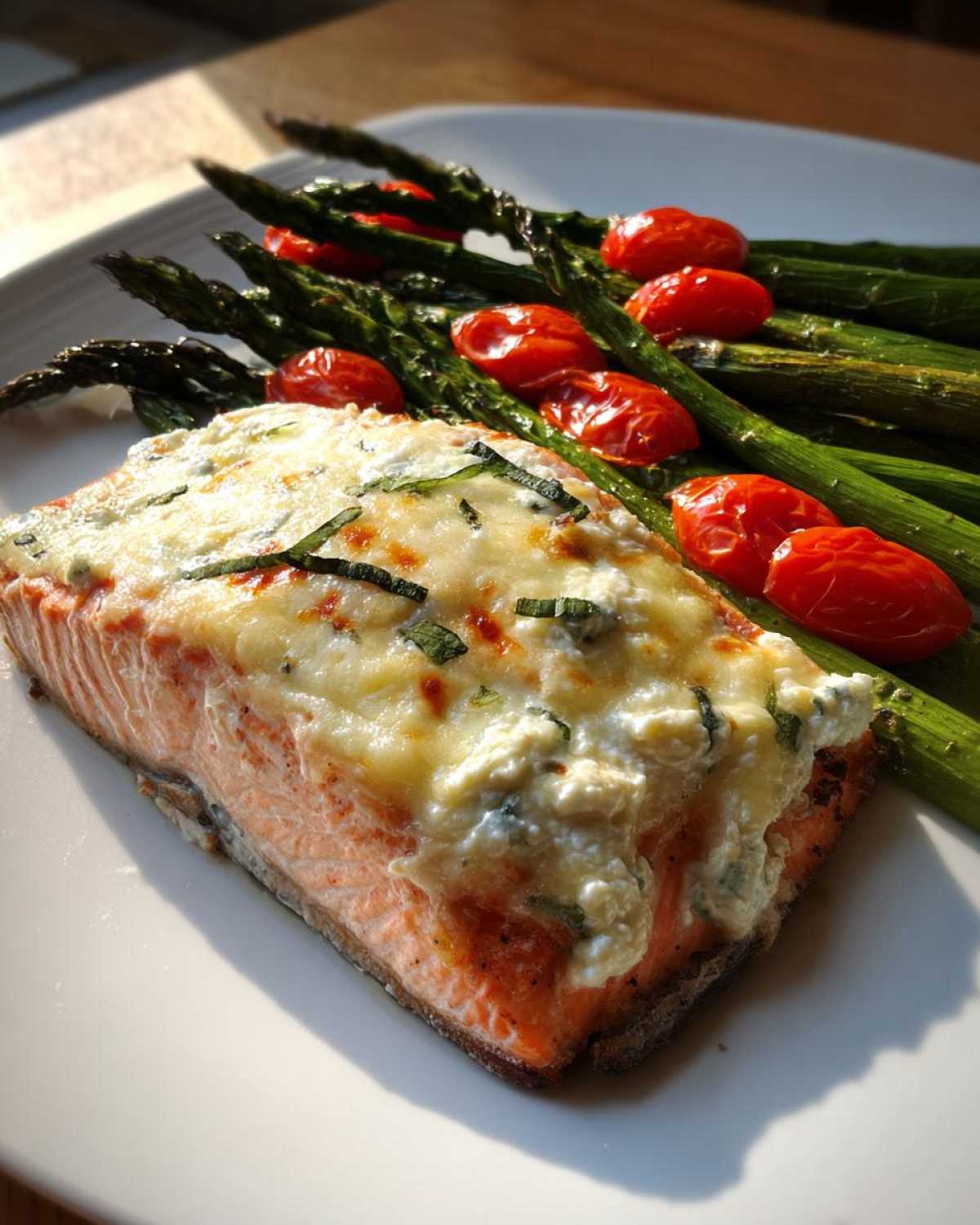
So, you pulled your beautiful **Baked Boursin Salmon** out of the oven, the cheese is perfectly bubbly, and it smells incredible! Now what? Since this is such a rich main course, you want something that cleanses the palate slightly or absorbs all that wonderful cheesy, garlicky goodness. Since we already roasted the asparagus and tomatoes along with the fish, that’s basically your immediate veggie component sorted out for a perfect **Boursin Salmon Dinner**!
But if you’re feeding a bigger crowd, or just really hungry, you need a great starch on the side. I always default to something light so the creamy salmon really shines through. Forget heavy pasta; we’re aiming for something quicker!
When I make this, I usually whip up a quick batch of fluffy quinoa. It’s fast, healthy, and the grains are perfect for soaking up any little bit of melted Boursin that might drip onto your plate. If you want baked potatoes but don’t want to use the oven because the salmon is already in there, you can totally make these crispy breakfast potatoes ahead of time! They bake up beautifully and have that fantastic texture contrast to the soft fish.
Another thing I love to do, especially if I’m serving this for guests, is add a second, slightly sweet, roasted vegetable on the side. Carrots work really well because their sweetness plays nicely against the savory herbs in the cheese. I sometimes do a quick toss of small carrots with maple and Dijon mustard for a little tang, which you can find how to make over on my maple Dijon glazed carrots recipe post. It adds great color to the plate without making the meal feel heavy.
The point is, keep the side simple. You’ve already done the heavy lifting making this **Creamy Cheese Salmon** taste like a million bucks. Quinoa, fluffy rice, or nicely roasted green beans are all excellent choices for finishing off your **Quick Weeknight Salmon** spread!
Storage and Reheating Instructions for Leftover Creamy Cheese Salmon
Believe it or not, this **Creamy Cheese Salmon** actually tastes fantastic the next day! And let’s be real, if you’re making four fillets, you probably have leftovers unless you’ve got some seriously hungry people around. Storing uneaten portions properly is key to keeping that rich flavor and moist texture intact. If you didn’t manage to eat it all in one go, don’t toss it! A little care now means you get a great lunch later.
Whenever I have leftovers from one of my **Oven Baked Seafood Recipes**, I make sure to save them right away—ideally within two hours of taking it out of the oven. You don’t want that beautiful fish sitting on the counter getting warm for too long. That’s just how we get into trouble, you know?
Here’s my routine for saving that delicious baked fish:
- First, let the salmon and veggies cool down just a touch before sealing them up. If you put piping hot food directly into a sealed container, you create steam inside, which is the enemy of good leftovers!
- Grab an airtight container. Seriously, get one with a tight seal—it keeps out any fridge smells and prevents drying.
- Gently place the remaining salmon fillets in the container. Try not to smash them up too much, even though they flake easily. I usually place any leftover veggies on top or in a separate section if I can.
- Seal it up tight and pop it straight into the refrigerator. Honestly, it stays perfectly good for about two, maybe three days maximum. Any longer than that, and I start to get nervous about food safety, even though the cheese helps preserve some moisture.
How to Gently Reheat Your Cheesy Baked Fish Dinner
This is where people mess up refrigerated salmon—they blast it in the microwave for way too long! You want to treat leftovers with respect, especially when they involve delicate proteins and creamy cheese. If you nuke it hard, you’re going to end up with dry fish again, and we worked so hard making this **Baked Boursin Salmon** moist the first time around!
The best method, hands down, is low and slow heat. If you’re just reheating one small piece, a quick trip in the oven or toaster oven works wonders.
- Preheat your oven (or toaster oven) to a super low temperature—think 275°F (135°C). This low heat gently warms the cheese and the fish without cooking it further.
- Place the leftover salmon on a small, shallow, oven-safe dish. If you’re worried about it drying out at all, you can add just a teaspoon of water or even a splash of white wine to the bottom of the dish before covering it loosely with foil. Covering it traps just enough steam to re-moisten things nicely.
- Heat it for about 10 to 15 minutes, depending on the portion size. You want it warm all the way through, not scalding hot.
- If you’re in a real pinch, the microwave works, but you must use reduced power! Use 40% power in 30-second bursts until it’s warm. It won’t be quite as good, but it beats cold fish!
See? Keeping this **Cheesy Baked Fish Dinner** tasting great the next day is super easy if you just follow a gentle reheating plan!
Frequently Asked Questions About Baked Boursin Salmon
When you try a new recipe, especially one that sounds as luxurious as this **Baked Boursin Salmon**, questions always pop up! I’ve gathered the ones I get asked most often below. Remember, mastering those little details is what turns a recipe into your own personal staple. Don’t hesitate to tweak things, but start with these guidelines! If you’re looking for more ways to use the oven for fish, check out my collection of oven baked seafood recipes.
Can I use a different flavor of Boursin cheese for this Baked Boursin Salmon?
You absolutely can experiment, but I always gently nudge people toward the Garlic & Fine Herbs version for their first time making this **Baked Boursin Salmon**. It’s the classic profile that pairs perfectly with salmon! If you want to venture out, stick to other herb-forward or milder options. Maybe try Shallot & Chive if you want something slightly less garlicky. I’d avoid really sweet flavors, though, like the caramelized onion one, unless you’re specifically aiming for a sweet-and-savory experience. The original recipe is designed around that iconic herb blend!
What temperature should I bake the salmon to ensure it is moist?
This is crucial for that beautiful texture! For a wonderfully **Moist Baked Salmon Technique**, you need the heat high enough to cook quickly but not so high it dries out the edges before the inside is done. I stick firmly to 400°F (200°C) for this recipe, regardless of whether you’re making **Oven Baked Seafood Recipes** or just this simple fish dinner. That medium-high heat ensures the cheese melts quickly and traps moisture inside the fillet without overcooking before the 15-minute mark hits.
Is this considered a Healthy Salmon Dish?
That’s a great question! If you look only at the protein and omega-3s in the salmon itself, then yes, this is incredibly healthy! Salmon is an amazing source of nutrients. However, we are topping it with a full-fat, flavored cheese, so it definitely leans toward decadent and satisfying rather than strictly ‘low-fat.’ If you’re watching your intake, just use a very thin layer of Boursin or skip the cheese on one fillet to test it out. It’s a perfect balance of healthy protein with a blast of flavor, so I count it as a win for a satisfying **Healthy Salmon Dish**!
Share Your Restaurant Style Salmon at Home Experience
Okay, now that you’ve mastered this **Baked Boursin Salmon**, I absolutely *need* to hear about it! Cooking is so much more fun when we can share what we’ve made, right? I put all my heart into getting these simple recipes just right so you can have those amazing **Restaurant Style Salmon at Home** moments, and seeing your results makes all the recipe testing worthwhile. If you loved making this, you should definitely check out my main write-up on how to achieve that restaurant-style salmon at home!
When you get this dinner on the table, please come back here and let me know how it went! Did the cheese get perfectly golden? Did your family devour it in minutes? Drop a comment below letting me know if you stuck exactly to the recipe or if you tried adding some extra lemon slices on top like I suggested. I read every single comment, I really do!
And if you snapped a quick picture before everyone dug in, please share it on social media! Tag me so I can see your gorgeous **Creamy Cheese Salmon** creations. Knowing that my recipes are helping you create easy, delicious meals is honestly why I love doing this so much. Happy cooking—I can’t wait to see what you pull out of your ovens!
Print
Baked Boursin Salmon
- Total Time: 25 min
- Yield: 4 servings
- Diet: Low Fat
Description
A simple recipe for baking salmon fillets topped with creamy Boursin cheese until flaky and cooked through.
Ingredients
- 4 salmon fillets (about 6 oz each)
- 1 container (5.2 oz) Boursin Cheese, Garlic & Fine Herbs flavor
- 1 tablespoon olive oil
- 1/2 teaspoon black pepper
- 1/4 teaspoon salt
- 1 cup asparagus spears, trimmed
- 1 cup cherry tomatoes
Instructions
- Preheat your oven to 400°F (200°C). Line a baking sheet with parchment paper.
- Place the salmon fillets on the prepared baking sheet. Drizzle each fillet lightly with olive oil and season with salt and pepper.
- Spread an even layer of the Boursin cheese over the top surface of each salmon fillet.
- Arrange the asparagus and cherry tomatoes around the salmon fillets on the baking sheet.
- Bake for 12 to 15 minutes, or until the salmon is cooked through and flakes easily with a fork. The cheese topping should be melted and slightly golden.
- Remove from the oven and serve immediately with the roasted vegetables.
Notes
- For extra moisture, you can place a few thin slices of lemon on top of the cheese before baking.
- To ensure the cheese melts evenly, let the Boursin sit at room temperature for 10 minutes before spreading it on the fish.
- This recipe pairs well with quinoa or roasted small potatoes.
- Prep Time: 10 min
- Cook Time: 15 min
- Category: Dinner
- Method: Baking
- Cuisine: American
Nutrition
- Serving Size: 1 fillet with vegetables
- Calories: 410
- Sugar: 3
- Sodium: 350
- Fat: 26
- Saturated Fat: 14
- Unsaturated Fat: 12
- Trans Fat: 0.5
- Carbohydrates: 8
- Fiber: 2
- Protein: 36
- Cholesterol: 105



Comments are closed.