
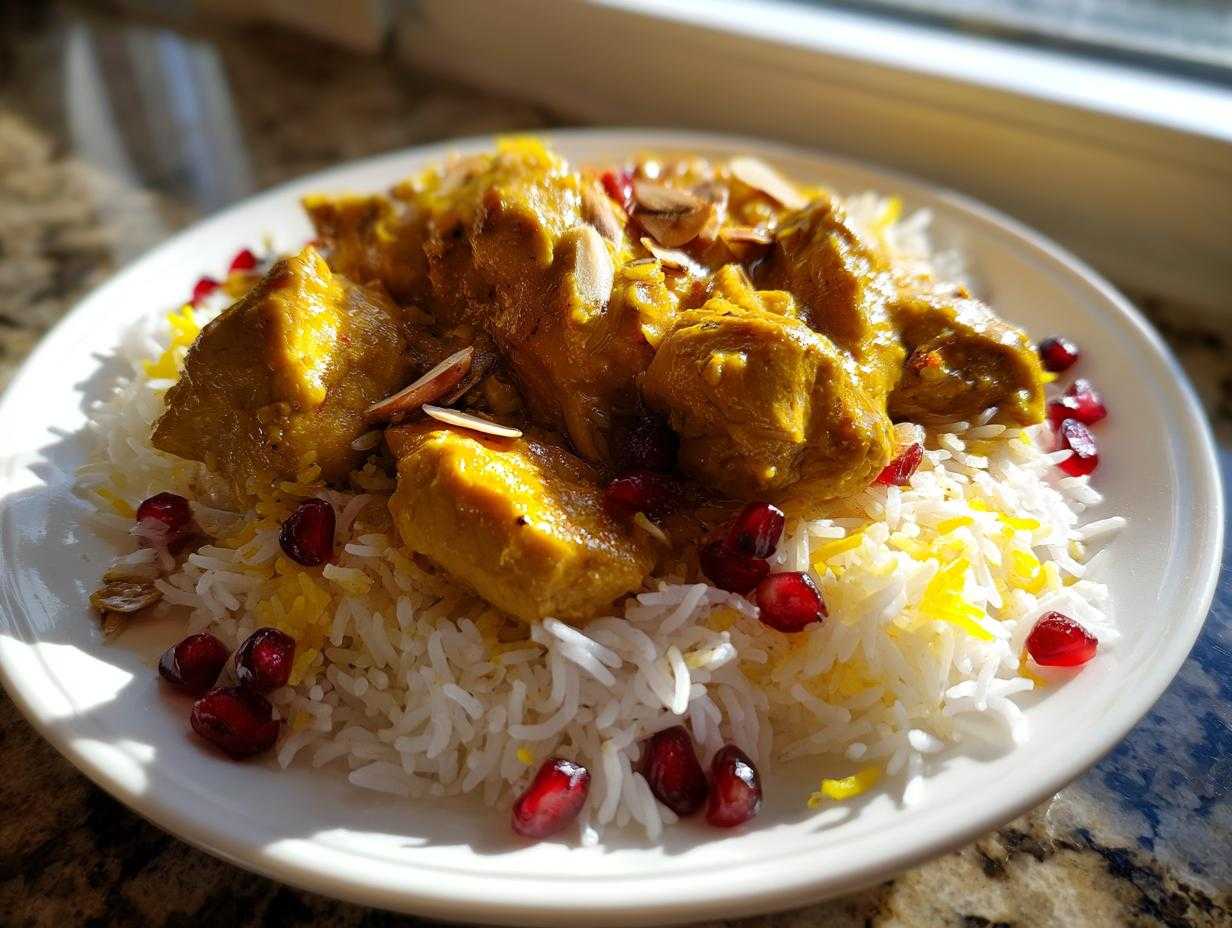
Oh my gosh, if you think you know chicken, you haven’t truly lived until you’ve immersed yourself in the incredible world of Iranian cooking. Seriously, the depth of flavor they achieve with just a few key ingredients—saffron, turmeric, and that little pop of fruit—is just magic, you guys. I’ve cooked this dish hundreds of times over the years, trying to perfect it just like my Auntie Soheila taught me, and I’m telling you, I finally cracked the code.
Forget those dry, boring chicken dinners! Today we are making Zereshk Polo ba Morgh. That translates simply to Saffron Chicken with Barberry Rice, and trust me, it’s the crown jewel of any **Persian Chicken** spread. This isn’t just a meal; it’s a celebration waiting to happen. Once you master this, you’ll have the most authentic, show-stopping main course in your rotation. Let’s get cooking!
Why This Zereshk Polo ba Morgh is the Best Persian Chicken
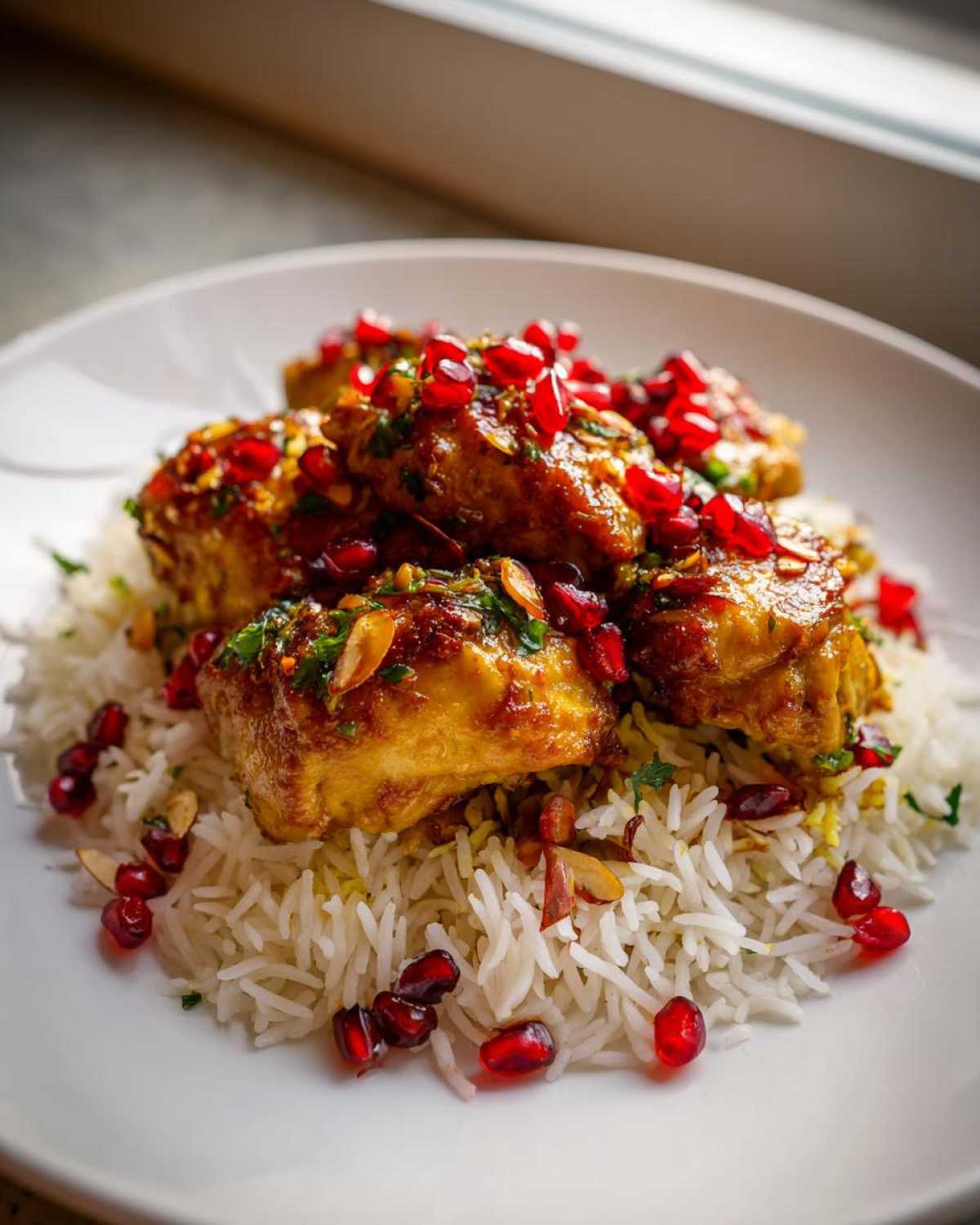
There are a lot of chicken recipes out there, but this one hits different. We’re not skimping on flavor here—this is next level Persian Chicken, guaranteed to get compliments at your dinner table. It’s all about balancing richness with brightness.
-
Flavor Profile: Saffron, Lime, and Tartness
The saffron is non-negotiable; it gives the sauce that incredible color and earthy perfume we all dream of. Then you get the tart little explosion from the barberries over the rice. It’s sweet, savory, and tangy all at once. Wow!
-
A True Traditional Iranian Chicken Recipe
This isn’t some quick weeknight hack, even though it’s totally possible to make quickly! This follows the spirit of traditional Iranian chicken recipes. When you follow these steps, you smell history in your kitchen. It’s the real deal, folks!
Gathering Ingredients for Your Persian Chicken Meal
Okay, before we get messy, let’s talk supplies. You can’t rush greatness, and that means using quality ingredients for this special **Persian Chicken**. I always lay everything out first so I don’t have to hunt for the turmeric when the onions are searing. It keeps the process smooth!
-
Chicken and Sauce Components
You’ll need about two pounds of chicken pieces—I prefer bone-in thighs because they stay really juicy during the simmer, but breasts work if you watch them closely. Grab one big onion, olive oil, turmeric, pepper, and a dollop of tomato paste. The secret powerhouse is the saffron! You need about a quarter teaspoon of threads, and you must, must, must bloom it first. Remember, we steep those magic threads in hot water for ten minutes to release all that color and flavor.
-
For the Barberry Rice Topping
For the dazzling topping, you only need a cup of dried barberries—those little red jewels! They are tangy, so they cut through the richness perfectly. Melt two tablespoons of butter, and if you want that extra crunch that makes this feel like a real treat, slivered almonds are a must. Don’t forget a bit of sugar to balance the tartness of the zerehsk.
-
Basmati Rice Preparation
You need three cups of good basmati rice, rinsed until the water runs totally clear—that’s key for fluffy, separate grains. And we’ll boil it first, so grab six cups of plain water for that step. Getting the rice right is half the battle for your barberry rice with chicken tutorial success!
Step-by-Step Instructions for Authentic Persian Chicken
This is where the actual cooking magic happens! Don’t feel overwhelmed because we break this down into stages. Once everything is simmering, you are just waiting for that incredible aroma to fill your kitchen. Honestly, the smell alone lets you know you’re nailing an authentic Persian chicken stew vibe, even though this isn’t a stew!
-
Preparing and Browning the Chicken
First things first: season that chicken! Be generous with salt, pepper, and that gorgeous turmeric. In your big pot—I use my heavy Dutch oven—heat up the olive oil until it shimmers a little. Toss in the seasoned chicken and brown it well on all sides. You want some nice color here; that browning builds tons of flavor depth later. Once they look happy and golden, pull them out and set them aside for a minute.
-
Building the Saffron Sauce and Simmering the Persian Chicken
Next, toss your sliced onions into that same pot. Cook them down until they’re soft, maybe five minutes. Stir in the tomato paste and cook that minute extra—it deepens the color, trust me. Now, bring the chicken back home! Pour in your pre-bloomed saffron water, the chicken broth, that tiny bit of sugar, and salt. Bring it up to a gentle simmer, slap the lid on, and turn that heat way down low. We want it to bubble gently for 45 to 60 minutes until the chicken is fall-off-the-bone tender.
-
Cooking the Basmati Rice Perfectly
While the chicken is doing its slow thing, turn your attention to the rice. This is crucial for any good Persian meal. Rinse your amazing basmati rice over and over until the water coming off it is totally clear. Boil six cups of water, dump the rice in, and only cook it for about 7 to 9 minutes. We want it perfectly ‘al dente’ because it finishes steaming later. Drain it right away!
-
Sautéing Zereshk (Barberries)
This happens super fast, so watch closely! Melt your butter in a tiny skillet over medium heat. Toss in those brilliant barberries and slivered almonds. Stir constantly for maybe 60 seconds. That’s it! Overcook them, and they turn bitter, so pull them off the heat the second they puff up a little.
Tips for Perfecting Your Persian Chicken and Rice
Listen, every great cook knows the recipe is just the map; the real flavor comes from knowing the little secrets along the way. Mastering this saffron chicken recipe Iranian style is all about respecting a couple of small steps that make a huge difference in the final plate. Don’t skip these because they keep the dish authentic!
-
Saffron Blooming Secrets
I know I mentioned it before, but it bears repeating because I see people mess this up all the time! You cannot just throw the threads into the hot sauce. You need to crush them—I use the back of a spoon on a little piece of parchment paper until they are practically dust—and then let them sit in just a tiny bit of hot (not boiling!) water for at least ten minutes. When that water turns a deep, vibrant orange-red, you know you’ve activated the magic. That deeply colored liquid is what makes your sauce gorgeous and truly taste like the best version of Persian Chicken.
-
Achieving Tahdig: The Crispy Rice Layer
If you really want to impress people and nail that ultimate Persian dinner experience, you have to go after the Tahdig. This is the crispy layer of rice that forms at the bottom of the pot, and honestly, it’s the first thing everyone fights over! To get it right, you need to make sure the bottom of your rice pot is covered with a good layer of fat—usually butter, or a mix of oil and butter. Pat a layer of your rinsed, uncooked rice right onto that fat. When you put the pot on the stove to steam later (after adding the draining rice to make your mountain), keep the heat medium-low for the first five minutes. You’ll hear it start to crackle right before you turn it down low for the main steaming period. It adds such a great textural counterpoint to the soft chicken and fluffy rice. For more tips on perfect rice, check out this guide on saffron rice pilaf!
Serving Suggestions for Your Persian Chicken Dinner
We did it! The chicken is tender, the sauce is fragrant, and the barberry rice is bright and beautiful. Now, how do we make this look like the amazing centerpiece it is? Since this is such a substantial dish, it naturally serves perfectly as a true family style Persian chicken meal. You want presentation and balance!
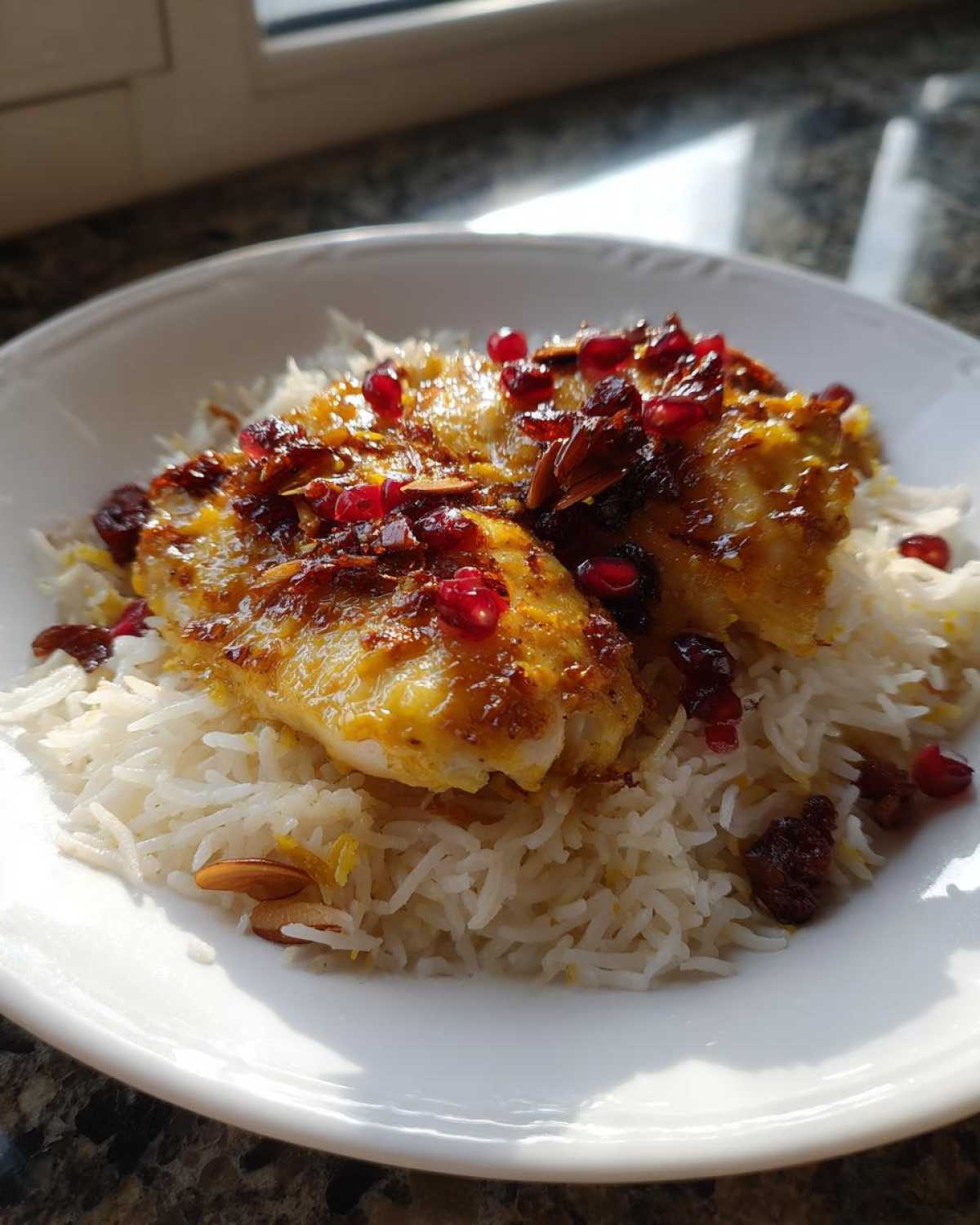
The biggest rule for serving Zereshk Polo ba Morgh is to present the rice first, then the chicken, and then spoon that glorious saffron sauce over everything. Think about layering! I often fluff the rice up high on a big platter first, then tuck the chicken pieces around the base. Don’t just drown the rice; you want those tart barberries to shine through on top.
For sides, Persian food loves cool, fresh elements to balance the richness. You absolutely have to have yogurt—either plain Mast-o-Khiar (cucumber yogurt dip) or just some thick, full-fat Greek yogurt on the side. It’s amazing for cooling the palate between bites of rich sauce or if your turmeric happens to pack a little extra heat.
A simple, fresh salad is also a must. Forget heavy dressings! I often whip up something super simple just using cucumbers, tomatoes, maybe some fresh herbs like mint and parsley, and a squeeze of lemon. It’s bright and clean. If you need inspiration for simple fresh sides, I’ve got this lovely raw salad idea that pairs surprisingly well with the spices in the chicken. It just pulls the whole meal together!
Storing and Reheating Leftover Persian Chicken
I know, I know. You probably won’t have leftovers because this dish is just that good, but if you manage to save some of this incredible Persian Chicken, you want to treat it right! The biggest issue with leftovers is that the lovely, fluffy basmati rice can sometimes get a bit stiff or dry when you just throw it in the microwave, and we certainly don’t want that.
The best way to store this is always separating the components. Keep the chicken and the sauce sealed tightly in one container. Keep your barberry rice in another container. If you mix them immediately when cold, you risk the rice getting mushy when reheated. I find leftovers taste absolutely divine the next day, by the way!
When it comes to reheating, do the items separately if you can. For the chicken and sauce, a small saucepan on the stove over low heat is perfect. Stir it occasionally, and if it seems a bit thick, just splash in a tablespoon of water or even some plain chicken broth to loosen up that saffron sauce immediately. It warms up beautifully that way, keeping the meat soft.
For the rice, avoid the microwave if possible unless you’re in a huge hurry! If you must microwave, put the rice in a bowl, place a damp paper towel right over the top of it, and heat in short bursts. Better yet? Put the rice in a small steamer basket or use a technique similar to making fresh rice: add just a teaspoon of water to the bottom of a small pot, pile the cold rice on top, cover tightly, and heat on *very* low for about five minutes. The steam will resurrect those gorgeous grains. Enjoy those second servings—you earned it!
Frequently Asked Questions About This Persian Chicken Recipe
I know when you see a traditional Iranian chicken recipe like this, a few questions pop up, especially when dealing with spices like saffron or finding specialty items like barberries. I want to make sure you feel totally confident before you start cooking! Here are the things folks ask me most often about perfecting their Persian Chicken meal.
-
Can I use boneless chicken breast instead of thighs for this Persian Chicken?
Absolutely, you can! Lots of people prefer breast meat, and it works just fine, but you need to adjust your timing! Chicken breasts cook much faster, and if you leave them simmering for the full hour we use for the thighs, they will turn stringy and dry. My advice is to brown the breasts, build the sauce just the same, but start checking for doneness around the 25 or 30-minute mark. You want them firm but still moist. It won’t have that melt-in-your-mouth quality of the thighs, but it’s a great shortcut for a fast Middle Eastern chicken entree!
-
What if I cannot find dried barberries (zereshk)?
Oh, darn it, sometimes those gems are hard to locate! If you absolutely can’t find zereshk, you are missing the signature tart punch for the rice, and frankly, the dish won’t be the same. But if you are in a pinch, you can try roughly chopping dried cranberries or dried sour cherries and soaking them slightly before you sauté them in the butter. Just use less sugar in the sauté mix because the dried fruit is often sweeter than barberries. It’s a decent substitute if you’re aiming for a Persian dinner idea main course right now, but I highly encourage you to track down the real deal for next time!
-
Is this recipe suitable for making Joojeh Kabob instead?
That’s a fun pivot! While Zereshk Polo is a simmered dish, the flavors we use in the sauce—onion, turmeric, saffron, and lemon/lime notes—are very similar to what you use for marinating authentic Joojeh Kabob! For Joojeh, you generally skip the tomato paste and broth. Instead, you’d cut the chicken into uniform cubes, marinate it overnight in the bloomed saffron, lemon juice, onions, and oil, and then thread it onto skewers. Then, you’d grill it over high heat instead of stewing it. The flavors are there, but the method is totally different! If you’re curious about mastering that grilling technique, check out my guide on cooking with dried limes in Persian food, as you can infuse those smoky grilled flavors!
Estimated Nutritional Information for Persian Chicken
You’ve made an incredible, flavorful meal, and while we don’t obsess over every gram when we’re cooking family-style Persian food, it’s smart to know roughly what’s on your plate! Keep in mind that these numbers are just an estimate based on the 2 lbs of chicken and the amount of rice listed. If you use more sauce, or if you load up on that incredible barberry topping, your totals will shift a bit.
This dish is surprisingly balanced! Because we’re simmering the chicken instead of frying it, we keep the fat content reasonable, and you get a fantastic boost of protein from the chicken itself. When you’re planning out your wonderful Persian dinner ideas main course, use these benchmarks to guide you.
- Serving Size: 1 serving (approx. 1 chicken piece and 3/4 cup rice)
- Calories: 550
- Protein: 38g
- Fat: 22g (A good amount of that comes from the butter used for the rice topping!)
- Saturated Fat: 6g
- Carbohydrates: 55g
- Fiber: 3g
- Sugar: 8g (Mostly natural sugars from the tomato paste and a little added for the sauce)
- Sodium: 450mg
Remember, this information doesn’t account for any extra butter you might add to your rice for an even crispier tahdig, or any dips you serve alongside it. It’s a hearty, satisfying plate that feels completely worth it!
Share Your Experience Making This Persian Chicken
Whew! Now that you’ve gone through the whole process—from blooming that precious saffron to enjoying the final bite of the perfectly seasoned chicken—I really want to hear about it! Cooking is always better when shared, and honestly, seeing your results brings me so much joy.
Did the barberries provide that perfect pop of tartness you were hoping for? Did you manage to get a beautiful crust on your rice? Don’t be shy! Drop a comment down below and let me know how your Zereshk Polo ba Morgh turned out. If you loved it, please give this recipe a quick star rating—it seriously helps other busy home cooks decide to try this magnificent Persian Chicken dish!
And if you took a gorgeous photo of your finished plate—show me! You can tag me on social media or just describe how you served it up. I always get new inspiration for pairings, just like how you might serve this alongside a simple noodle pilaf instead of rice sometimes, kind of like my thoughts on easy leftover chicken rice dishes. Happy cooking, and thank you for trusting me with your family dinner!
Print
Zereshk Polo ba Morgh (Saffron Chicken with Barberry Rice)
- Total Time: 90 min
- Yield: 4 servings
- Diet: Low Fat
Description
A classic Persian main course featuring chicken cooked in a saffron-infused sauce served over fluffy rice studded with tart dried barberries.
Ingredients
- 2 lbs chicken pieces (bone-in or boneless thighs)
- 1 large onion, sliced
- 2 tablespoons olive oil
- 1 teaspoon turmeric powder
- 1/2 teaspoon black pepper
- 1/4 teaspoon saffron threads, crushed and bloomed in 3 tablespoons hot water
- 1/2 cup chicken broth
- 1 tablespoon tomato paste
- 1 teaspoon sugar
- 1 cup dried barberries (zereshk)
- 2 tablespoons butter
- 1/4 cup slivered almonds (optional)
- 3 cups basmati rice
- 6 cups water for boiling rice
- Salt to taste
Instructions
- Season the chicken pieces generously with salt, pepper, and turmeric.
- Heat olive oil in a large pot or Dutch oven over medium heat. Brown the chicken pieces on all sides, then remove and set aside.
- Add the sliced onion to the pot and cook until softened, about 5 minutes.
- Stir in the tomato paste and cook for 1 minute.
- Return the chicken to the pot. Add the bloomed saffron water, chicken broth, sugar, and salt. Bring the liquid to a simmer.
- Cover the pot, reduce heat to low, and let the chicken simmer gently for 45 to 60 minutes, or until fully cooked and tender.
- While the chicken cooks, prepare the rice: Rinse the basmati rice several times until the water runs clear. Boil 6 cups of water in a separate pot, add the rice, and cook for 7-9 minutes until al dente. Drain the rice immediately.
- In a small skillet, melt the butter over medium heat. Add the barberries and slivered almonds (if using). Sauté briefly, about 1 minute, stirring constantly to prevent burning. Remove from heat.
- To serve, spread a layer of cooked rice on a platter. Top with the cooked chicken pieces and spoon the saffron sauce over everything. Sprinkle the barberry and almond mixture over the rice.
Notes
- To bloom saffron, crush the threads finely and steep them in a small amount of hot (not boiling) water for at least 10 minutes before use.
- For a crispier rice bottom (tahdig), place a thin layer of butter or oil and a few spoonfuls of rice at the bottom of the pot before layering the rest of the rice for steaming.
- You can add a squeeze of fresh lemon juice to the sauce near the end of cooking for brightness.
- Prep Time: 20 min
- Cook Time: 70 min
- Category: Dinner
- Method: Stovetop Simmering
- Cuisine: Persian
Nutrition
- Serving Size: 1 serving (approx. 1 chicken piece and 3/4 cup rice)
- Calories: 550
- Sugar: 8
- Sodium: 450
- Fat: 22
- Saturated Fat: 6
- Unsaturated Fat: 16
- Trans Fat: 0
- Carbohydrates: 55
- Fiber: 3
- Protein: 38
- Cholesterol: 110


Comments are closed.