

Oh, I just love when a meal comes together fast but tastes like you spent all afternoon perfecting it, you know? If you are anything like me, you are always hunting for those incredible quick Asian lunch ideas that satisfy that craving for something savory and satisfying. Forget takeout blues! Today, we are making the absolute best tuna kimbap—specifically, the spicy version that kicks everything up a notch. I’ve rolled hundreds of these savory rice wraps, and trust me, getting that perfect, tight roll takes practice, but the filling is where the magic truly happens. We are focusing on that vibrant, addictive spicy tuna filling that makes you forget all about your boring lunch bag. Let’s dive in!
Why This Spicy Tuna Kimbap Recipe Stands Out (The Best Tuna Kimbap)
You know how some recipes look flashy but take forever? Not this one! If you are a beginner looking for Kimbap for beginners, this is your perfect starting point. What makes this recipe the absolute best homemade tuna kimbap is how it nails that takeout flavor in minutes. We nail the balance of texture and heat, making it perfect for packing or just whipping up when that craving hits hard.
Speed: Achieving Tuna Kimbap in Under 20 Minutes
Seriously, you read that right! With only 20 minutes total, this is lightning fast. Since we aren’t cooking much besides the rice (which you can use leftover for!), there isn’t a lot of downtime. This means less kitchen stress and more time actually eating these delicious savory rice rolls!
The Secret to Flavorful Spicy Tuna Mayo Filling for Tuna Kimbap
The secret sauce for truly great Spicy Tuna Kimbap is definitely the paste we build. It’s all about that punchy Gochujang—that Korean chili paste brings warmth and depth you just can’t get from regular sriracha. Mixing it perfectly with creamy mayo creates the ultimate savory delight for our tuna kimbap filling. It’s addictive!
Gathering Ingredients for Your Tuna Kimbap Rolls
Alright, to make these amazing tuna kimbap rolls, you can’t just throw anything in! Quality ingredients are key to getting that fresh, clean crunch. We need the right rice base, the superstar tuna filling, and crisp veggies. Don’t skip the details here; they make all the difference in the final roll!
Rice Preparation and Seasoning
This is where you build your foundation, so listen up! You absolutely need short-grain white rice—none of that long-grain stuff! Make sure it’s slightly warm, not cold, when you season it. Take about three cups of that rice and gently mix in exactly one tablespoon of sesame oil and one teaspoon of salt until everything is loving each other. That simple mix keeps the rice sticky enough to hold together but flavorful enough to stand up to that spicy filling.
Assembling the Spicy Tuna Mayo Filling Ingredients
Now for the star of the show, the spicy part! For our Spicy Tuna Kimbap filling, grab one 5-ounce can of tuna, drained really, really well—super important! Mix that carefully with three tablespoons of mayonnaise, one tablespoon of Gochujang (that’s our flavor rocket!), one teaspoon of sugar, and one teaspoon of sesame oil. You have to mix this until it’s completely uniform. No streaks allowed!
Vegetable Components for Tuna Kimbap
Vegetables add texture and brightness to your tuna kimbap so they don’t just taste like tuna toast, right? You need about half a cup of carrot, but it must be *finely* shredded. The pickled radish (danmuji) needs to be cut into strips—think matchsticks. Finally, use about half a cup of cooked spinach, and I mean it when I say you must squeeze every drop of water out of that spinach. Sog factor is the enemy!
Chamchi Kimbap Tutorial: Step-by-Step Instructions
Okay, the moment of truth! Making Chamchi Kimbap is way easier than it looks, I promise. It just takes organizing your little piles of ingredients (mise en place is your best friend here!). Once you get the rolling down, you’ll be whipping these Korean food recipes out every week. Let’s walk through it from mixing to slicing.
Seasoning the Rice and Mixing the Filling
First things first: get that rice seasoned exactly right. Take your warm rice, splash in the sesame oil and salt, and toss it gently so every grain gets some flavor. Don’t mash it, though! While that settles for a second, get your spicy tuna mixture whipped together. It needs to be totally homogeneous—that means no separate blobs of mayo or chili paste floating around. Everything has to be one glorious, spicy, creamy mass ready to go into the wraps.
The Art of Rolling Perfect Tuna Kimbap
Lay your seaweed sheet down on the bamboo mat, shiny side facing down! Spread about three-quarters of a cup of rice across it, but stop short of the back edge—you need that 1-inch border to seal everything up later. Now, put your fillings—tuna, radish, carrot, spinach—right in a neat line down the center. Lift that mat edge toward you, tuck those fillings in tight, and roll it away from you. Roll it firmly! I always give mine a good, gentle squeeze right through the mat to compact the Tuna Kimbap roll. Then, just moisten that top edge with a tiny bit of water to seal it shut!
Finishing and Slicing Your Tuna Kimbap
Once sealed, flip it over and take a minute to just brush the outside of the roll with a little extra sesame oil. That gives it that beautiful sheen and savory aroma! Now, the trickiest part: cutting! Don’t just hack at it; you’ll crush your beautiful work. Use a very sharp knife, and wipe the blade with a damp paper towel *before* every single slice. That prevents the rice from sticking. I always cut mine into neat 1-inch pieces so they look professional when they hit the platter!
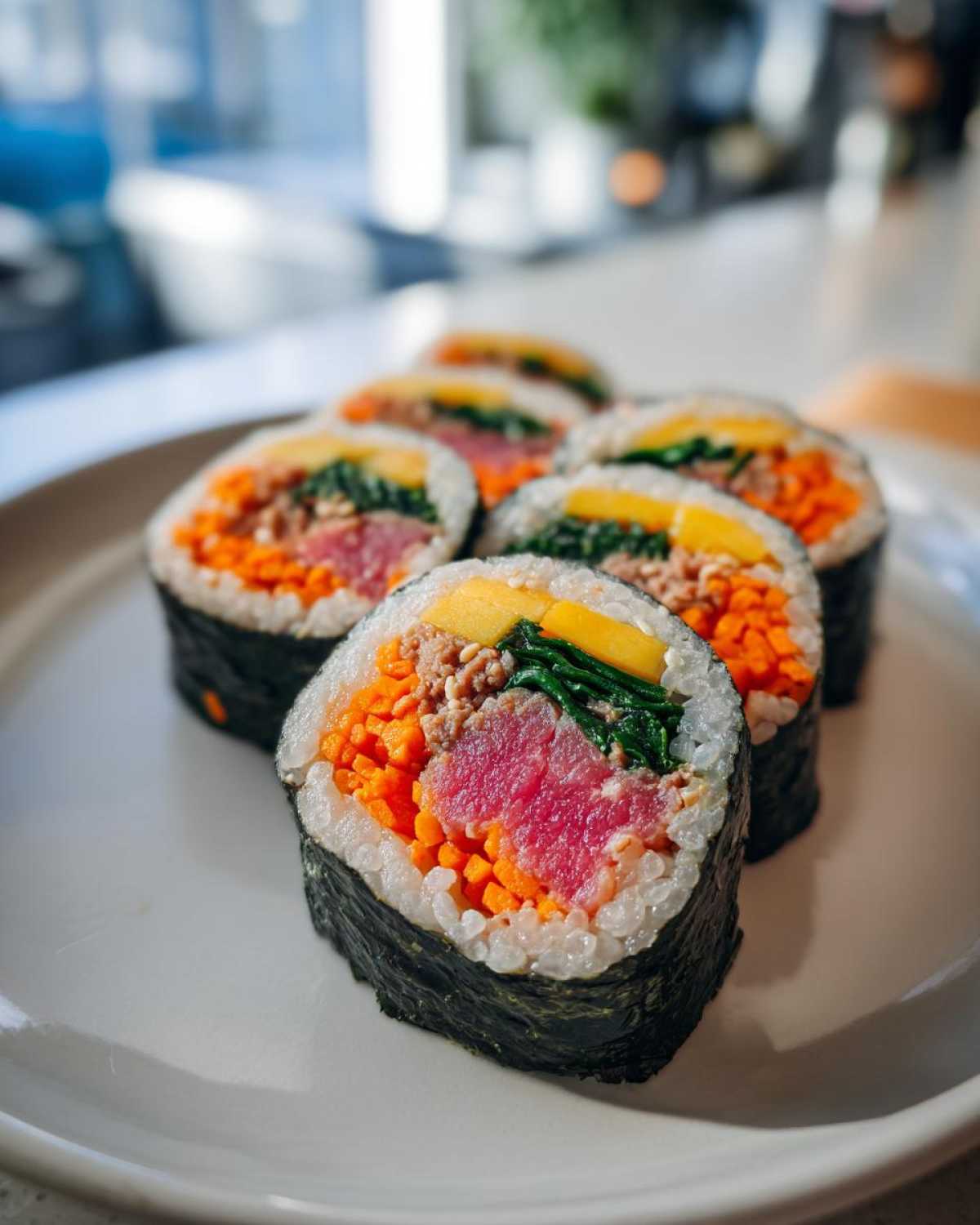
Tips for Making Kimbap Better Than Store-Bought Tuna Kimbap
If you’ve ever grabbed a pre-made roll from the store, you know they can sometimes be a little sad—dull rice, watery filling, sometimes they just taste flat. No thanks! We are making the superior homemade version of tuna kimbap here, and it all comes down to a few professional tricks. Keep these tips in mind, and your homemade rolls will always win!
Moisture Control: Preventing Soggy Kimbap
Listen, this is the non-negotiable rule for perfect kimbap rolls. Water equals sadness! You need to treat every ingredient like it’s packed full of liquid that must be removed before it hits that rice. That means draining the canned tuna until you think it can’t possibly drain any more—and then drain it again! Trust me, there’s liquid in there. Same goes for your veggies.
If you use fresh spinach, blanch it quick, shock it in cold water, and then grab handfuls and just wring that water out over the sink like you mean it. We want crispy texture, not rice that turns into porridge after an hour. If your veggies are dry and your tuna is dry, your kimbap stays perfect all day long.
Adjusting Spice Level in Your Tuna Kimbap Filling
I love the heat, so I always stick to the full tablespoon of Gochujang, but I know not everyone wants sweat rolling down their forehead while eating lunch! If you are sensitive to spice, don’t panic. You can totally adjust the heat in the filling. For a milder, almost barbecue-like tang, just cut the Gochujang way back—maybe just a teaspoon. You can even swap it out for a little tomato paste if you just want that color and slight acidity without the burn in your tuna kimbap filling!
Variations and Substitutions for Tuna Kimbap
Sometimes you’re out of tuna or just want to shake things up! That’s the beauty of Tuna Kimbap—it’s really just a platform for whatever delicious fillings you have on hand. I love keeping a few different things tucked away in the fridge so I can swap things out on a whim. You absolutely do not have to stick just to tuna if you don’t want to!
Adding Refreshing Cucumber Rolls Elements
If you want to make your roll feel extra light and crisp, think about adding something super refreshing. While this recipe is fantastic as is, throwing in thin strips of crisp cucumber—the English kind works great—adds the perfect cool crunch. It brings it closer to those vibrant, fresh Korean rolls you see everywhere for picnics.
And if you’re feeling bold, I’ve seen people use blanched zucchini strips in place of the spinach sometimes. Or, hear me out, if you want to ditch the fish entirely, you can make a mock tuna filling using chickpeas—I know, wild idea! But honestly, if you’re looking for a great recipe to try that out, check out some great vegan tuna salad chickpea tuna recipe ideas to give your kimbap a complete makeover. You can also swap tuna for good quality imitation crab sticks for a completely different flavor profile in your kimbap!
Serving Suggestions for This Flavorful Finger Foods
So, you’ve successfully rolled up these gorgeous bites! Now, how do we serve them? Honestly, these spicy rolls are perfect for almost any scenario. They shine as amazing flavorful finger foods at a party because they are just the right size—no forks needed! They are also my absolute go-to for packing in brown bag lunches.
For an official snack or appetizer spread, you just need a couple of simple sides. I love serving them alongside a small dish of extra pickled radish (the crunchy yellow kind!) for a second hit of tang. A little dish of kimchi on the side adds a fermented kick that cleanses the palate between those spicy rolls. They don’t really need a dipping sauce since the filling is flavorful enough, but if you must, a very light drizzle of soy sauce mixed with a tiny bit of rice vinegar works wonders!
Storage and Make Ahead Party Food Tips for Tuna Kimbap
I get asked all the time if you can make make ahead party food out of these rolls, especially since they are perfect for potlucks or picnics. The answer is yes, but you have to be smart about it! The fillings themselves hold up surprisingly well because we were so careful about draining all that moisture earlier. If you need to prep these for an event, you can definitely roll them the morning of, or even the night before.
Here’s my biggest secret: Don’t slice them until serving! Slice the rolls right before you put them on the platter. Why? Because once you slice them, the rice starts to dry out faster and the seaweed can get tacky. If you’re transporting them, wrap the whole unsliced roll tightly in plastic wrap—like, really vacuum-seal it with the wrap—and keep it chilled. This keeps everything perfectly compressed until the last minute.
When it comes time to serve your perfect Tuna Kimbap, take them out of the fridge about 30 minutes before you plan to eat them. Letting them warm up just slightly to room temperature makes the rice taste much fresher and softer. Cold kimbap rice just isn’t the same; it gets a little stiff. This small waiting period makes these savory rice rolls taste freshly made, even if you rolled them hours ago!
Frequently Asked Questions About Making Tuna Kimbap
Can I use rice vinegar instead of salt/sugar in the rice for my tuna kimbap?
That is a super common question, especially if you’ve made sushi before! Traditional sushi rice gets that tangy kick from rice vinegar mixed with sugar and salt. But for classic kimbap, we skip the vinegar entirely. We rely on just salt and sesame oil to season the rice. If you add vinegar, it changes the texture and tang profile too much—it starts tasting more like sushi than that savory, nutty kimbap we are aiming for. Stick to just salt and sesame oil for authentic flavor!
What is the best way to pack Tuna Kimbap for a quick Asian lunch idea?
I learned this trick the hard way, and it saves so much mess! If you are packing these for a quick lunch, always refrigerate the whole roll *before* slicing it. Remember how in the notes I mentioned wrapping the finished roll tightly in plastic wrap for five minutes? Do that for your lunch batches, but leave it wrapped. That pressure keeps everything super tight. When you are ready to eat it later, just unwrap, slice it with your damp, sharp knife, and you’re good to go. It holds its shape beautifully that way!
Can I make this a healthy seaweed wrap by reducing the mayo?
Absolutely, you can definitely thin out the fat content! If you want to lean into those **healthy seaweed wraps**, cutting back on the mayo in the spicy tuna filling is the easiest way to do it. I’d suggest replacing about half of the mayonnaise with plain Greek yogurt. It keeps the filling creamy, adds a little tang, and cuts down on the overall fat content significantly without making the filling totally fall apart. Watch your texture though—yogurt can be thinner than mayo, so drain your tuna extra well if you go this route!
Nutritional Estimates for Spicy Tuna Kimbap
Now, I’m not a nutritionist, so please take these numbers with a giant grain of salt—they are just my quick estimates based on the ingredients listed! When you are making something this delicious, you usually aren’t thinking about macros, but sometimes it’s nice to have a ballpark idea, especially if you’re portioning this out for a few meals.
This estimate is based on serving six pieces of the Spicy Tuna Kimbap roll. Because we are using canned tuna packed in water and focusing on simple additions, it stays fairly reasonable for a satisfying snack or light lunch. Remember, the final count depends heavily on how much filling you pack into each roll!
- Serving Size: 6 pieces
- Calories: Around 320 per serving
- Fat: Roughly 12 grams total (with about 2 grams being saturated fat)
- Carbohydrates: About 40 grams
- Protein: A solid 15 grams to keep you full!
- Sugar: Very low, sitting around 3 grams
We keep the sodium a bit higher because that pickled radish (danmuji) and the seasoned rice salt contribute, so keep that in mind if you are monitoring salt intake. Overall, for a homemade roll packed with fresh ingredients, I feel pretty good about these numbers whenever I make a batch for dinner!
Print
Quick Spicy Tuna Kimbap
- Total Time: 20 min
- Yield: 4 rolls (about 24 pieces)
- Diet: Vegetarian
Description
Make flavorful Spicy Tuna Kimbap (Chamchi Kimbap) quickly. This recipe focuses on a simple, spicy tuna filling perfect for lunch or snacks.
Ingredients
- 4 sheets dried seaweed (gim/nori)
- 3 cups cooked short-grain white rice, slightly warm
- 1 tablespoon sesame oil for rice
- 1 teaspoon salt for rice
- 1 (5 ounce) can tuna in water, drained well
- 3 tablespoons mayonnaise
- 1 tablespoon Gochujang (Korean chili paste)
- 1 teaspoon sugar
- 1 teaspoon sesame oil for filling
- 1/2 cup finely shredded carrot
- 1/2 cup pickled radish (danmuji), cut into strips
- 1/2 cup cooked spinach, squeezed dry
Instructions
- Prepare the rice: In a bowl, mix the warm rice with 1 tablespoon sesame oil and 1 teaspoon salt until evenly seasoned. Set aside.
- Make the spicy tuna filling: In a separate bowl, combine the drained tuna, mayonnaise, Gochujang, 1 teaspoon sugar, and 1 teaspoon sesame oil. Mix until fully combined.
- Prepare the vegetables: Ensure the carrots are shredded, and the pickled radish and spinach are cut into strips appropriate for rolling. Squeeze excess water from the spinach.
- Assemble the kimbap: Lay one sheet of seaweed, shiny side down, on a bamboo rolling mat. Spread about 3/4 cup of the seasoned rice evenly over the seaweed, leaving a 1-inch border at the top edge.
- Layer the fillings: Arrange a line of the spicy tuna filling across the center of the rice. Place strips of carrot, pickled radish, and spinach next to the tuna filling.
- Roll the kimbap: Moisten the top edge of the seaweed lightly with water to help seal. Lift the edge of the mat closest to you and roll the ingredients tightly away from you, pressing gently to keep the roll compact.
- Seal and finish: Once rolled, press the seam firmly. Brush the outside of the finished roll lightly with sesame oil.
- Slice and serve: Using a sharp, slightly damp knife, slice the roll into bite-sized pieces (about 1 inch thick). Serve immediately or pack for later.
Notes
- For easier slicing, wrap the finished roll tightly in plastic wrap for 5 minutes before cutting.
- If you prefer less spice, reduce the Gochujang amount or substitute with tomato paste for a milder flavor.
- You can substitute the spinach with blanched zucchini or use imitation crab meat instead of tuna for a variation.
- Prep Time: 20 min
- Cook Time: 0 min
- Category: Main Course
- Method: Rolling
- Cuisine: Korean
Nutrition
- Serving Size: 6 pieces
- Calories: 320
- Sugar: 3
- Sodium: 450
- Fat: 12
- Saturated Fat: 2
- Unsaturated Fat: 10
- Trans Fat: 0
- Carbohydrates: 40
- Fiber: 2
- Protein: 15
- Cholesterol: 30


Comments are closed.