
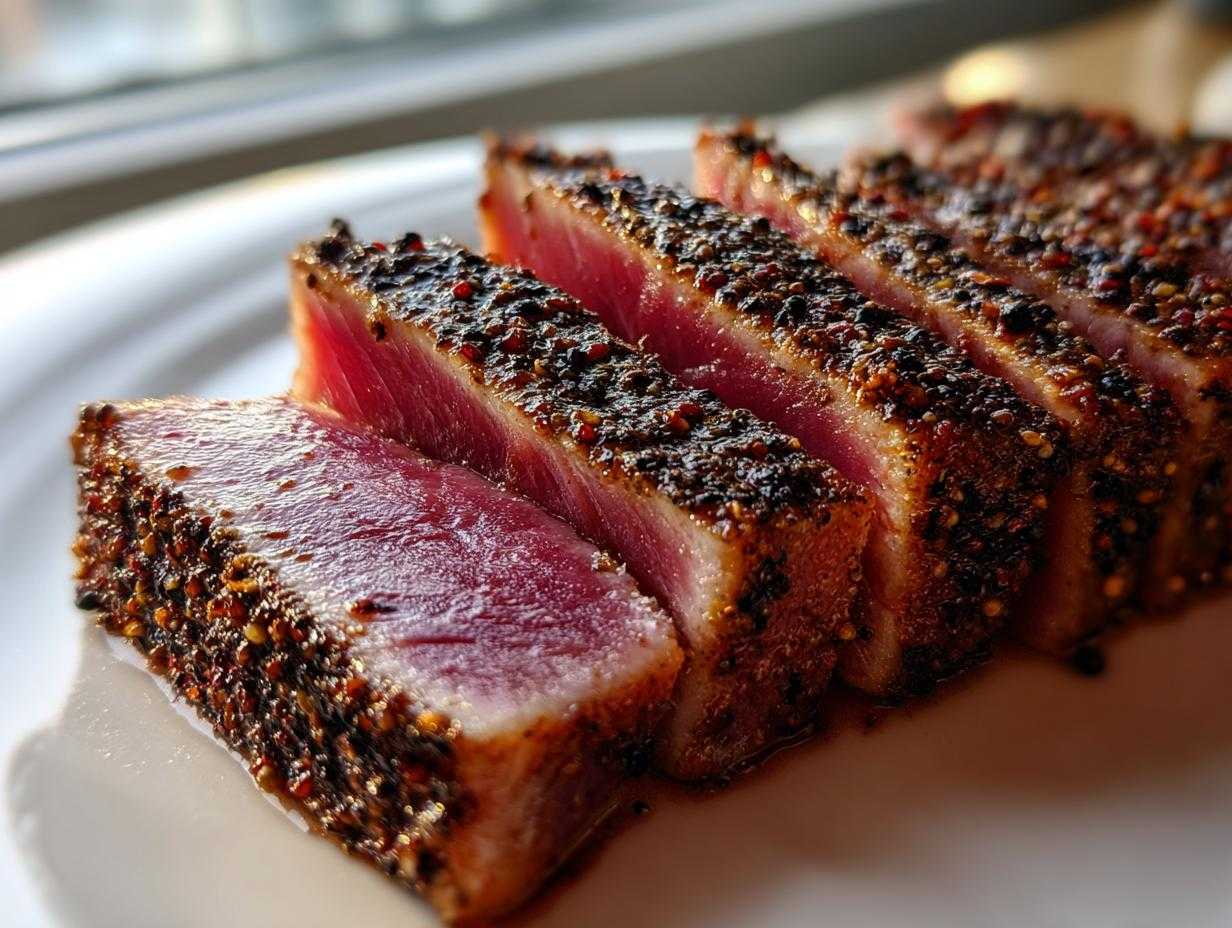
When you need a seriously satisfying dinner, but you only have about ten minutes before hunger strikes, you need protein that cooks *fast*. That’s where these Simple Seared Tuna Steaks come in, seriously!
I’m telling you, nothing beats the texture you get from a hot, fast sear. It locks in all the flavor and gives you that beautiful, deep crust while keeping that amazing pink center. Forget waiting around for the oven or scrubbing a grill pan; this cast-iron technique is my weeknight hero. These perfect, flavorful Tuna Steaks are done from start to finish in under ten minutes. Wow, that’s quality fast food right on your own stovetop!
Why You Will Love These Seared Tuna Steaks
Honestly, if you think cooking high-quality fish like ahi tuna steaks is complicated or takes forever, this recipe is going to change your mind. I keep coming back to this method because it just works every single time. It’s the definition of an easy seafood dinner without sacrificing quality.
- It’s Shockingly Fast: Seriously, go from fridge to plate in under ten minutes. It’s faster than ordering takeout, and way healthier, too!
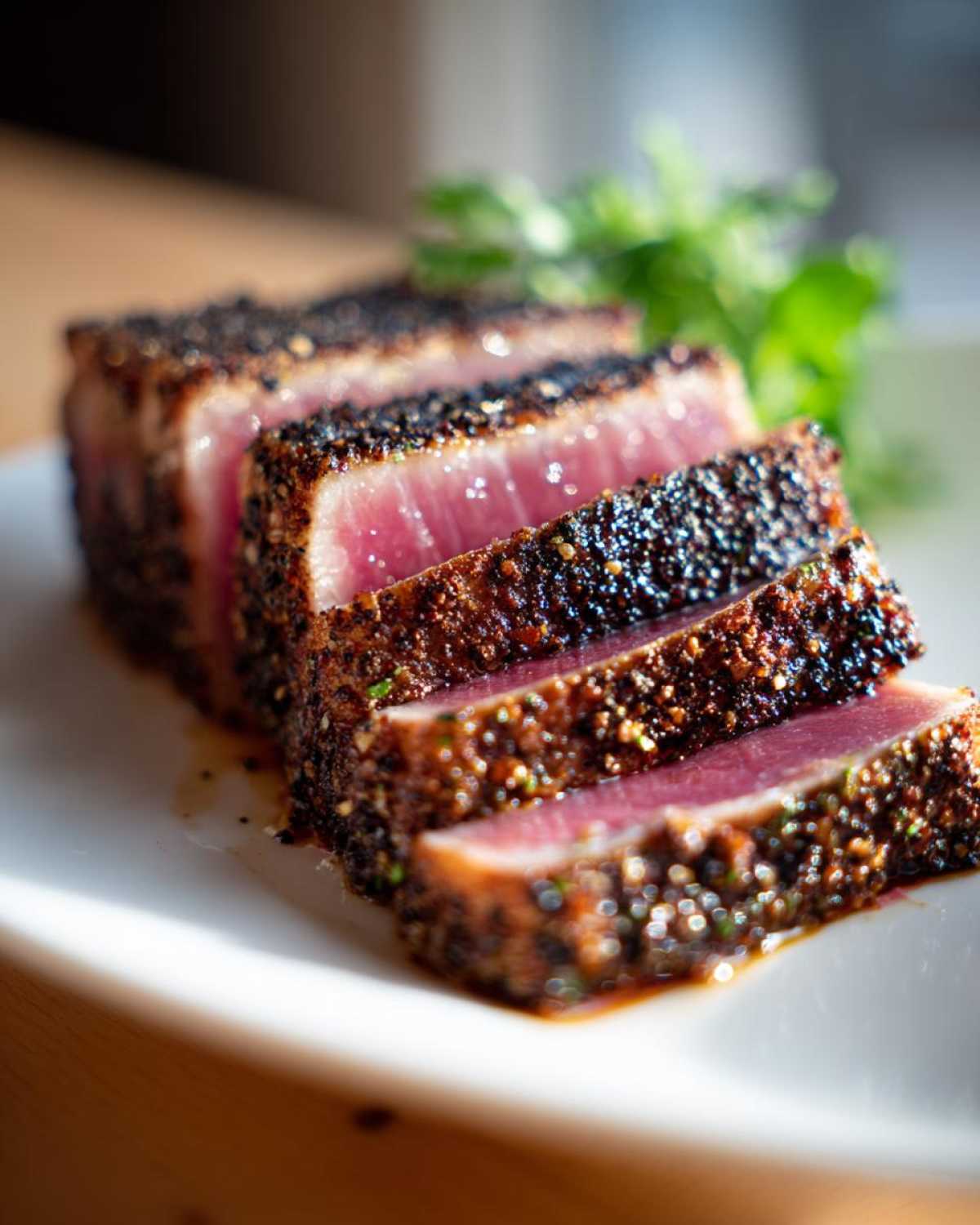
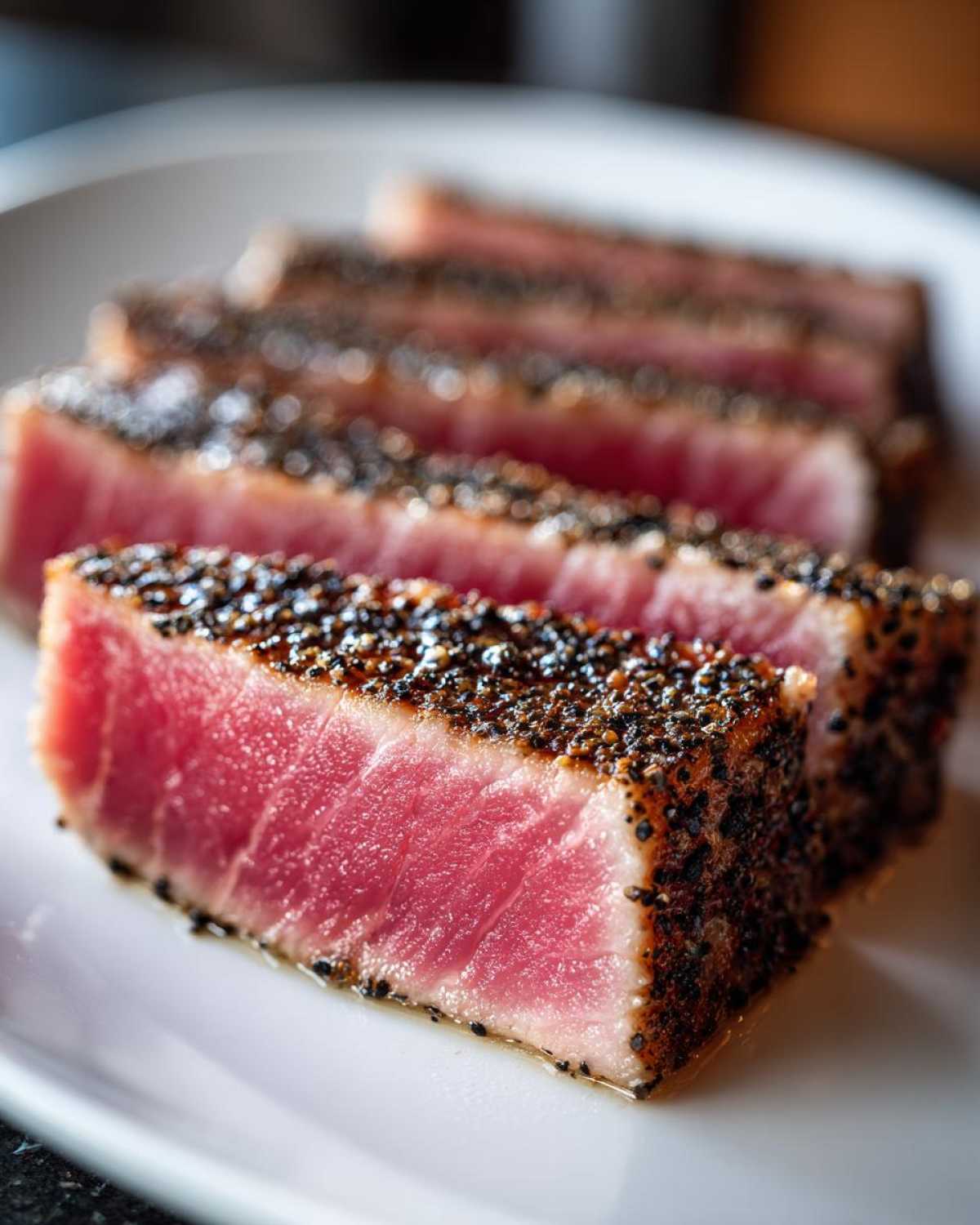
- Perfect Medium-Rare Crust: We’re aiming for that professional-looking, dark, savory sear on the outside. That contrast with the tender inside? Perfection.
- Maximum Flavor, Minimal Ingredients: You only need salt, pepper, garlic powder, and oil to make these tuna steaks shine. No fancy marinades needed to mask fresh fish flavor.
- Super Healthy Main Course: We’re talking huge protein punch with almost no carbs or sugar. It’s the absolute best way to get lean muscle fuel on the table guilt-free.
Essential Ingredients for Perfect Tuna Steaks
The beauty of this recipe is its simplicity—we aren’t masking the flavor of the magnificent tuna loin, we’re just accentuating it! You only need five things here, and getting the quality right makes all the difference. Make sure your steaks are cut about 1 inch thick for this timing to work out perfectly.
- 2 (6 ounce) tuna steaks, about 1 inch thick
- 1 tablespoon olive oil
- 1 teaspoon coarse salt
- 1/2 teaspoon black pepper
- 1/2 teaspoon garlic powder
Ingredient Notes and Substitution Tips
My biggest rule for any quick-cooking fish like this is the quality of the cut. You absolutely want sushi-grade or sashimi-grade tuna steaks if you can find them. That fresh quality is what allows us to cook them so quickly for that perfect, barely-cooked center. If you’re worried about your oil smoking too much on medium-high heat, swap out the olive oil for avocado oil. Trust me, avocado oil has a higher smoke point and won’t burn before your tuna gets its crust!
Step-by-Step Instructions for Seared Tuna Steaks
Okay, this is where the magic happens! Because the cooking time is so short—we’re talking less than four minutes total—it’s essential that you have everything ready to go before you even turn on the stove. If you follow these steps, you can learn exactly how to cook tuna steak perfectly every time. Organization is key for searing!
- First things first: You absolutely must pat those tuna steaks completely dry using paper towels. I mean bone dry! Moisture creates steam, and we want searing, not steaming.
- In a tiny little bowl, whisk together your coarse salt, pepper, and garlic powder until it’s all mixed up nicely.
- Rub that spice blend generously all over every single surface of your tuna steaks. Don’t be shy!
- Get your heavy skillet—I’m telling you, cast iron is your best friend here—hot over medium-high heat. Add the tablespoon of olive oil and wait until it shimmers slightly. That’s your signal!
- Carefully place the seasoned tuna steaks into the screaming-hot skillet. If you hear a good sizzle, you’re doing it right.
- Now, don’t touch them! Let them sear for exactly 1.5 to 2 minutes on the first side for that perfect rare center. Flip, and repeat that quick sear time on the second side.
- Take the steaks out of the pan right away. Set them on your cutting board and let them chill out for about three minutes before you even think about cutting them.
Achieving the Ideal Sear on Your Tuna Steaks
The heat management here is non-negotiable for that amazing crust. You need that **medium-high heat** and oil that is just starting to shimmer—not smoking heavily, but definitely hot enough to create an instant crust when the cold fish hits it. A huge, crucial pro-tip: only cook two steaks at a time unless you have a very large pan. If you cram too many in there, the pan temperature drops instantly, and suddenly you wind up steaming those beautiful ahi tuna steaks instead of searing them. Give them space to breathe!
Resting and Slicing Tuna Steaks for Tenderness
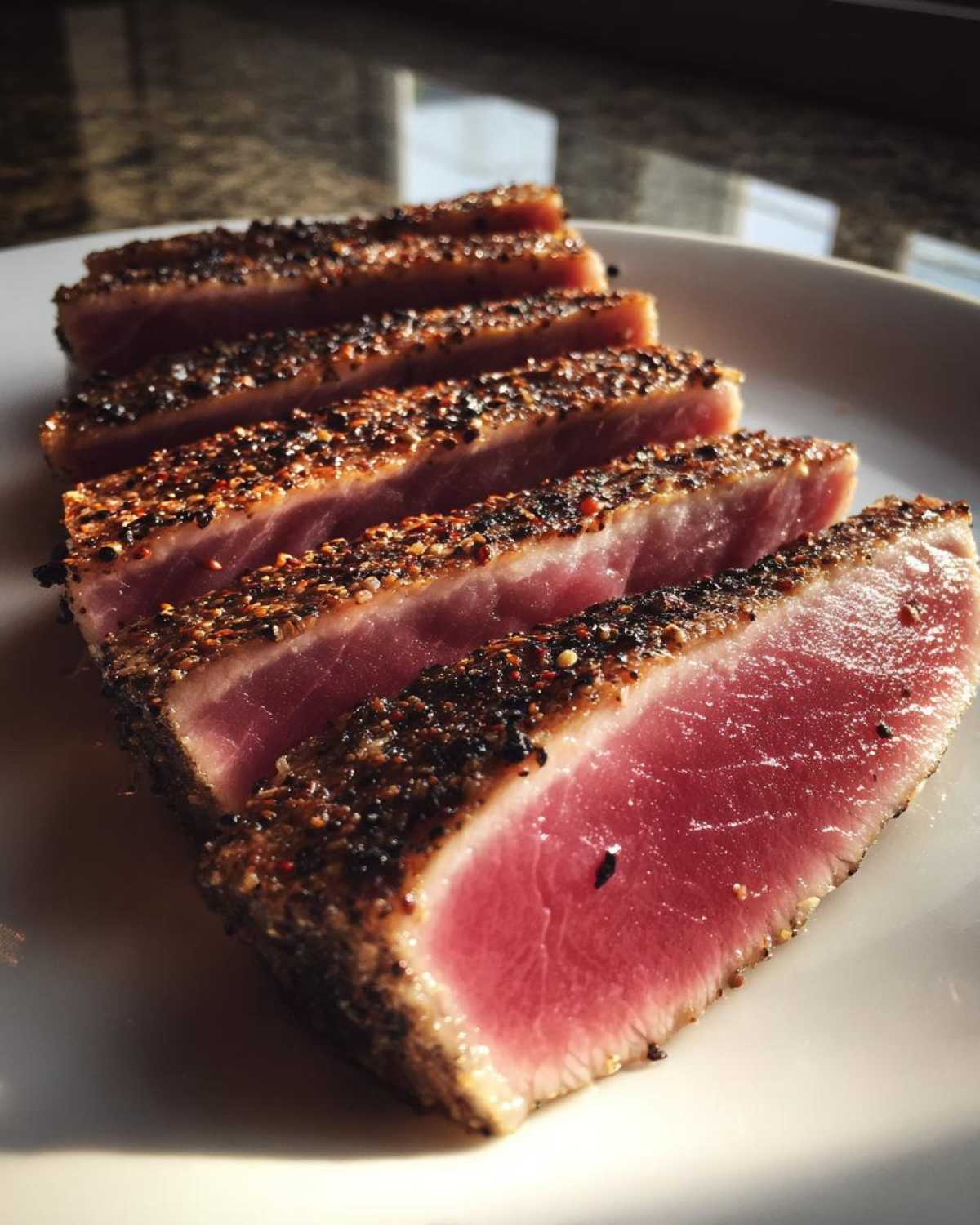
I know it seems silly to rest fish for only three minutes, but those few minutes let any residual heat move evenly through the center. If you slice it right away, all those delicious juices you just worked hard to protect will run all over your cutting board instead of staying in the fish. When you finally do slice, always go against the grain. Finding the direction the muscle fibers run and cutting perpendicularly across them is what gives you maximum tenderness. If you cut with the grain, even perfectly cooked tuna can feel a little chewy!
Tips for Success When Cooking Tuna Steaks
Look, I’ve ruined a few pieces of expensive tuna in my time—we’ve all been there, right? Overcooking tuna is the cardinal sin, and it’s so easy to do when the cooking time is only a few minutes long. These tips are the things I learned the hard way, so you don’t have to! Following these little rules is how you consistently get show-stopping seared tuna steak results.
First, let’s talk equipment. You really, really want a quality heavy skillet. I am obsessed with my cast iron pan for this! Cast iron holds onto heat like nothing else, which is exactly what you need to create that beautiful, dark sear instantly. If your pan isn’t hot enough, the seasoning just sits there and steams the outside of the fish, turning it gray instead of beautifully brown.
Next, remember the dry fish rule we talked about? That’s rule number one for success. If you skip patting it dry, the seasoning won’t stick well, and you’ll slow down that crucial searing process. It needs to be dry as a bone before it hits the salt and pepper blend!
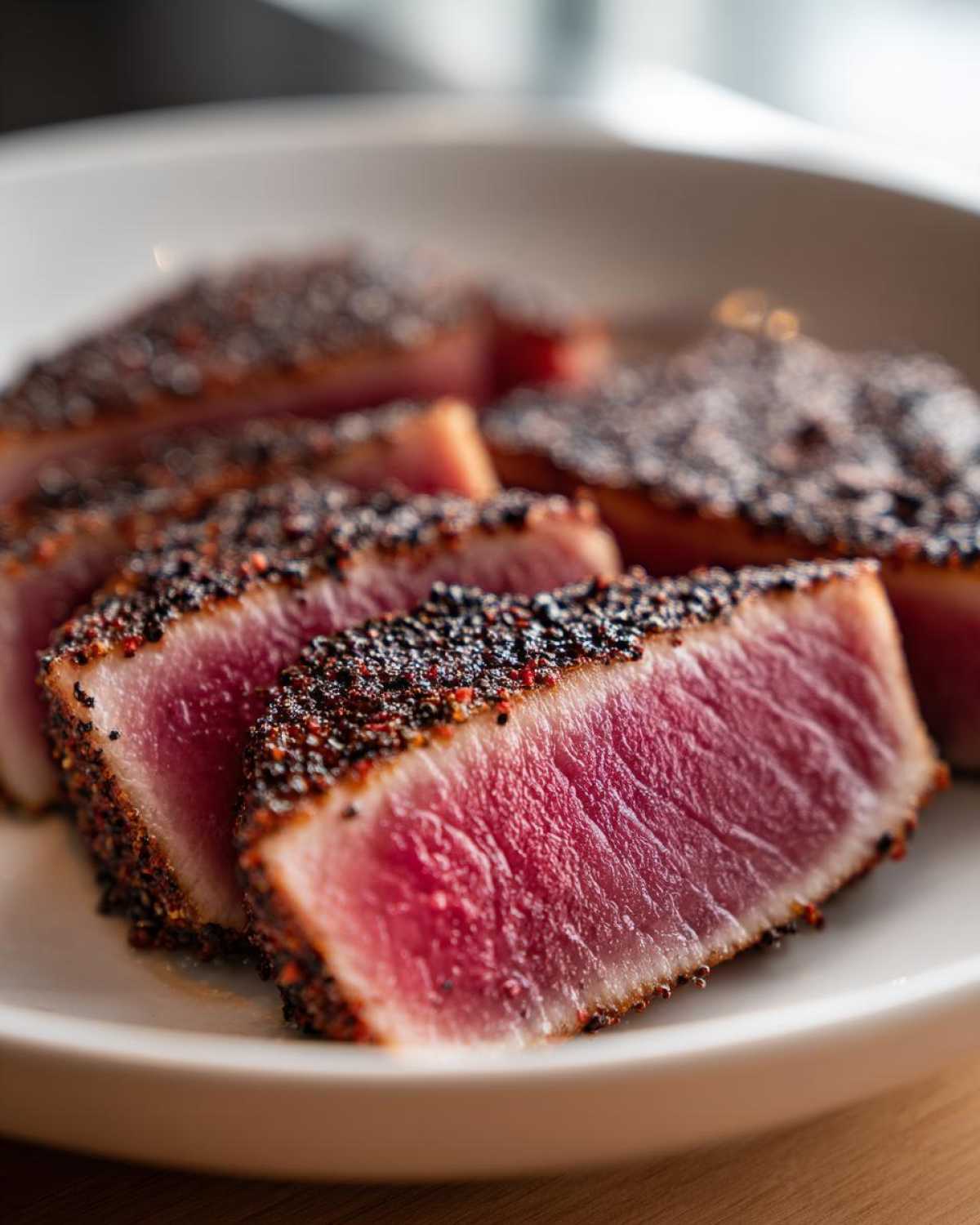
My final, and maybe most important, tip is to constantly watch the clock and trust your eyes over timing if you need to. Tuna steaks cook *so* fast. You are aiming for rare or medium-rare. If you see the color starting to creep more than halfway up the side of the steak, pull it out immediately! It will continue cooking for a minute on the cutting board during resting, so you must pull it off the heat slightly *before* you think it looks done. Better slightly underdone than dry and rubbery!
Serving Suggestions for Your Tuna Steaks
Once you’ve achieved that gorgeous medium-rare centerpiece, you need sides that are going to complement all that clean flavor without weighing the meal down. Since these seared tuna steaks are already a powerhouse of lean protein, we want our accompaniments to keep things light and vibrant. This is when the meal truly becomes one of those fantastic healthy fish recipes!
I never feel like a fantastic piece of fish needs heavy sauces or complicated starches. Here are my go-to pairings that come together just as quickly as the tuna itself:
- Quick Sesame-Garlic Green Beans: Toss fresh green beans in hot olive oil for two minutes, then add a dash of soy sauce and sesame oil right before serving. They should still have a nice snap left in them.
- Simple Spring Mix with Citrus Vinaigrette: A bed of mixed greens, maybe some sliced cucumber, topped with a super light vinaigrette made from lemon juice, olive oil, and a touch of Dijon mustard is perfect. The acidity cuts right through the richness of the fish.
- Lemon-Herb Quinoa: If you need something a little more substantial, make a quick batch of quinoa and stir in some fresh parsley, mint, and a huge squeeze of fresh lemon juice at the end. It’s light, fluffy, and absorbs all the extra juices from the resting tuna beautifully.
Honestly, sometimes I just serve it with a pile of roasted asparagus spears sprinkled with sea salt. As long as the sides are quick and bright, they let your perfectly seared tuna steaks take center stage, which is exactly where they belong!
Storage and Reheating Instructions for Leftover Tuna Steaks
If you manage to have any of these beauties left over—which is rare in my house—you definitely want to treat them kindly. Cooked tuna steaks store best when they are refrigerated right away in an airtight container. Honestly though, they are much better served cold the next day!
I usually just slice up the leftovers cold and toss them onto a salad for lunch. If you *must* reheat them, use a microwave for only about 10 seconds. Any longer, and you risk turning that lovely medium-rare into tough, well-done fish. Keep it quick, or better yet, eat them cold!
Frequently Asked Questions About Tuna Steaks
I get so many questions about cooking tuna because people are terrified of turning it gray! It’s one of those ingredients where knowing the right trick makes all the difference. Here are the things I hear most often from people trying out these quick recipes.
How long do I cook tuna steaks for rare?
This is the most important question! For a standard 1-inch thick tuna steak, I recommend about 90 seconds per side on medium-high heat. That gives you a glorious, cool, raw center. If you push it to 2 minutes per side, you’ll definitely hit that medium-rare mark that most people prefer. Remember, if you’re aiming for a fully cooked steak—which I don’t recommend for a high-quality ahi tuna steak because it gets dry—you’ll need closer to 3.5 or 4 minutes per side. Always err on the side of undercooking!
Can I use frozen tuna steaks for this recipe?
You certainly can, but skipping the thawing process is a recipe for disaster! You absolutely cannot throw a frozen steak into a hot pan; all that ice will instantly lower your pan temperature and steam the fish. You have to thaw them safely in the refrigerator overnight. If you forget, you can use a very cold water bath—keep the steak sealed in its vacuum pack and submerge it in cold water, changing the water every 30 minutes. Never use warm or hot water, as that can start cooking the outside before the inside even thaws. Once thawed, pat them aggressively dry just like you would fresh ones before seasoning for your grilled tuna steak!
What is the difference between searing and grilling tuna steaks?
Searing, like we do in this recipe, gives you a solid, uniform crust across the entire surface, especially great in a flat cast-iron pan. Grilling is more about flavor and those beautiful char marks! When you grill tuna steaks, you get those smoky char lines, but the surface of the fish that sits between the grates might not get as dark a crust as it does in a hot skillet. Both methods are fantastic for medium-rare results in minutes, but searing is faster and more consistent on the stovetop.
Estimated Nutritional Information for Seared Tuna Steaks
I always feel a little bit guilty sharing the nutritional facts because I don’t want anyone skipping this recipe just because they think it’s *too* healthy, you know? But for those of you tracking macros or watching your intake, this is fantastic news: it’s lean, mean, and pure protein! This data is calculated based on the specific ingredients listed—two 6-ounce tuna steaks seasoned simply with oil, salt, pepper, and garlic powder.
Since we aren’t adding any sugars, thick sauces, or breading, these numbers stay incredibly clean. It’s a wonderful, filling meal that fits perfectly into almost any diet plan. Seriously, look at that protein count!
Here’s a quick breakdown per serving (which is one 6-ounce steak):
- Calories: Approximately 200
- Protein: A whopping 35 grams!
- Total Fat: Only about 6 grams (and most of that is the healthy stuff from the olive oil).
- Saturated Fat: Basically negligible, around 1 gram.
- Sugar and Carbohydrates: Zero. Zip. Nada.
- Sodium: About 350 mg (this mostly relies on how much salt you decide to sprinkle on!).
Just remember, these are fantastic estimates, but the actual numbers can shift based on the exact type of oil you use or how generously you season. But the big takeaway is that these seared tuna steaks are a lean, powerful meal ready in minutes!
Share Your Perfectly Seared Tuna Steaks Experience
Now that you’ve mastered the art of the quick sear, I absolutely have to know how they turned out! Seriously, when you take those beautiful tuna steaks off the heat and slice into that perfect pink center, that’s a moment worth sharing. I love seeing your successes because it tells me the little tips I shared actually work for everyone!
Don’t be shy! Head down to the comments section below and leave a rating. Did you manage that perfect 90-second sear? Tell me what sides you chose! If you served these with something amazing, I need the details. Maybe you even decided to try out a different crust, like a sesame seed coating or even a little soy-based rub—if you’re looking for flavor inspiration, I have a fantastic post on quick Asian soy marinades you might want to check out next time!
And please, if you snapped a picture of your beautifully crusted, pink-centered beauty, share it on social media! Tag me so I can see my handiwork out in the wild. Getting that perfect sear is a skill, and you totally earned the bragging rights for making such an elegant, healthy meal happen in basically no time at all. I can’t wait to hear how quickly you dispatched these incredible tuna steaks!
Print
Simple Seared Tuna Steaks
- Total Time: 9 min
- Yield: 2 servings
- Diet: Low Fat
Description
A quick method for cooking tuna steaks to a medium-rare finish with a flavorful crust.
Ingredients
- 2 (6 ounce) tuna steaks, about 1 inch thick
- 1 tablespoon olive oil
- 1 teaspoon coarse salt
- 1/2 teaspoon black pepper
- 1/2 teaspoon garlic powder
Instructions
- Pat the tuna steaks dry with paper towels.
- Mix salt, pepper, and garlic powder in a small bowl.
- Rub the spice mixture evenly over all sides of the tuna steaks.
- Heat the olive oil in a heavy skillet (cast iron works well) over medium-high heat until shimmering.
- Carefully place the tuna steaks in the hot skillet.
- Sear for 1.5 to 2 minutes per side for rare to medium-rare. Adjust time for desired doneness.
- Remove the steaks from the skillet and let them rest on a cutting board for 3 minutes before slicing.
Notes
- For best results, use sushi-grade or sashimi-grade tuna steaks.
- If you prefer a crustier sear, increase the heat slightly and use a higher smoke point oil like avocado oil.
- Slice the tuna against the grain for maximum tenderness.
- Prep Time: 5 min
- Cook Time: 4 min
- Category: Dinner
- Method: Searing
- Cuisine: American
Nutrition
- Serving Size: 1 steak
- Calories: 200
- Sugar: 0
- Sodium: 350
- Fat: 6
- Saturated Fat: 1
- Unsaturated Fat: 5
- Trans Fat: 0
- Carbohydrates: 0
- Fiber: 0
- Protein: 35
- Cholesterol: 70



Comments are closed.