
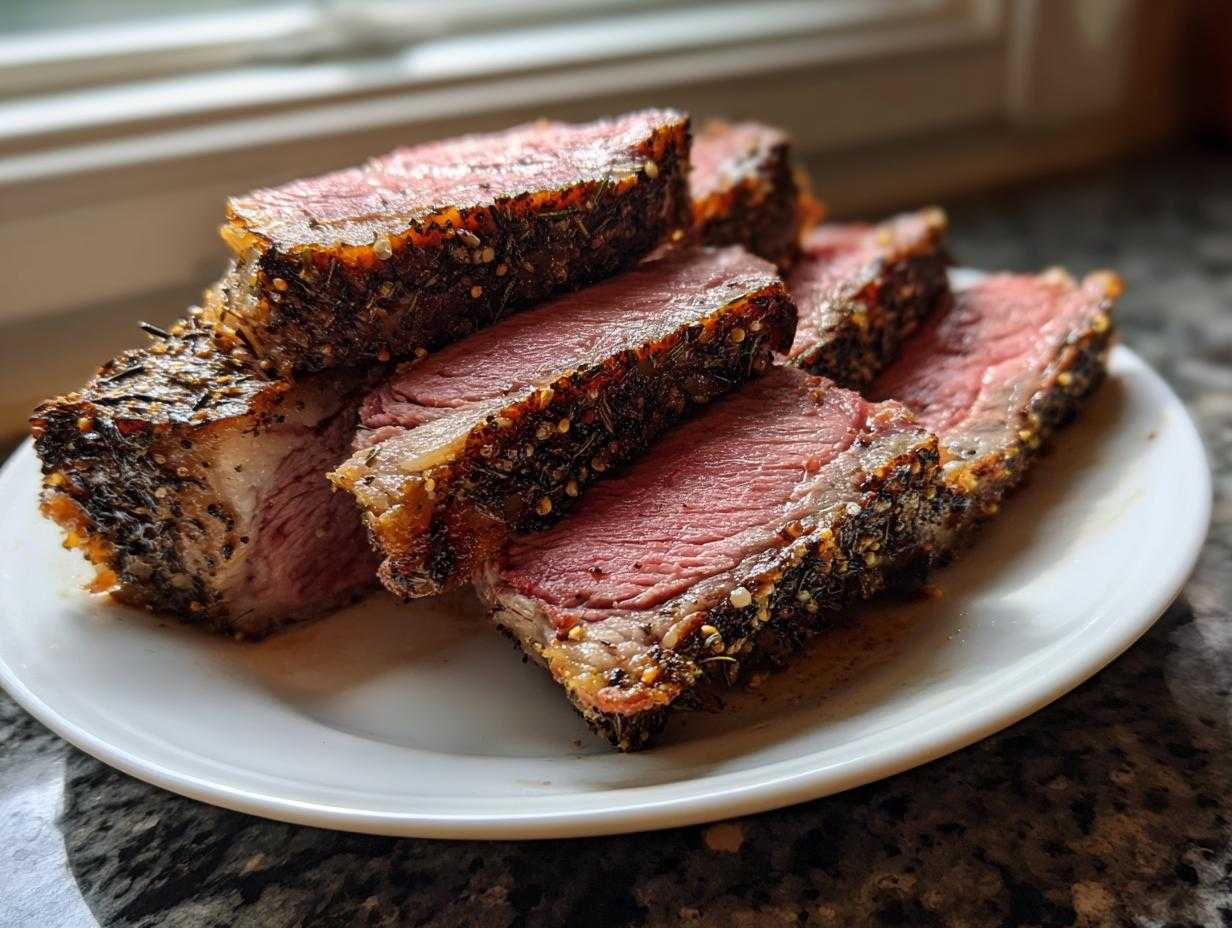
Let’s be real: when you pull a massive, gloriously crusted **rib roast** out of the oven, your whole house just *stops*. It’s the centerpiece, right? It has to be perfect, especially when it’s for Christmas or a big anniversary.
I spent years worrying about dry edges and cold centers. Seriously! But I finally nailed down what I call my ultimate, foolproof method for cooking a **Standing Rib Roast**, and trust me, once you try this two-temperature technique, you won’t look back. This **Prime Rib Recipe** guarantees you get that incredible, salty herb crust sealing in all the juices. It’s the secret to a consistently tender and juicy roast every single time.
Why This Herb-Crusted Rib Roast is the Ultimate Holiday Dinner Main Dish
If you’re looking for a showstopper, stop hunting—this is it! This **Herb Crusted Roast** isn’t just dinner; it’s the reason everyone gathers around the table. It elevates any holiday setting, whether it’s your main **Christmas Dinner Idea** or a fancy Sunday supper. My sister even tried a similar high-heat technique on her steak once when we were testing out different dry rubs—you can check out my notes on that weirdly amazing coffee rub moment!
I used to dread pulling the meat out, praying it wasn’t overdone, but this method takes the guesswork out. It’s what gives you that truly **Juicy Tender Roast** without fail. It’s the best **Easy Prime Rib Method** out there.
Here’s why I swear by this approach for my **Standing Rib Roast**:
- The Perfect Crust: That initial blast of heat at 500 degrees F isn’t just bragging rights; it sets the herbs and the fat cap immediately. It’s a quick way to get amazing browning without overcooking the interior.
- Foolproof Temperature Control: We drop the heat to 325 degrees F right after that 15-minute blast. This gentle, slow finish means the center cooks evenly, avoiding that gray ring of overcooked meat just beneath the surface that ruins a beautiful roast.
- Incredible Presentation: A fat, well-seasoned roast, especially a bone-in one, just looks majestic. It’s the ultimate **Thanksgiving Centerpiece Meat**.
Honestly, mastering this **Oven Roasted Beef** technique changed how I approach big meals. It’s confidence on a platter whenever I cook a **rib roast**!

Ingredients for Your Perfect Rib Roast
Okay, let’s talk about what you need. For a roast this special, you absolutely must start with quality. I always splurge on a bone-in **rib roast**—that extra little bit of bone insulation helps keep things tender, which is key for serving a magnificent **Holiday Dinner Main Dish**.
For the rub, we keep it simple but punchy. Don’t skimp on using fresh herbs here; the dried stuff just won’t give you that bright, savory pop we need. It’s my tried-and-true formula for the best roast crust:
- One (5-7 pound) bone-in **rib roast** (Yes, call it **Prime Rib** when you ask for it!)
- 4 tablespoons unsalted butter, softened until it’s nearly melted on the counter
- 4 cloves garlic, minced super fine—I mean, really mince it!
- 2 tablespoons fresh rosemary, chopped small
- 1 tablespoon fresh thyme leaves
- 1 tablespoon coarse salt (don’t use fine table salt here, please!)
- 1 teaspoon black pepper
- 1 teaspoon smoky paprika
Essential Equipment for How to Cook Rib Roast
Look, you can have the best beef in the world and the fanciest spice blend, but if you don’t have the right gear, you’re taking a huge gamble with a dinner this important. When I first started making this **rib roast**, I tried to get away without the essentials, and boy, did I pay for it.
Don’t let yourself get burned! For a giant piece of meat like this **Ribeye Roast**, you need to equip yourself properly. It really boils down to three non-negotiables for success:
- A Good Roasting Pan: You need something sturdy that can hold the roast up. If you’re using a **Bone In Roast Recipe**, try to place the bones facing down so they act as a little natural rack. If you don’t have one, just use a sturdy rimmed baking sheet—it works in a pinch!
- Aluminum Foil: This is key for the rest period. We need to tent this beauty loosely after it comes out of the oven so all those amazing juices stay where they belong (inside the meat!) instead of running onto the cutting board.
- An Instant-Read Meat Thermometer: This is the single most important piece of advice I can give you for **Mastering Roast Beef**. Forget tapping the side or guessing based on time per pound. These big cuts of meat heat unevenly, and if you want that **Perfect Temperature Roast** (especially aiming for that dreamy 130°F medium-rare), you need an accurate probe inserted deep into the thickest part, avoiding the bone. It’s the only way to ensure you never overcook your centerpiece again!
Step-by-Step Instructions for Your Rib Roast
This is where my old family method really shines and turns you into a **Savory Beef Roast** legend! The secret isn’t crazy ingredients; it’s the timing and the temperature juggling act. Follow these steps exactly, and I promise you this is the **Best Roast Beef Recipe** you’ll ever use for a special occasion.
First, and this is crucial for any **Beef Roast for Special Occasion**, you must take the roast out a good two or three hours before you even think about turning on the oven. That big hunk of beef needs to get close to room temperature so it cooks evenly. If you skip this, you’ll get that notorious cold spot right in the middle!
Preparing the Herb Crusted Rib Roast
While the meat is slowly warming up, get your rub party started! Mix up that softened butter, the garlic, rosemary, thyme, salt, pepper, and paprika until it’s basically a fragrant green-and-yellow paste spread it all over that beautiful hunk of meat. Don’t be shy—press it in firm! Make sure every inch is coated, kind of like frosting a cake.
My biggest piece of expert advice? Before you even start seasoning, if you can, ask your butcher to “French” those bones for you. That means they clean up the meat around the bones, making for way cleaner carving later. If they can’t, no big deal, but it makes that final presentation for your **Christmas Dinner Idea** so much cleaner! Also, pat the whole roast bone-dry with paper towels before the rub goes on; this helps the crust stick better.
The Two-Temperature Oven Roasted Beef Method
Okay, turn that oven up high—let it preheat to a screaming 500 degrees F. Now, pop your **rib roast** in for exactly 15 minutes. This high blast starts developing that incredible crust we talked about. Don’t peek during this time! After those 15 minutes are up, immediately reduce the temperature down to 325 degrees F. Do not open the door when you change the temp; just adjust the dial!
Now, we wait, relying on that thermometer. Keep checking the thickest part of the meat. You are aiming for 125 degrees F for rare, but honestly, if you want that **Perfect Temperature Roast**, aim for 130 to 135 degrees F for medium-rare. Once it hits that number, yank it out! Immediately cover it loosely with foil for a good 20 minutes of resting. Trust me on the rest; it carries over cooks and gets so much juicier. You can learn more about achieving deep, slow-cooked flavor perfection, even though this is fast roasting, over here if you want to look into other methods like slow-cooked amazingness.
Tips for Mastering Roast Beef and Achieving a Juicy Tender Roast
So, you pulled the roast out right on time, it rested beautifully, and now it’s time to carve. This is the moment of truth! Even with the best technique for **How to Cook Rib Roast**, a few little things can still go wrong if you aren’t careful at this last stage.
I remember the first time I cooked a truly huge **Standing Rib Roast**—it was probably eight pounds—for Thanksgiving, and I was terrified. I kept poking it while it rested! But when I finally sliced into it, the center was perfectly pink from edge to edge, and the crust just cracked beautifully. It felt like a miracle! That’s what happens when you respect the temperature and the resting time.
Addressing the dreaded gray ring issue
If you followed the temperature dips, you shouldn’t have much of a gray ring, but if you do, it’s usually because the temperature reduction from 500 to 325 degrees wasn’t fast enough, or you opened the door too often while it was cooking low. Another pitfall is carving too soon! If you cut into that meat before it rests for 20 full minutes, all that beautiful moisture rushes right out onto your board, leaving you with a slightly tougher bite on the outside sections.
The secret to incredible simple au jus
Everyone wants gravy, but I think a perfect **rib roast** demands a simple, flavorful au jus made from its own drippings. Don’t waste what’s left in that roasting pan! Once you pull the roast out, carefully pour off most of the fat sitting on top, but leave the dark, sticky bits stuck to the bottom. That’s pure flavor!
You simply set the pan over two stove burners on medium heat, add about two cups of hot beef broth—something really concentrated is best—and scrape up all those delicious crusted bits stuck to the metal. Seriously, scrape hard! Let that simmer for five minutes. I sometimes add a splash of Worcestershire sauce here for depth. If you’ve ever made my quick steak bites, you know how much a little beefy fond adds to the flavor profile! Skim any remaining fat off the top, and you have rich, custom **Prime Rib Au Jus Sauce** ready to go.
Slicing technique for the whole family
When you finally carve, cut against the grain. If you have a bone-in cut, the grain can sometimes shift direction slightly around the bone, so look carefully. You want thin slices—maybe a quarter-inch thick—for most people. Thick slices of high-quality beef are intense and buttery, and you want everyone to enjoy that rich flavor without feeling overwhelmed.
Serving Suggestions for Your Standing Rib Roast
Okay, you’ve pulled off the most important part—the roast is resting perfectly, and the smell in your kitchen is already making people weak at the knees. Now comes the fun part: deciding what else is going on the table! A massive, beautiful **Standing Rib Roast** deserves side dishes that can stand up to its richness without fighting it.
When I’m making this **rib roast**, I usually think about balancing that heavy, savory beef flavor with something bright, something creamy, and maybe something starchy to soak up all that gorgeous homemade au jus we made. It’s the star, but the supporting cast is what makes the whole show memorable!
For a true **Thanksgiving Centerpiece Meat** vibe, you can’t go wrong with tradition, but I like putting a little spin on things. Here are my go-to pairings that never fail:
- Creamy Potatoes: Forget basic mash. You need something decadent. I often make a huge batch of potatoes au gratin—layers of thinly sliced potato baked in cream, garlic, and Gruyère cheese. It’s rich, yes, but the salty, savory crust of the potatoes is just heavenly next to that smooth, tender **rib roast** meat.
- Something Green and Bright: You need something to cut through the fat! Roasted asparagus with lemon zest is perfect. Or, if you want something a little more unique, try roasted Brussels sprouts tossed with dried cranberries and maybe a splash of balsamic reduction. That sweet-tart burst cleanses the palate wonderfully between slices of beef.
- The Unexpected Casserole: If you’re looking for something deeply comforting that feels traditional but tastes unexpectedly gourmet, you absolutely have to try sneaking in a decadent casserole. I love adapting my recipe for French Onion Soup Casserole—it has that deep caramelized onion flavor and the great cheesy crust that just *begs* to be served alongside a perfectly cooked **Prime Rib**.
- A Simple Vegetable: Sometimes you just want simple. Roasted carrots with brown sugar and thyme is a classic for a reason. The sweetness of the carrots naturally complements the savory herbs on the crust.
The goal here is abundance without being overwhelming. Keep your heavy hitters like potatoes and starches creamy, and let your greens handle the acidity and crunch. Enjoy that magnificent **Oven Roasted Beef**!
Storage and Reheating Instructions for Leftover Rib Roast
Oh, leftovers! This is my favorite part of cooking a huge **rib roast**—not because I don’t love eating it the first night, but because the next day, you get to have steak-quality meat again with zero effort. But we have to treat leftovers with respect, or we ruin the wonderful texture we worked so hard to achieve! You absolutely cannot microwave a big slice of standing rib roast unless you want jerky.
The absolute key to success here is moisture control. If you just wrap a couple of slices in plastic wrap and stick them in the fridge, the outside edges will dry out and stiffen by morning. We need a protective, moist environment for reviving this expensive meat!
The Proper Way to Store Your Leftover Rib Roast
The night you finish carving, get the leftover slices ready for storage. Don’t just toss them in a container—that leads to freezer burn or drying out. You want to wrap them as tightly as you possibly can.
Here’s my process for preserving that perfect medium-rare:
- First, immediately place the slices in a layer, not piled on top of each other, into heavy-duty zip-top bags. Try to get most of the air out—press down hard or use a straw if you need to!
- If the slices are large, I sometimes put a small square of parchment paper between them so they don’t stick together when freezing.
- If you plan to eat them within three or four days, the refrigerator works fine. If you’re saving them for longer, definitely move those bags into the deep freeze. Remember, this is some of the best beef you’ll ever eat, so keep it safe!
Reheating Slices Without Drying Them Out
When it comes time to reheat those gorgeous slices, forget the microwave! We are gently steaming them back to life. This technique is how you keep the meat juicy and tender, even if it’s heading toward well-done because of how thin you sliced it.
When I reheat, I always use a low oven setting—think 275 degrees F. Arrange your slices in a shallow baking dish. Now for the magic:
- Pour just enough beef broth or, even better, some of that rich **Prime Rib Au Jus Sauce** we made earlier into the bottom of the dish, making sure the liquid only comes up about a quarter of the way on the side of the meat.
- Cover the entire dish tightly with foil. You are basically steaming the meat gently in that flavorful liquid.
- Pop it in the oven for about 10 to 15 minutes. You just want it warmed through, not cooked any further. Test a slice after 10 minutes—if it’s warm, you’re golden!
If you want to eat the roast cold later (hello, amazing roast beef sandwiches!), just slice it thinly and enjoy it as is—it’s fantastic that way too!
Frequently Asked Questions About Cooking a Ribeye Roast
I get so many questions about this recipe, which makes total sense because a **rib roast** is an investment, and nobody wants to mess up something this expensive! I tried to cover everything in the steps, but here are a few things people always wonder about right before they start searing that beautiful meat.
Is a bone-in rib roast truly better than a boneless for these results?
Oh, yes, I strongly believe it is! If you look at the ingredient list, one of my little requests was to ask the butcher about a **Bone In Roast Recipe**. The bones act like natural insulation. They help shield the meat closest to them from the intense heat of the oven, giving you a more even cook overall. When I first tried this **Prime Rib Recipe** with a boneless roast, the edges always seemed to cook faster than the center. The bone also adds flavor, though that’s more subtle!
What’s the safest internal temperature for a medium-rare rib roast?
This is the most important question, honestly! For me, the absolute sweet spot for truly luscious, **Juicy Tender Roast** results is 130 to 135 degrees F when you pull it out of the oven. Remember, the roast keeps cooking while it rests—that carryover heat can jump another 5 to 7 degrees. So, pull it out at 125 degrees F if you’re nervous, but 130°F gives you that perfect, rosy pink center. Don’t forget to check out my favorite method for rich, slow-cooked beef if you want to explore other temperature journeys: slow cooker brisket perfection!
Can I skip the initial 500-degree blast?
You functionally *can*, but honestly, why would you? That initial 15-minute sear is what creates the deeply savory crust using the herbs and butter. If you just start at 325 degrees F the whole time, you might end up with a **Savory Beef Roast**, but it won’t have that signature crispy, dark brown exterior that makes this **Standing Rib Roast** so unique. If your oven is old or temperamental, just watch it closely at 500 degrees, but don’t skip it entirely!
How do I make the au jus without fancy drippings?
If you ended up with very little fond (those sticky brown bits) at the bottom of your pan, maybe because the crust didn’t adhere quite as well, don’t panic! You can still make a beautiful, simple **Prime Rib Au Jus Sauce**. After you remove the roast and skim the fat, just use good quality, reduced beef stock or broth. Heat the stock in the roasting pan on the stovetop, scraping up any remaining bits. You can enrich it by whisking in a tablespoon of cornstarch mixed with cold water (a slurry) until it thickens slightly. It won’t be as deep as the drippings version, but it’s still miles better than store-bought gravy!
Estimated Nutritional Data for This Beef Roast for Special Occasion
I always feel a little nervous sharing nutrition facts because, let’s be honest, we make this **rib roast** for sheer deliciousness, not health kicks! When you’re cooking a premium **Prime Rib** like this for a **Christmas Dinner Idea**, you’re focused on flavor and celebration, not counting calories. But, because I try to be transparent about everything in my kitchen—even the indulgent stuff—here is a breakdown based on the ingredients listed for this unbelievably **Savory Beef Roast**.
Please take these numbers with a big grain of salt (pun absolutely intended!). They are rough estimates based on the bone-in cut, the butter in the rub, and standard serving sizes. Actual values can change based on how much beef fat renders off during cooking or which specific cut you managed to snag!
Estimated Nutritional Information (Per 6 oz Cooked Serving)
- Calories: Around 450—Yep, it’s hearty!
- Protein: A whopping 40 grams! Great fuel for a long holiday evening.
- Total Fat: About 30 grams, with 12 grams being saturated fat. That’s where the incredible flavor lives!
- Carbohydrates and Sugar: Zero! The herbs and paprika give us all the flavor we need without any sugar addition in the main roast itself.
- Sodium: Roughly 350mg, mostly thanks to the coarse salt we used in that crust. If you are watching your salt intake, cut that back just a touch.
This rich meat is loaded with protein and iron, making it a real powerhouse meal. So, enjoy responsibly, knowing you’ve created the most amazing **Holiday Dinner Main Dish** possible. If you want to try something completely different but equally satisfying in terms of beef intensity, you should definitely check out how I handle a slow-cooked, fork-tender beef brisket sometime!
Print
Ultimate Herb-Crusted Standing Rib Roast
- Total Time: 2 hr 50 min
- Yield: 8 servings
- Diet: Low Fat
Description
A straightforward method for preparing a tender and juicy standing rib roast with a flavorful herb and garlic crust, suitable for holiday meals.
Ingredients
- 1 (5-7 pound) bone-in rib roast (Prime Rib)
- 4 tablespoons unsalted butter, softened
- 4 cloves garlic, minced
- 2 tablespoons fresh rosemary, chopped
- 1 tablespoon fresh thyme leaves
- 1 tablespoon coarse salt
- 1 teaspoon black pepper
- 1 teaspoon paprika
Instructions
- Remove the rib roast from the refrigerator 2 to 3 hours before cooking to allow it to come to room temperature.
- Preheat your oven to 500 degrees Fahrenheit.
- In a small bowl, combine the softened butter, minced garlic, rosemary, thyme, salt, pepper, and paprika to create the herb rub.
- Pat the entire surface of the roast dry with paper towels.
- Rub the herb mixture evenly over the entire surface of the roast, pressing it firmly into the meat.
- Place the roast, fat side up, in a roasting pan. If using a bone-in roast, try to position the bones underneath the roast to act as a natural rack.
- Roast at 500 degrees Fahrenheit for 15 minutes.
- Reduce the oven temperature to 325 degrees Fahrenheit without opening the oven door.
- Continue roasting until the internal temperature reaches 125 degrees Fahrenheit for rare, 130-135 degrees Fahrenheit for medium-rare (recommended). Use a meat thermometer inserted into the thickest part of the meat, avoiding bone contact. This usually takes about 13-15 minutes per pound at the lower temperature.
- Remove the roast from the oven when it reaches your desired temperature.
- Tent the roast loosely with aluminum foil and let it rest for at least 20 minutes before carving. The internal temperature will rise another 5-10 degrees during resting.
- Carve into thick slices and serve with pan drippings or au jus.
Notes
- For easier carving, ask your butcher to ‘French’ the bones (remove the excess meat between the bones) or remove the bones entirely and tie them back on with butcher’s twine.
- If you prefer a crispier crust, you can briefly place the roast under the broiler for the last minute, watching carefully to prevent burning.
- Use the pan drippings to make a simple au jus by skimming off excess fat, adding beef broth, and simmering briefly on the stovetop.
- Prep Time: 20 min
- Cook Time: 2 hr 30 min
- Category: Main Course
- Method: Oven Roasting
- Cuisine: American
Nutrition
- Serving Size: 6 oz cooked
- Calories: 450
- Sugar: 0
- Sodium: 350
- Fat: 30
- Saturated Fat: 12
- Unsaturated Fat: 18
- Trans Fat: 0
- Carbohydrates: 0
- Fiber: 0
- Protein: 40
- Cholesterol: 130


Comments are closed.