

Oh, the sheer joy of a soft breakfast that doesn’t require a single drop of oil! If you’ve ever stared into a pot of swirling water, only to pull out a sad, watery mess instead of a beautiful, intact egg, welcome! You are so not alone. I used to dread making **poached eggs**; it felt like a secret culinary art reserved only for fancy brunch spots. But trust me on this—once you nail the water temperature and learn the little trick with the strainer, you’ll be poaching like a pro. This guide guarantees you’ll pull out those perfect, pillow-soft egg whites with the gorgeous, runny yolks every single time you try!
Why Mastering Poached Eggs is Essential for Perfect Brunch Recipes with Eggs
Honestly, getting a truly perfect **poached eggs** structure is the difference between a standard morning meal and a show-stopping weekend treat. We’re aiming for that ideal combination: whites set firm enough to hold their shape, but yolks just crying out to burst and envelop everything else on your plate. It’s the crowning glory for so many fantastic brunch recipes with eggs.
Forget those overcooked, rubbery yolks! Learning these simple cooking tips for soft eggs instantly elevates everything from your simple toast to fancy Eggs Benedict. It’s the technique that makes the dish, and once you get it, you’ve unlocked a healthy, delicious way to prepare eggs without fuss or too much fat.
Ingredients for Perfect Poached Eggs: Quality Matters
Okay, let’s talk about what you need for our go-to stovetop method. You don’t need much, but the little bit you *do* need has to be top-notch for the best **poached eggs**. Grab four cups of plain water, about a tablespoon of good, plain white vinegar—not that fancy apple cider stuff this time—and two very large, very fresh eggs. Seriously, if your eggs are old, they’ll just turn into sad white ribbons in the water, so use the freshest ones you can find!
Ingredient Notes and Substitutions for Poached Eggs
That white vinegar? It’s not for flavor, I promise. It’s like a little chemical helper that makes the egg whites firm up super fast when they hit the hot water. If you really hate the thought of vinegar, you can skip it, but you absolutely must use a fine-mesh sieve first. Draining off those extra watery whites is the best substitute because it prevents all that fluffy spread.
The Ultimate Stovetop Method: How to Poach Eggs Successfully
Alright, this is where the magic happens! We’re going to conquer the stovetop method for **how to poach eggs** so they look store-bought perfect. First things first: you need a wide, shallow pot with about four cups of water. Get that water heating up, but listen closely—you want a gentle simmer, not a rolling boil. A hard boil will just tear your delicate egg apart! Add your vinegar now, just a splash, and we are ready for the crucial prep step.
Prepping the Egg for Perfect Poached Eggs
Don’t just crack your egg straight into the water! That’s a rookie mistake that guarantees wispy whites. You need to crack one fresh egg right into a fine-mesh sieve that you’re holding over a little bowl. Let it sit there for about 30 seconds. See that thin, watery stuff dripping out? That’s the part that always spreads and makes a mess! Draining this away is my number one hack for learning how to keep poached eggs together.
Water Temperature and Creating the Vortex for Poached Eggs
Now that your egg is strained, gently slide it into a little cup or ramekin so you can introduce it nicely to the water. Once the water is simmering gently—think tiny little bubbles rising—take a spoon and stir the water rapidly in one big circle to create a nice, strong swirl, or vortex. Right as that swirl starts fading, gently lower your cup right to the water’s edge and slide that carefully prepared egg right into the middle of the swirl. It wraps around itself like magic! For a truly runny yolk, let it cook undisturbed for just about three to four minutes. Pull it out gently with a slotted spoon, dab it on paper towel, and boom—perfection!

Poached Egg Hacks: Troubleshooting Common Failures
Look, even when reading experts, sometimes those little plumes of white still escape, right? It happens! But I’ve collected some solid **poached egg hacks** over the years that have saved my brunch more times than I can count. The number one complaint I hear is about the watery whites or the egg breaking apart when I try to transfer it, which used to happen to me constantly!
I remember the first time I hosted Easter brunch and my **poached eggs** looked more like scrambled clouds. Mortifying! My secret weapon now, which I mentioned earlier, is the fine-mesh strainer. It gets rid of the slack, thin egg white that never sets properly. If your egg still breaks, try lowering it into the water much slower, almost letting it float down, right into the eye of the vortex if you’re using that method. It truly keeps everything together beautifully!
Alternative Ways to Make Poached Eggs Without Cursing
So, the stovetop method is fantastic, but maybe you’re cooking for a crowd, or maybe you just don’t trust yourself near that swirling hot water again. That’s totally valid! I’ve got some super reliable backups that result in an equally excellent, **easy poached egg recipe** that barely requires your focused attention. When I need to make a batch but don’t want the fuss, I completely switch gears.
The microwave is shockingly fast—we’re talking one to two **microwave poached eggs minutes** if you use a little water in a safe dish! I actually first cracked this secret while trying to figure out how to make quick microwave brittle, and realized the concept works for eggs too. You just need a little water, cover it loosely so it steams, and zap it gently. It’s almost cheating, but wow is it effective when you are in a rush!
Oven Poached Eggs Tutorial for Batch Cooking
If you’re hosting a huge brunch event and you need stability, the oven is your best friend. Forget individual swirling pots! Get an oven-safe dish—a muffin tin is perfect for individual servings—and fill the bottom of the tin with about an inch of hot water. Then, just crack an egg directly into each muffin cup. Pop that tray in a preheated oven at about 375°F (190°C). They bake up beautifully firm and neat. It’s an amazing tutorial for getting a big batch of **runny yolk eggs** ready all at once without standing over the stove.
For a slightly different method, you can crack the eggs into individual, lightly greased ramekins sitting inside a larger baking dish filled with hot water—talk about creating a gentle water bath for those **cooking eggs without oil**! You get that lovely gentle steaming effect which makes them so tender and lovely.
Storage and Reheating Poached Eggs for Meal Prep
Guess what? You can—and totally should—make **poached eggs** ahead of time for easier mornings! If I make a big batch, I let them cool slightly, then carefully submerge them in a bowl filled with ice water. They keep great in the fridge for a couple of days like that! When it’s time to eat, skip the microwave! You just want to warm them up gently, so drop them into a bowl of hot tap water—not boiling, just hot—for about 60 seconds. They warm right through and keep that perfect texture. It’s the secret to fast meal prep breakfasts!
Serving Suggestions: Versatile Egg Dishes
Now that you have these absolutely gorgeous, jiggly **poached eggs**, you can’t just let them sit around! The key to celebrating them is serving them up immediately so that yolk can do its glorious job. My favorite simple way is just on toasted sourdough with a sprinkle of sea salt and chili flakes, but they are critical for a lot of other things too.
They are incredible on top of bright, fresh salads for lunch, or as the star of a proper Eggs Benedict. If you’re building one of those epic, layered breakfast bowls, you need a perfectly **poached eggs** topping. Seriously, try putting one on top of some roasted sweet potatoes and avocado—it makes the ultimate best breakfast bowls topping!
Frequently Asked Questions About Poached Eggs
I know you still might have a few little worries running around your brain—we all do when trying a new technique! Don’t fret, I’ve collected the questions I get asked most often about making **perfect poached eggs**.
Can I make poached eggs without vinegar?
Absolutely, you can! Like I mentioned above, the vinegar is just a little insurance policy. If you use the finest, freshest eggs and remember to strain off those watery bits in a fine-mesh sieve first, you’ll get great results without using any vinegar at all. Some people worry about the slight tang, so skipping it is totally fine for this healthy egg preparation!
How long do poached eggs last in the fridge?
If you cook them perfectly and store them right away submerged in cool water in an airtight container, they are usually good for up to two days in the fridge. The trick is reheating them gently in hot—not boiling—water, which keeps them tasting just-made. This is a great trick for quicker breakfast egg techniques for busy mornings.
What makes the yolk runny?
That beautiful, oozy center is all about timing! For a standard large egg, if you cook it at a gentle simmer (just barely bubbling) for three to four minutes, you should hit that sweet spot for a fantastic **runny yolk eggs** experience. If you like them just slightly less liquid, aim closer to four and a half minutes, but don’t go past five!
Why do my poached eggs look stringy?
Stringy whites mean you waited too long after cracking the egg to get it into the water, and those thin outer whites started spreading out and cooking separately. Or, your eggs just aren’t that fresh! Remember the sieve trick? That almost entirely fixes the stringy issue by letting the watery white drain away before it even hits the pot. It’s the best of all the **poached egg hacks**!
Estimated Nutritional Data for Poached Eggs
Now, I know you aren’t likely making **poached eggs** for their fiber content, but it’s good to know what you’re eating! This is just a basic estimate for one standard large poached egg, made using the water and vinegar method with no added fats. Because we aren’t using oil or butter, these are wonderfully prepared **cooking eggs without oil** and keep the count down. So, one egg comes in right around 72 calories, with about 6.3 grams of fantastic protein. Quick, easy, and guilt-free!
Print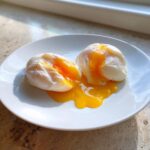
The Ultimate Guide: How to Poach Eggs Perfectly Every Single Time
- Total Time: 13 min
- Yield: 2 servings
- Diet: Low Fat
Description
Learn the best techniques for poaching eggs to achieve firm whites and runny yolks consistently, covering traditional and alternative methods.
Ingredients
- 2 large fresh eggs
- 4 cups water
- 1 tablespoon white vinegar
- Pinch of salt (optional)
Instructions
- Fill a wide, shallow pan with 4 cups of water and bring it to a gentle simmer, not a rolling boil.
- Add 1 tablespoon of white vinegar to the water; this helps the egg white set quickly.
- Crack one egg into a fine-mesh sieve set over a bowl to drain any thin, watery white. Discard the drained liquid.
- Gently slide the strained egg from the sieve into a small ramekin or cup.
- Create a gentle vortex (swirl) in the simmering water using a spoon.
- Carefully lower the ramekin to the water’s surface and gently slide the egg into the center of the swirl.
- Cook undisturbed for 3 to 4 minutes for a runny yolk. Adjust time for desired doneness.
- Use a slotted spoon to carefully lift the poached egg from the water.
- Place the egg on a plate lined with a paper towel to drain excess water.
- Repeat the process for the second egg, refreshing the water if necessary.
Notes
- Use the freshest eggs possible; older eggs have thinner whites that spread more easily.
- If you prefer not to use vinegar, use slightly less water and ensure the simmer is very gentle.
- To reheat pre-poached eggs, place them in a bowl of hot (not boiling) water for one minute.
- Prep Time: 5 min
- Cook Time: 8 min
- Category: Breakfast
- Method: Stovetop Poaching
- Cuisine: General
Nutrition
- Serving Size: 1 egg
- Calories: 72
- Sugar: 0.6
- Sodium: 71
- Fat: 4.8
- Saturated Fat: 1.6
- Unsaturated Fat: 3.2
- Trans Fat: 0
- Carbohydrates: 0.4
- Fiber: 0
- Protein: 6.3
- Cholesterol: 186


Comments are closed.