
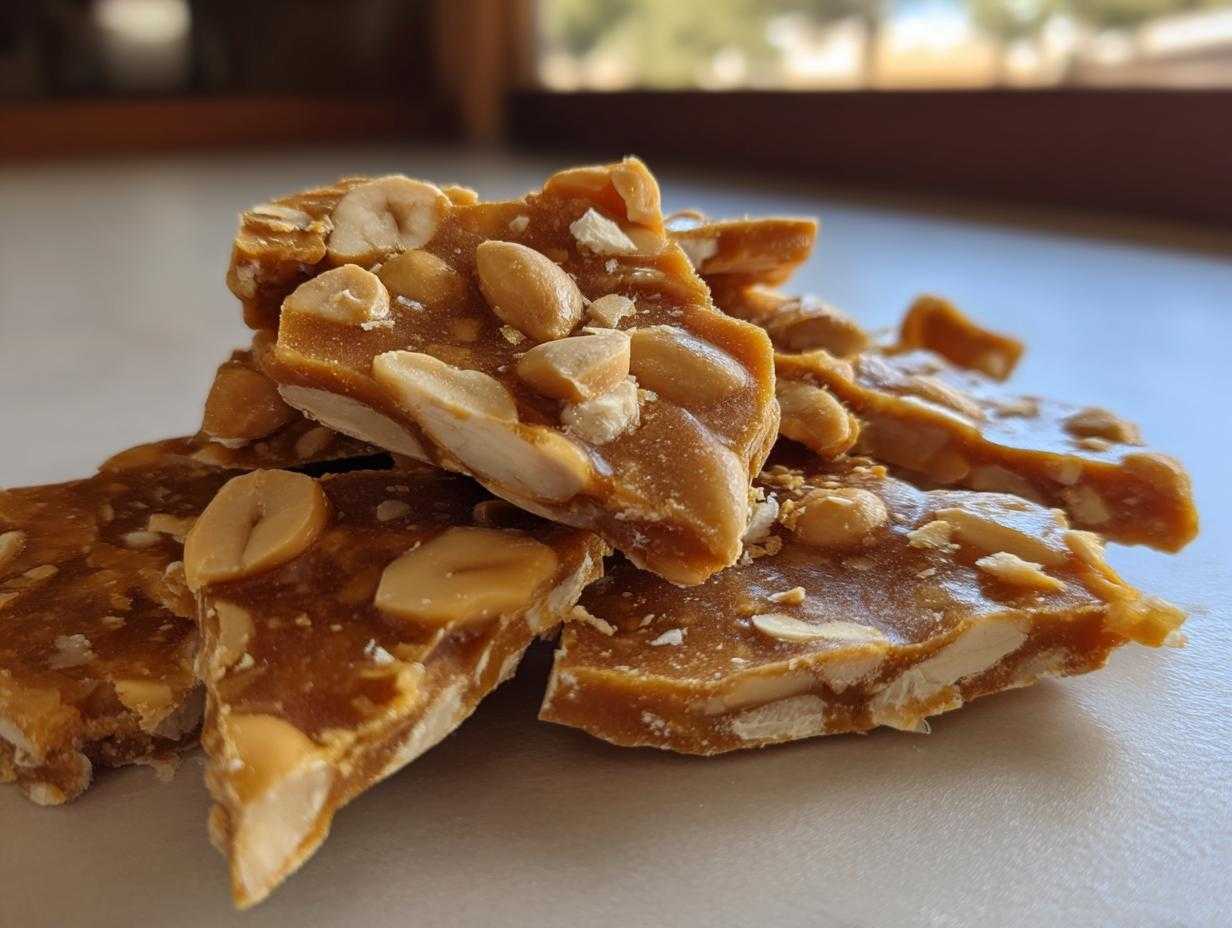
Oh my gosh, is there anything better than that sound? You know, that sharp, satisfying *CRACK* when you break off a piece of peanut brittle? It has to shatter! If it bends even a little bit, well, that’s just sad chewy junk, and we don’t make that here. I spent years messing around with sugar syrup until I finally figured out the secret, and trust me, it all comes down to heat control. This **peanut brittle recipe** isn’t just a list of ingredients; it’s your absolute ticket to that classic, old-fashioned, shattering crunch. I remember the first time I learned to trust the thermometer instead of just guessing—the brittle came out perfect! Get your candy thermometer ready; we’re going the extra mile for that perfect snap.
Why This is the Best Peanut Brittle Recipe for a Perfect Snap
If you want that guaranteed, perfect, loud snap, you have to respect the science of candy making. Lots of **homemade peanut brittle** recipes end up soft or sticky because they stop cooking too soon. This recipe is different because we are obsessive about hitting the specific thermal tipping point that transforms syrup into glass-like sugar. I learned the hard way that humidity plays a role, but if you nail the temperature, you get truly **shattering peanut brittle** every time. Forget those sticky messes; we are aiming for pure sweetness and crunch that stays perfect for weeks!
For those of you interested in the finer points of candy making techniques, this section shows you why we get that glorious texture.
Achieving the Hard Crack Stage in your peanut brittle recipe
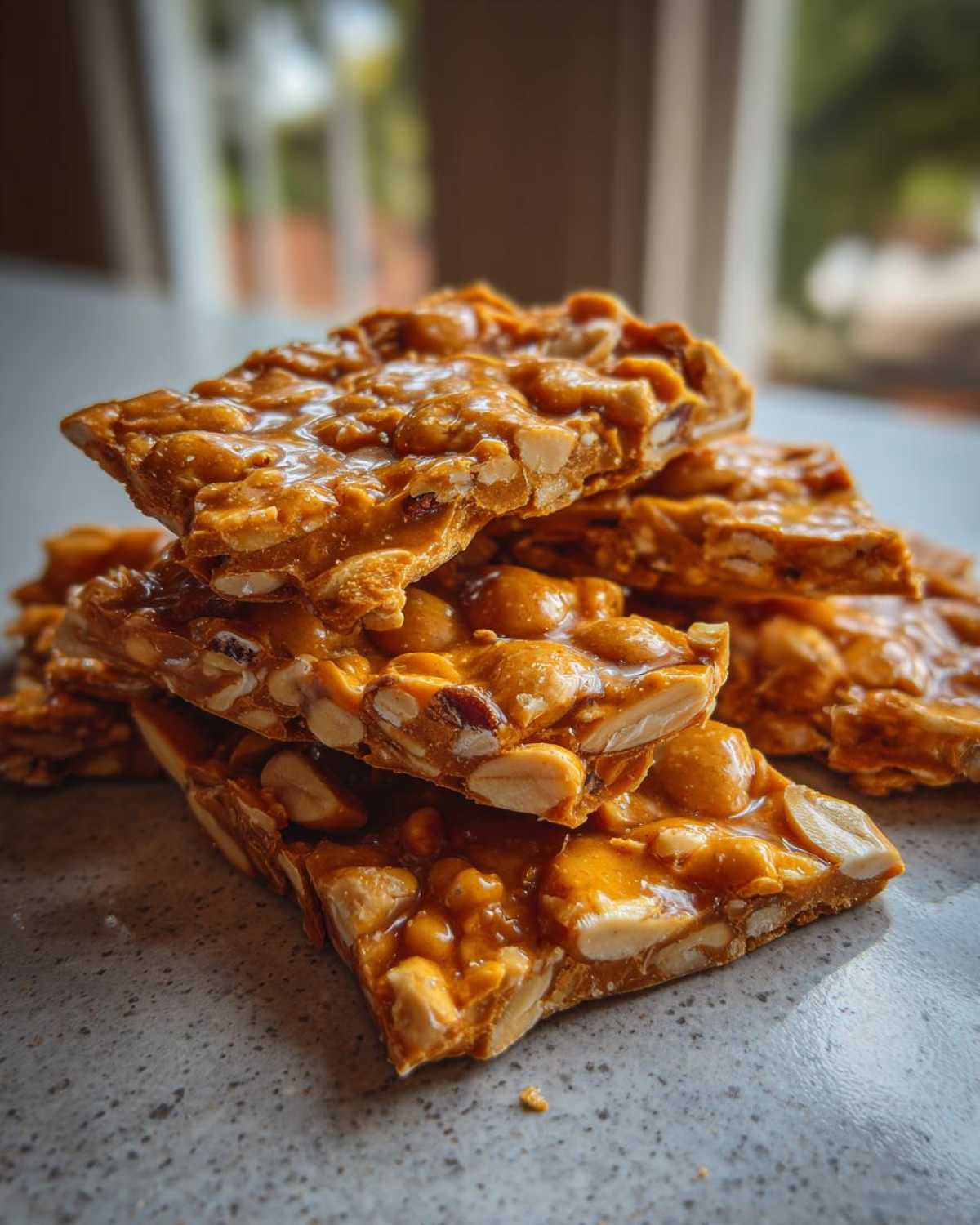
Listen closely: the magic number is 300 degrees Fahrenheit—that’s 149 degrees Celsius. This is called the hard-crack stage, and it’s non-negotiable for that classic **peanut brittle with snap**. If you pull the pot off the heat just shy, maybe at 290°F, you’ll end up with a chewy, disappointing slab. You *must* use a reliable candy thermometer. We build all the structure for that clean break when the sugar reaches this exact temperature, ensuring absolutely **no chew peanut brittle**.
The Role of Baking Soda in Crunchy peanut brittle recipe
The absolute second you take the pot off the heat, we introduce the baking soda. This might seem tiny, but it’s huge! When that hot syrup hits the baking soda, it reacts immediately, creating thousands of tiny air bubbles very quickly. These bubbles are what make your **old fashioned peanut brittle** light and fragile, allowing it to break cleanly instead of melting back into a dense lump. It puffs up like a volcano—so be ready!
Simple Peanut Brittle Ingredients for Your classic candy recipe
The beauty of making this **classic candy recipe** at home is that you probably have almost everything in your pantry already! We aren’t messing around with fancy molasses or wild extracts here—just pure, simple ingredients dedicated to creating that perfect caramel flavor and delicate crunch. The key is using standard pantry staples and making sure your measurements are spot on, especially with the sugar and syrup. Having everything ready is vital because once we get to the final steps, things move fast! You can find a quick guide on where I source my favorite low-cost items here at simple peanut brittle ingredients.
- 2 cups granulated sugar
- Exactly 1 cup light corn syrup—don’t try to substitute this!
- 1 cup plain water
- 1 teaspoon baking soda (measured perfectly!)
- 1 teaspoon vanilla extract
- 1/2 teaspoon salt
- A generous 2 cups unsalted, shelled peanuts (that’s the main event!)
- 1 tablespoon butter, just for getting the pan ready
How to Make Peanut Brittle at Home: Step-by-Step Instructions
Okay, now we get to the fun, slightly frantic part! Making this **homemade peanut brittle** is a dance, and you have to know your steps because things cook fast once they get hot. The most important thing I can tell you is to have your baking sheet completely ready—oiled, tools standing by—before that sugar even thinks about hitting 250 degrees. We are moving with purpose from start to finish. You can check out my full breakdown on how to make peanut brittle at home later, but for now, follow this sequence precisely.
Preparation and Initial Syrup Cooking for peanut brittle recipe
First, you need to grease that baking sheet thoroughly, or use parchment paper if you prefer. Once that’s done, grab your biggest, heaviest saucepan. Combine your sugar, corn syrup, and water. Stir it gently just until the sugar crystals disappear, which is usually before the heat even comes on big. Once the stirring stops and the mixture is boiling, DO NOT STIR AGAIN! Seriously, don’t touch it! Stirring now encourages crystals to form, and that will ruin your **caramelized sugar candy** by making it cloudy or grainy. Just let it boil away until it hits that first sweet spot.
Reaching Hard Crack Stage in this crunchy peanut brittle recipe
We’re aiming for deep color and that crucial temperature reading. Once you see the syrup bubbling happily, keep your thermometer snug. We want to pass 250°F (soft-ball stage) on our way up. Once you hit 250°F, add your peanuts! Now you stir constantly because the peanuts need to cook evenly. Keep watching that thermometer climb toward 300°F. That final temperature is what makes this the **best peanut brittle recipe**; it ensures the sugar has fully dehydrated for that rock-hard texture. Don’t overshoot 300°F, or you risk burning the batch!
The Quick Finish and Spreading of the peanut brittle recipe
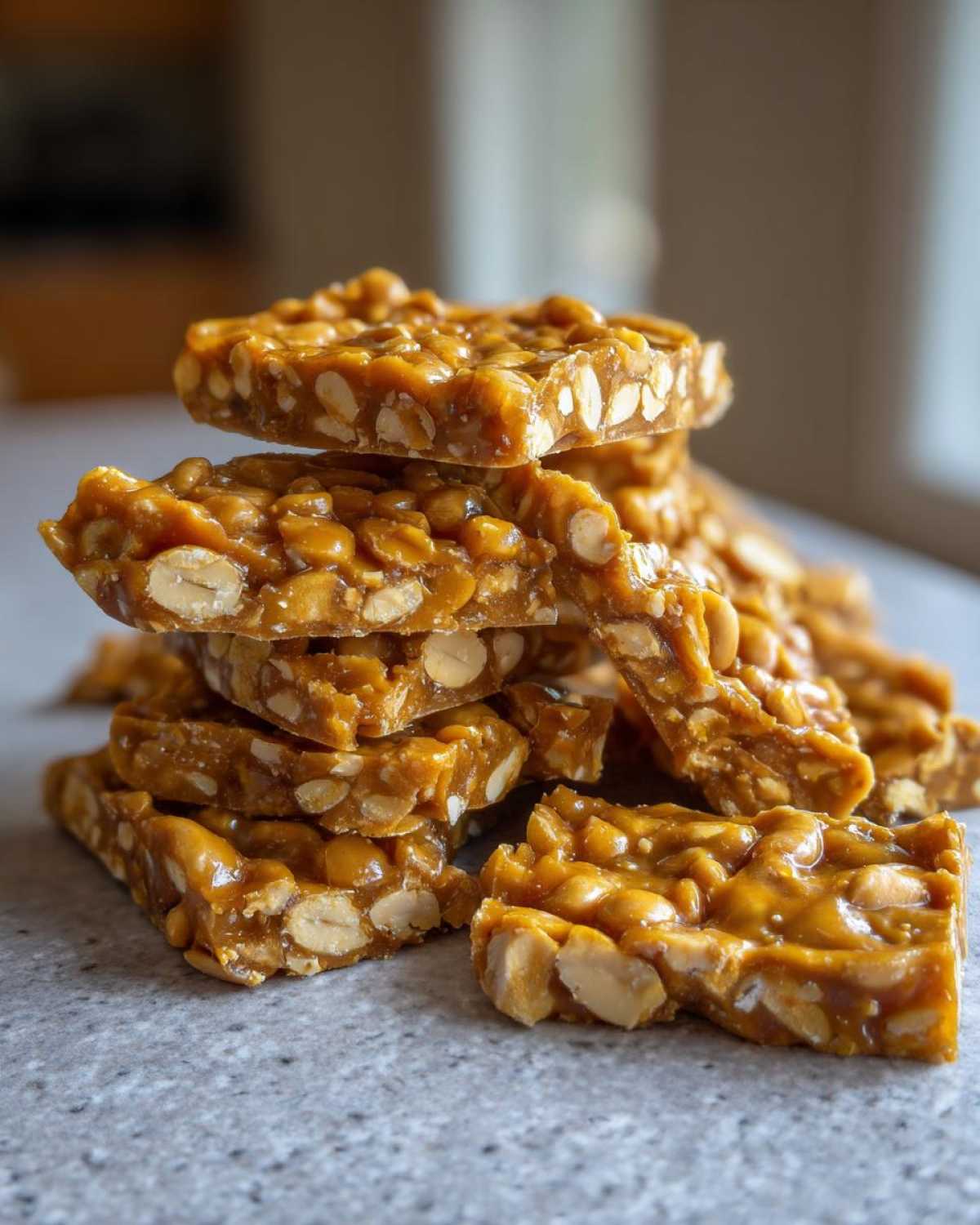
The second that thermometer hits 300°F, yank that pot off the burner! Seriously, move fast now. Immediately stir in your vanilla, salt, and that magic baking soda—it will foam up like crazy! You must mix it quickly and pour it *immediately* onto your prepared sheet. Do not scrape the bottom of the pan! If you leave even a drop behind, it solidifies into rock candy stuck to the sides. Use your spatula quickly to spread the hot mixture into a thin layer—thinness is key for incredible crunch—and then just walk away. Let it cool completely!
Tips for Success with Your old fashioned peanut brittle recipe
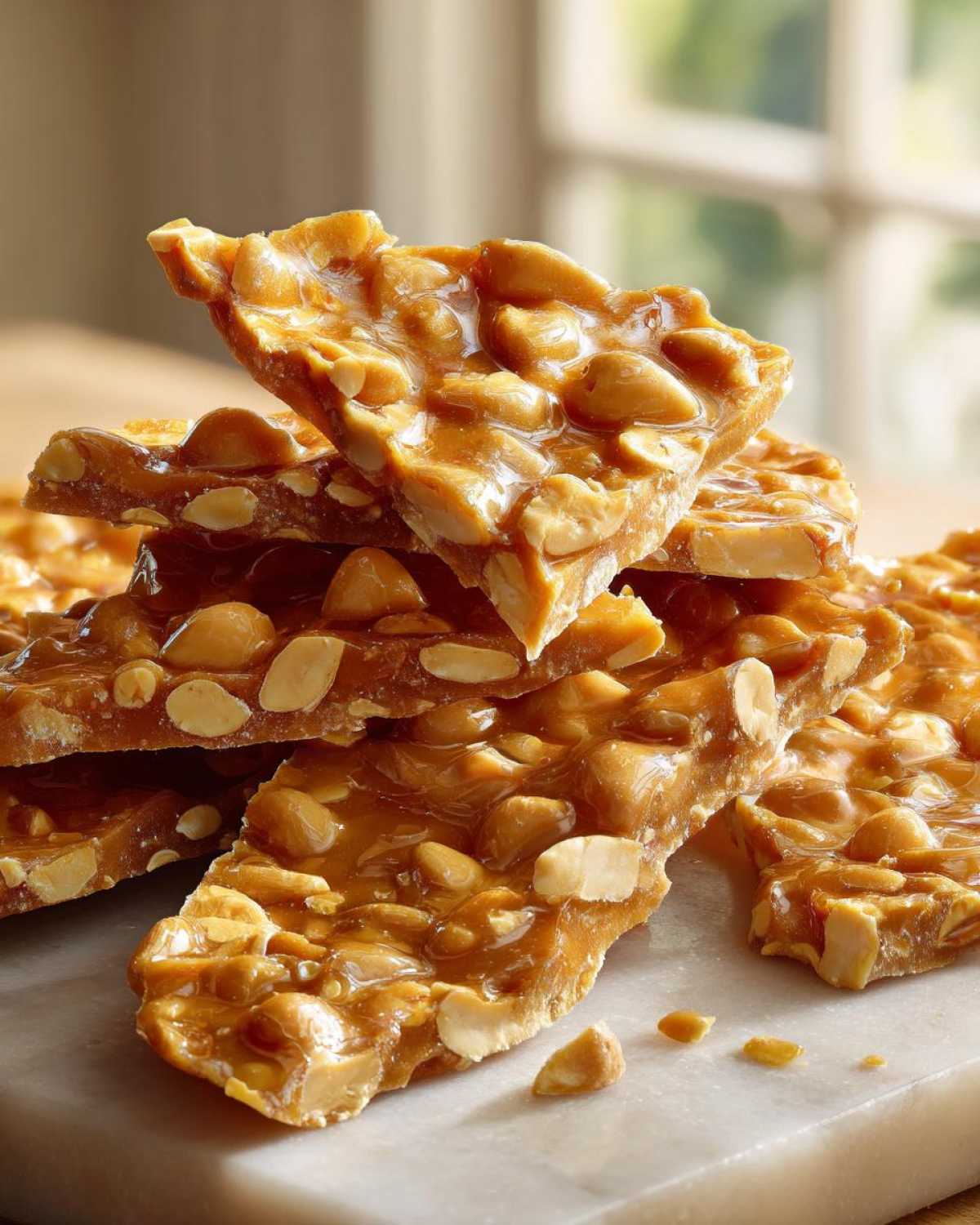
I know candy making sounds intimidating, but honestly, most people mess up because they rush or don’t trust their tools. For this **old fashioned peanut brittle recipe**, you need to commit to two things: perfect preparation and trusting that thermometer. If you get those locked down, you’re basically ready to start making these for **homemade candy gifts**!
Don’t try to wing the temperature, please. I’ve been baking since I was little, and even I need my trusted candy thermometer. If you don’t hit that 300°F mark, you are guaranteed a sticky mess. Also, I can’t stress this enough: have that baking sheet prepped and ready right next to the stove before the mixture even simmers. When that baking soda hits, the clock starts ticking, and you do *not* want to be hunting for parchment paper at that moment. For more easy wins, check out my tips for those ready to try their first batch at brittle recipe for beginners.
Humidity is another factor! If it’s super rainy or muggy outside, your sugar might not dry out properly, leading to that dreaded chewiness. If you can sneak in a batch on a dry day, you’ll have the most amazing, clean-breaking brittle you’ve ever tasted.
Storage and Making Homemade Candy Gifts with peanut brittle recipe
Okay, once you’ve managed that amazing, loud snap—don’t let humidity steal your victory! The absolute enemy of perfectly **crunchy peanut brittle** is moisture in the air, so storage has to be perfect. You need an airtight container, no question. I usually place a small square of parchment paper between the layers if I stack them, just so they don’t stick together while resting overnight.
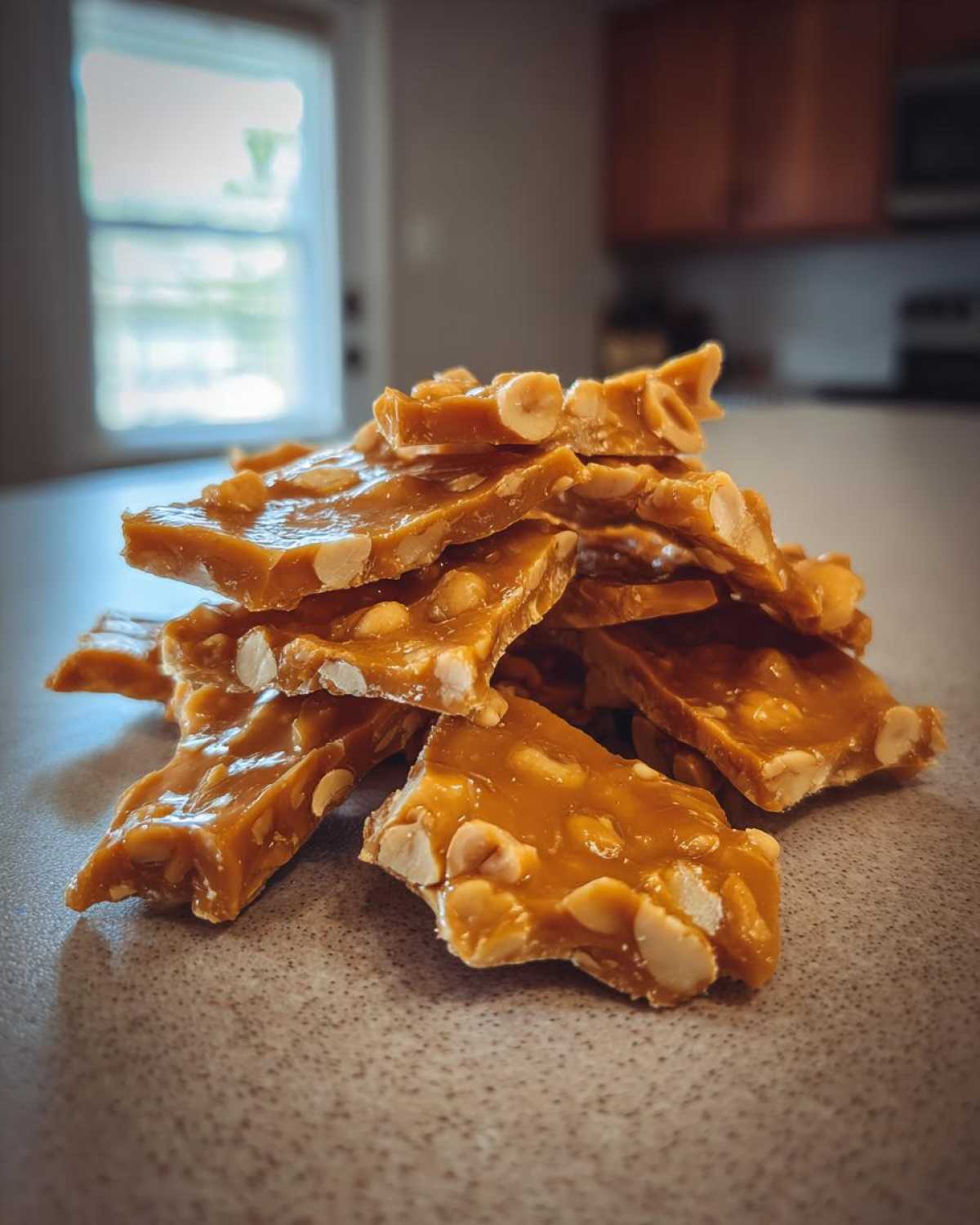
If this batch is for you, just seal it up and keep it in a cool, dark pantry. But this brittle is the absolute star of the **holiday candy recipes** marathon! If you’re planning on giving these away as **homemade candy gifts**, I highly suggest wrapping each individual piece in wax paper or cellophane before sticking them in a cute tin. That little bit of extra barrier works wonders for keeping the crispness locked in until Christmas morning. Everyone goes nuts for this!
You can definitely find some darling packaging ideas for that special touch over here: homemade candy gifts. Once sealed tight, this stuff lasts for weeks, which is more than I can say for the cookies!
Frequently Asked Questions about this peanut brittle recipe
Can I make this easy peanut brittle recipe without a candy thermometer?
Oh, I wish I could tell you yes, but honestly, for this specific **easy peanut brittle recipe** that guarantees that perfect shatter? No. If you want to avoid that sticky, chewy mess, you absolutely must adhere to the 300°F hard-crack stage. Trying to guess by the old ‘cold water test’ is such a gamble, and you risk wasting all those great peanuts!
The cold water test is where you drop a bit of syrup into cold water to see if it forms a hard ball. It works okay in theory, but temperature changes too fast when you’re working with sugar. If you skip the thermometer, you’re just hoping, and we never hope in candy making—we **know**! Trust me, buying a cheap candy thermometer is the best $10 you’ll ever spend on baking gear.
What kind of peanuts work best for this buttery peanut brittle recipe?
For this **buttery peanut brittle recipe**, you want standard, raw, shelled peanuts. They absorb the sugar syrup beautifully and have that perfect underlying nutty flavor that pairs so well with the caramel notes. They are the workhorse of this operation!
Now, here’s a little pro-tip if you want to go slightly above and beyond for a richer taste: you can lightly toast the raw peanuts in a dry skillet for about five minutes before you start the actual candy process. That little bit of extra heat really wakes up their oils, making your final product taste like the best **toasted peanut brittle**. Just make sure they cool down before you toss them into that hot sugar!
My peanut brittle turned out chewy. What went wrong with my classic candy recipe?
Ugh, that is the worst feeling, isn’t it? When you pull that slab out and it bends instead of breaking? I’ve been there! Ninety-nine times out of one hundred, the reason your **classic candy recipe** went soft is temperature related. You likely stopped cooking before you hit that critical 300°F mark. The sugar just wasn’t cooked long enough to evaporate all the moisture needed for the glass-like structure to form.
The other big culprit for a chewy result is moisture in the air. Sugar is hydroscopic, meaning it loves to suck up water. If you attempt this on a super rainy or horribly humid day, the sugar traps that extra dampness right in the brittle. If you have a choice, always try to make this **peanut brittle recipe** on a dry day. That’s your best bet for a guaranteed, perfect snap!
Estimated Nutritional Data for your peanut brittle recipe
Now, I know when we’re making something this delightful and sugary, we aren’t usually counting calories, but it’s good to have a rough idea of what you’re enjoying! I pulled these numbers straight from my standard analysis of the ingredients used in this **homemade peanut brittle**. But, you have to remember, this is just an estimate based on using standard store-bought items and serving sizes. Your exact results might vary a little depending on how thinly you spread the final batch!
Because we use such simple ingredients—mostly sugar and peanuts—the breakdown is pretty straightforward, giving you that perfect balance of sweetness and protein. Here’s what you can generally expect for one ounce serving:
- Serving Size: 1 ounce
- Calories: Around 150
- Sugar: Roughly 18g
- Total Fat: About 8g
- Protein: A solid 3g
- Carbohydrates: Around 19g
- Cholesterol: 0mg (Yes, zero! That’s a win.)
Look at that—a little bit of protein from the peanuts is helping balance out all that glorious, crunchy sugar. It’s the best way to enjoy a sweet treat, in my opinion. It makes just under a pound of candy, so you get quite a few little treasures out of one go!
Share Your Crunchy Peanut Brittle Results
Well, there you have it—the blueprint for the most satisfying, absolutely **shattering peanut brittle recipe** you’ll ever make! I really hope you tried it, and more than that, I hope you achieved that beautiful, loud snap we talked about. If you followed the temperature guide and didn’t cheat on the bake time, I know you did!
Now is the time to celebrate your victory over sticky sugar! Please, please, please leave me a little note in the comments below. I absolutely love hearing which batch number was the charm, or if you managed to get your kids to stop sneaking the peanuts before they went into the syrup. Did you try it as one of your **homemade candy gifts**? Let me know how people reacted!
If you managed to nail that perfect texture, I want to see it! Tag me on social media when you share photos of your finished pieces. You can also give this guide a quick rating so other bakers know this truly is the best peanut brittle recipe for a guaranteed crunchy result. Happy snapping, everyone!
Print
The Ultimate Crunchy Old Fashioned Peanut Brittle Recipe (Perfect Snap Guaranteed)
- Total Time: 35 min
- Yield: About 1 pound
- Diet: Vegetarian
Description
Follow these steps to make classic, old-fashioned peanut brittle that achieves a perfect, satisfying snap every time. This recipe relies on accurate temperature control for a non-chewy result.
Ingredients
- 2 cups granulated sugar
- 1 cup light corn syrup
- 1 cup water
- 1 teaspoon baking soda
- 1 teaspoon vanilla extract
- 1/2 teaspoon salt
- 2 cups unsalted, shelled peanuts
- 1 tablespoon butter, for greasing
Instructions
- Lightly grease a large baking sheet with butter or line it with parchment paper. Set aside.
- Combine the sugar, corn syrup, and water in a heavy-bottomed, deep saucepan. Stir gently over medium heat until the sugar dissolves.
- Insert a candy thermometer into the mixture, avoiding the bottom of the pan.
- Increase the heat to medium-high and boil the mixture without stirring until it reaches 250 degrees Fahrenheit (121 degrees Celsius), the soft-ball stage. This takes about 15 to 20 minutes.
- Add the peanuts to the syrup mixture. Continue cooking, stirring constantly now, until the temperature reaches 300 degrees Fahrenheit (149 degrees Celsius), the hard-crack stage. Do not let the temperature go higher.
- Remove the saucepan immediately from the heat. Quickly stir in the vanilla extract, salt, and baking soda. The mixture will foam up rapidly. Work fast.
- Immediately pour the hot mixture onto the prepared baking sheet. Do not scrape the sides of the pan.
- Using a heat-safe spatula, quickly spread the brittle as thinly as possible across the sheet. Do not overwork the mixture.
- Allow the brittle to cool completely and harden, about 30 to 45 minutes, before breaking it into pieces.
Notes
- Use a candy thermometer; success depends on reaching exactly 300 degrees Fahrenheit.
- Ensure your baking sheet is ready before the syrup reaches the final temperature, as spreading must be done quickly.
- Do not stir the syrup once it begins boiling until you add the peanuts, or it may crystallize.
- Prep Time: 10 min
- Cook Time: 25 min
- Category: Dessert
- Method: Stovetop Cooking
- Cuisine: American
Nutrition
- Serving Size: 1 ounce
- Calories: 150
- Sugar: 18g
- Sodium: 45mg
- Fat: 8g
- Saturated Fat: 1.5g
- Unsaturated Fat: 6.5g
- Trans Fat: 0g
- Carbohydrates: 19g
- Fiber: 1g
- Protein: 3g
- Cholesterol: 0mg


Comments are closed.