
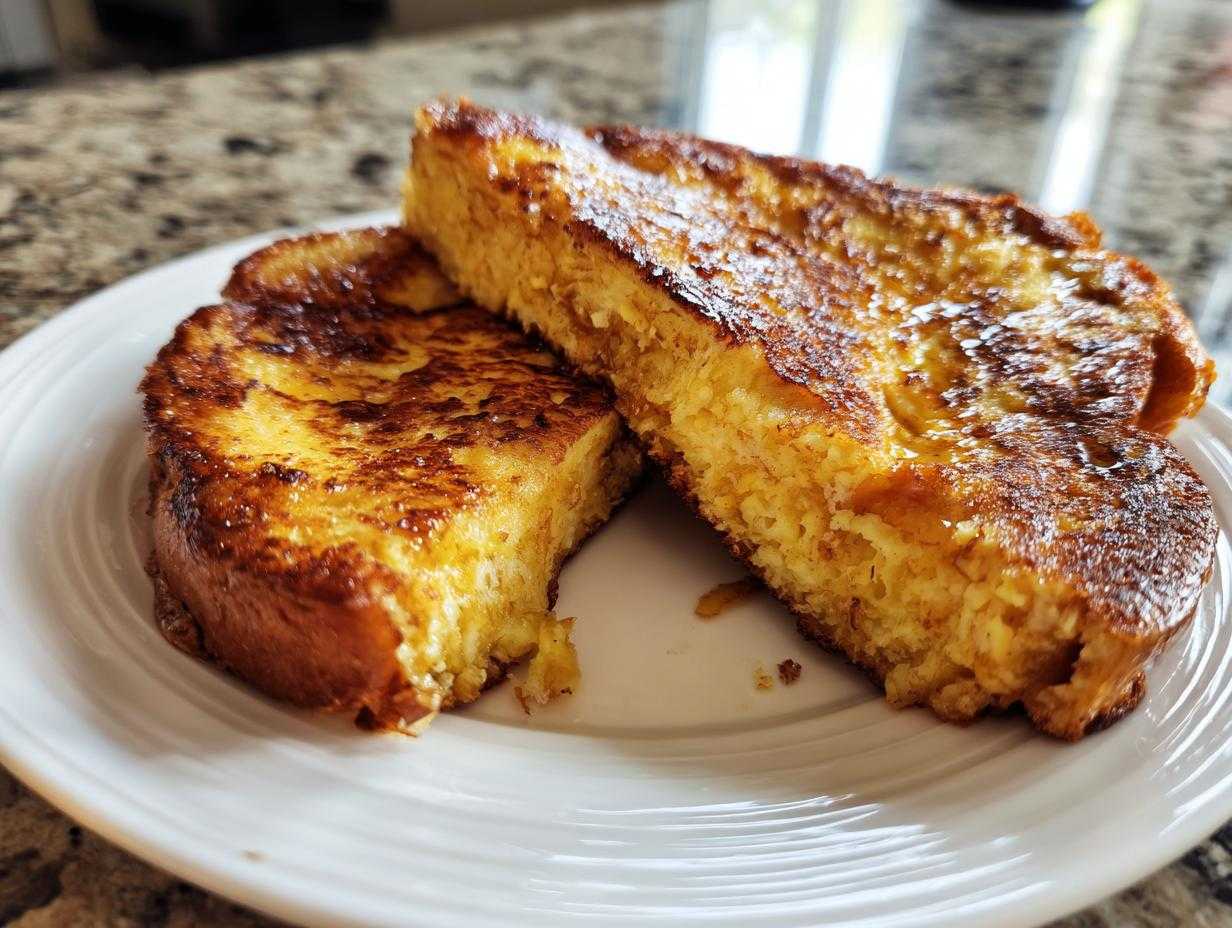
If you think you know French toast, I need you to stop right there and listen up! We are leaving behind that floppy, sad bread situation that soaks up too much egg and turns into a mushy mess. Seriously, soggy French toast is a breakfast tragedy, and I’m here to rescue your mornings with the one thing that fixes everything: sourdough. That’s right, making sourdough french toast isn’t just a trend; it’s the key to textural heaven. When I first realized how much sturdier my leftover sourdough was for dipping, my entire approach to weekend brunch changed forever. This recipe guarantees you get that deeply satisfying, shatteringly crisp exterior that gives way to the richest, most decadent custardy center you’ve ever had. You’re going to wonder why you ever settled for regular white bread again! If you love tangy flavor pairings like this, you absolutely have to check out my recipe for fluffy sourdough pancakes next week.

Why This Sourdough French Toast Recipe Is Superior
The magic really starts with the bread itself. Regular bread—you know, that soft white stuff—just can’t handle the rich, heavy custard we’re making. It turns into soup way too fast! But sourdough? That natural structure and sour tang is what stops sogginess in its tracks. We are going straight for those perfect Crispy French Toast Edges because the loaf holds its shape. Trust me, once you’ve had this flavor profile, you won’t look back. This is truly the Best French Toast Recipe because the bread does half the work for you!
This is also one of my favorite Weekend Brunch Recipes because I can always rely on it when I have my leftover loaf sitting on the counter. We’re turning what might have been bread for discard into something incredible and unbelievably satisfying. If you need a quicker version sometimes, I have a great classic French toast recipe, but this sourdough one always wins for texture.
Achieving the Perfect Custard Soak
Because sourdough is so sturdy, we can spend just a little more time letting it soak without feeling nervous. You want the bread to absorb that beautiful, rich mixture so you get that incredible Custardy French Toast interior, right? Aim for about 30 to 45 seconds on each side. That gives the sturdy crumb enough time to get saturated, adding wonderful depth from the natural tang. This makes it a fantastic Sourdough Breakfast Idea for any weekend morning.
Essential Ingredients for Ultimate Sourdough French Toast
Okay, even though sourdough is the star here, the stuff we dip it into has to be just right, or we won’t get that amazing texture we are dreaming about. We aren’t skimping on the richness here! The dairy is super important—remember, we want custard, not watery egg wash. I use whole milk, but the heavy cream is my secret weapon for that truly decadent feel. I’ve listed out exactly what you need below, but I want to talk about the bread first because that choice makes or breaks the sourdough french toast experience.
Bread Selection: The Key to Great Sourdough French Toast
Listen closely if you want that perfect structural integrity! You absolutely must use thick cuts. I mean, aim for slices that are at least ¾ inch thick, maybe even a full inch if you’re feeling ambitious. We are chasing that Thick Cut French Toast experience where the outside gets brown and crispy, but the inside stays soft. Also, please, please use day-old bread. This is the best way to handle your How to Use Leftover Sourdough situation because slightly stale bread just absorbs that custard without collapsing into a sad pile of goo during cooking. It’s seriously an incredible way to fight food waste!
Crafting the Rich Custard Base
This is where we build flavor and moisture. The ratio of eggs to dairy is what guarantees that incredible Custardy French Toast texture. Four eggs to one cup of milk and a splash of cream—that’s the ticket! Don’t forget the vanilla extract; I add a full teaspoon because I love that warm scent when it hits the pan. Then we give it a little zing with cinnamon and nutmeg. These warm spices elevate it from just basic toast to a true Homemade Breakfast Classic. If you’re looking for other ways to use specialized breads, I once made a crazy good herbed version with Italian herb and cheese bread for dinner!
Step-by-Step Instructions for Perfect Sourdough French Toast
We’ve prepped the bread, we’ve mixed the magic custard—now it’s time for action! This whole process flies by, coming in under 25 minutes total once you get into the rhythm. This is why it makes such a great choice for a busy morning when you still want something special! I always have a side dish ready, like some crispy oven-roasted breakfast potatoes, because the French toast cooks fast.
Preparing the Custard and Soaking the Sourdough French Toast
First things first, make absolutely sure that custard base is mixed well. Whisk those four eggs, milk, cream, sugar, and spices together in a shallow dish—you want everything totally uniform so you don’t end up with pockets of raw egg. When you introduce the sourdough, be patient! Give each side that full 30 to 45 seconds. Don’t rush it just because it’s thick! If you pull it too soon, the center stays dry. But if you leave it for two minutes, it’ll just turn to mush, so that 45-second window is crucial for that wonderful soak.
The Pan Frying Technique for Sourdough French Toast
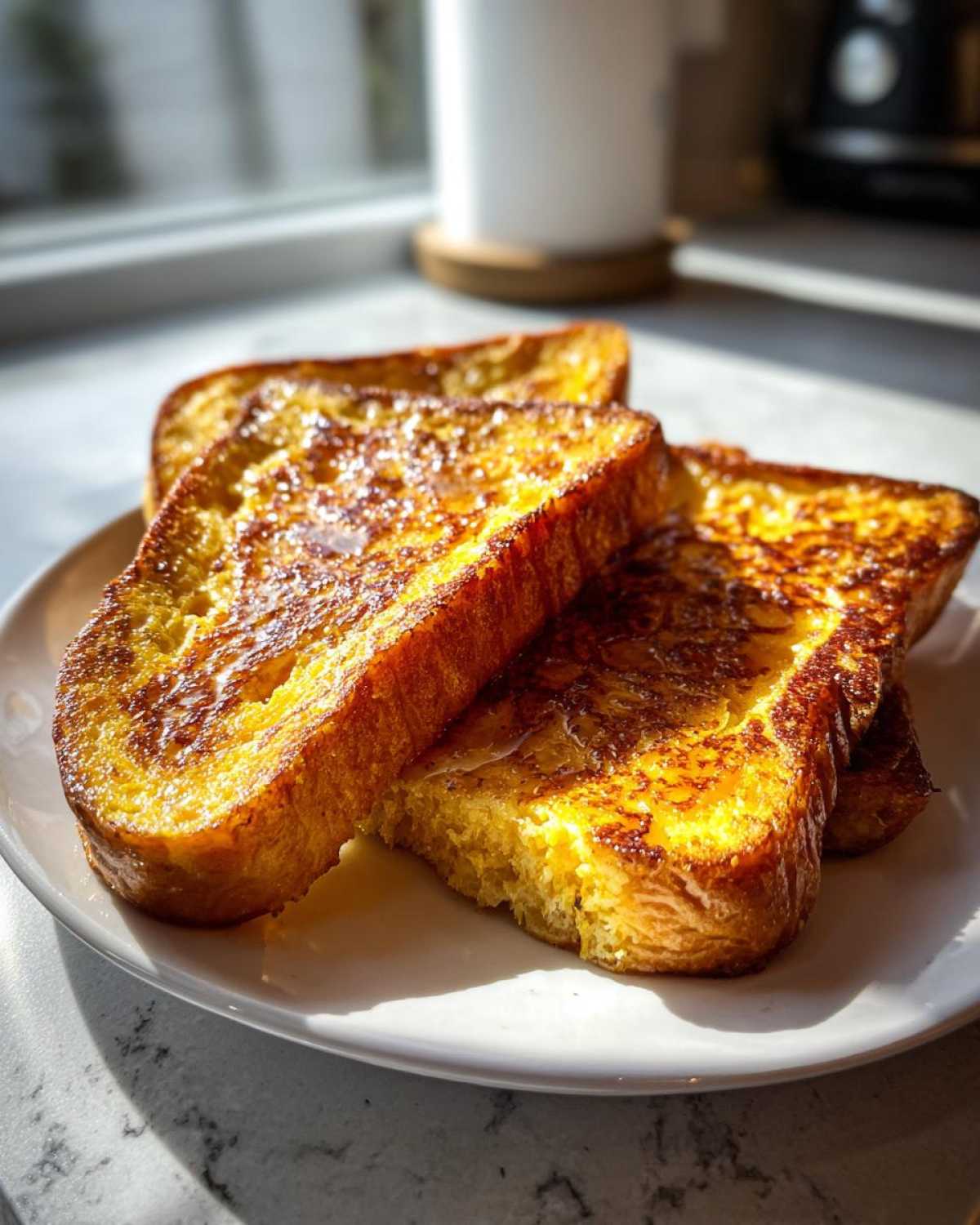
Heat your skillet over medium heat. And I mean *medium*! If it’s too hot, the outside burns before the inside turns custardy—we want that golden glow, not black char. Melt about half of your butter until it’s foaming nicely. That foam tells you the temperature is spot on for achieving those lovely Crispy French Toast Edges. Lay your soaked slices down gently; don’t crowd the pan, or the temperature will drop too fast and you’ll steam them instead of frying them. Cook them for about three to four minutes until they are deeply golden brown on that first side. That gorgeous brown crust means you’ve achieved ultimate Pan Fried French Toast perfection. Flip carefully and cook the second side until done, adding more butter as needed for the next batch!
Tips for Success: Mastering Your Sourdough French Toast
We’ve mastered the basics, which means now we can start fine-tuning this recipe to make it truly yours! Even though the base recipe is fantastic, I love making small adjustments depending on how decadent I want my breakfast to be. This is where those little tweaks turn a great sourdough french toast serving into a dish worth bragging about at your next Weekend Brunch Recipes gathering.
Ingredient Tweaks for Next-Level Sourdough French Toast Flavor
If you really want to blow people away, ditch the vanilla extract sometimes. I know, heresy! But hear me out: scrape the seeds from half a vanilla bean right into that custard base. You get these beautiful little black specks in the final product, and the flavor is so much deeper and warmer than the extract provides. It really elevates this dish into something gourmet, which is why I also love calling this my sourdough pizza dough alternative—it’s all about recognizing the potential in simple ingredients!
Also, if you’re serving this to adults or just want a truly unbelievably rich texture, try swapping out half of the whole milk for heavy cream or even half-and-half. That extra fat content gives the finished toast a beautiful, almost silky mouthfeel that pairs perfectly with the sour tang of the bread. You’ve already got the great structure from the sourdough, so loading up on richness in the custard is never a problem here!
Serving Suggestions for Your Sourdough French Toast
Now that you have this perfect, sturdy, custardy bread on your plate, the real fun begins—the toppings! This is the part where we turn a fantastic meal into a true showstopper for your table. Since the sourdough has a slight natural tang, I find that toppings that bring richness and warmth complement it beautifully. Forget those sad little syrup drizzles; we are building proper stacks here! These suggestions help solidify this as one of your favorite Homemade Breakfast Classics.
For the purists among us, a generous dusting of powdered sugar and a few pats of good quality butter melting over the top is always divine. But if you want to elevate it, try making a quick fruit compote. Blueberries or sliced strawberries simmered quickly with a tiny bit of sugar and lemon juice really cut through the richness of the custard beautifully. Don’t forget a good drizzle of pure maple syrup—you know, the real stuff, not the corn syrup imposters!

If you’re after something richer, think about a sprinkle of toasted pecans or walnuts. And if you made a batch of my easy honey bran muffins to go with it, a dollop of homemade whipped cream on the side pulls the whole breakfast spread together perfectly. It’s all about balancing that savory sour note with sweet, comforting garnishes!
Storage and Reheating Sourdough French Toast
Okay, so if you’re like my family, there are usually a couple of slices left over because we just can’t stop eating this stuff! Good news: this French toast holds up really well in the fridge. The trick is making sure you don’t store it stacked right on top of itself while it’s still warm. That creates steam, and steam means sogginess, and we fought too hard to avoid sogginess this morning!
When you’re storing leftovers, let the slices cool completely on a wire rack first. Once they are cool, lay them out in a single layer on a plate or baking sheet and cover them loosely with plastic wrap before tucking them into the fridge. They should stay fresh and delicious for about three days. This means they are perfect for whipping up a quick reheat when you need one of those dependable Easy Breakfast Recipes during the week.
Now, reheating is where we bring back that beautiful crispness. Don’t even think about the microwave, please! The microwave is the enemy of crispy exteriors. I have two favorite methods, depending on how much time I have.
The Toaster Oven or Oven Method for Crispy Reheat
If you’re reheating just a couple of slices, the toaster oven is my go-to. Pop the cooled slices in there for about 3 to 5 minutes at 350°F (175°C). Keep an eye on them, because they’ll heat up fast and get those edges delightfully crunchy again. If you have a big batch, lay them all out on a baking sheet and slide them into a preheated conventional oven at the same temperature for about 8 to 10 minutes. They’ll be just as good as fresh!
Quick Skillet Reheating
If you need one slice, like, right now, the skillet is fastest. Wipe out your pan (you can use a tiny bit of fresh butter if you want extra richness, but it’s not strictly necessary since the custard is already in there). Set the heat to medium-low—we are warming through, not burning! Heat the slice for just a minute or two per side until it’s hot all the way through and the outside has re-crisped a bit. That warm, comforting smell of cinnamon rising up is seriously the best way to start a busy morning!
Variations on Classic Sourdough French Toast
So, the recipe I gave you is the absolute best for classic, pan-fried perfection—think of it as our standard-issue, can’t-be-beat sourdough french toast. But hey, sometimes even I want to shake things up, especially when I’m planning a huge spread for a holiday morning and don’t want to stand over the skillet for an hour!
Because this bread is so hearty, it handles flavor boosts like a champ. I love using the base custard recipe here and just mixing in different flavor profiles before soaking the bread. This method still delivers that perfect texture but gives you something completely new to talk about!

If you’re hosting brunch and need something a little more seasonal, try adding a half teaspoon of pumpkin pie spice to the custard instead of—or alongside—the cinnamon and nutmeg. That immediately transforms it into a wonderful Cinnamon Spice Breakfast treat, and it pairs beautifully with crunchy pecans!
For something totally unexpected, especially nice in the summer, mix in the zest of one whole lemon into the custard mixture. It brightens everything up—the tang of the sourdough loves the citrus kick! I usually serve that version with fresh berries and a simple dusting of powdered sugar rather than heavy syrup. It feels lighter, almost like a dessert, but it’s still hearty enough to keep everyone satisfied until lunch. You could easily adapt this idea into a baked casserole version if you’re serving a crowd, much like how my creamy sour cream coffee cake recipe adapts well to a 9×13 pan!
If you ever decide to go full-on casserole, the rule is the same: use day-old bread so it doesn’t get soggy overnight in the fridge before baking. You just assemble everything, let it sit overnight, and bake it in the morning. Easy peasy!
Frequently Asked Questions About Sourdough French Toast
It makes total sense that you have questions! When you stumble upon a recipe that promises to solve the age-old soggy breakfast debate, you want to make sure you get it right the first time. This sourdough french toast is truly my favorite winter morning Comfort Food Breakfast because it feels indulgent but I know I’m using up bread that needed to be baked with soon. Here are the things I hear most often when people try this recipe for the first time!
Can I use fresh sourdough bread instead of day-old for sourdough french toast?
Yes, you absolutely *can*, but you have to be much more careful with your soaking time! Day-old, slightly stale sourdough is amazing because it’s dry enough to truly soak up that custard without immediately turning soft. If your bread is fresh out of the oven and soft as a cloud, you’ll need to cut that soaking time way down—maybe just 15 to 20 seconds per side. If you soak fresh bread too long, it tends to break apart on the spatula when you try to flip it. So, if fresh is all you have, just be quick and gentle!
How do I make my sourdough french toast extra crispy?
Crispiness comes down to three things: heat, fat, and timing. First, make sure your skillet isn’t just warm; it needs to be properly heated over medium heat before that butter goes in. Wait until the butter melts and starts foaming slightly—that’s your cue! Second, use enough butter. Don’t be stingy! You want the entire surface of the bread to lightly sizzle when it hits the pan. Finally, when you flip them, only flip once! Resist the urge to keep poking at it to check underneath. Those three to four minutes per side allow that crust to develop perfectly. You can also check out my guide on various sourdough baking alternatives if you want to see how bread structure changes!
Nutritional Snapshot of This Sourdough French Toast
Now, I know some of you are watching macros, and some of you just want to know what you’re diving into when you decide this is your Comfort Food Breakfast for the day. So, I pulled the numbers straight from my recipe breakdown. I always use the official metrics because while this is a homemade classic, it’s still good to have a baseline, right?
Just keep in mind that these figures are estimates. They are based on using the exact ingredients I listed—standard whole milk, average sized eggs, and the amount of butter I specified for cooking. If you swap the heavy cream for half-and-half or use a leaner type of sourdough, those numbers will shift slightly. But this gives you a fantastic general idea of what one slice of this amazing sourdough french toast brings to the table!
- Serving Size: 1 slice
- Calories: 280
- Fat: 14g (Be sure to measure that butter!)
- Saturated Fat: 7g
- Carbohydrates: 28g
- Sugar: 8g (Natural sugars and added sugar combined)
- Protein: 11g
- Fiber: 1g
- Cholesterol: 150mg
See? Not bad for such an indulgent treat, especially considering that 11 grams of protein will actually keep you full until lunchtime! It’s a far better choice than those versions smothered in high-fructose syrups. I’m so happy we can enjoy this incredible texture without all the guilt!
Print
The Ultimate Crispy Outside, Custardy Inside Sourdough French Toast Recipe
- Total Time: 25 min
- Yield: 6 servings
- Diet: Vegetarian
Description
Make superior French toast using sourdough bread. The natural tang and structure of sourdough result in a crispy exterior and a rich, custardy interior that resists sogginess.
Ingredients
- 6 thick slices day-old sourdough bread
- 4 large eggs
- 1 cup whole milk
- 1/4 cup heavy cream
- 2 tablespoons granulated sugar
- 1 teaspoon vanilla extract
- 1/2 teaspoon ground cinnamon
- 1/4 teaspoon ground nutmeg
- Pinch of salt
- 2 tablespoons unsalted butter, for cooking
Instructions
- Whisk together the eggs, milk, heavy cream, sugar, vanilla extract, cinnamon, nutmeg, and salt in a shallow dish until fully combined. This is your custard base.
- Place one slice of sourdough bread into the custard mixture. Let it soak for 30 to 45 seconds per side. Sourdough is sturdy, but do not over-soak, or it will become too wet.
- Heat a large skillet or griddle over medium heat. Add half of the butter and let it melt until it foams slightly.
- Carefully place the soaked bread slices onto the hot skillet, ensuring they do not touch.
- Cook for 3 to 4 minutes per side until the French toast is golden brown and crispy on the edges. Adjust the heat if the outside browns too quickly before the inside cooks.
- Remove the cooked slices and keep them warm while you cook the remaining bread, adding more butter to the skillet as needed.
- Serve immediately with your preferred toppings.
Notes
- Using day-old or slightly stale sourdough bread works best because it absorbs the custard without falling apart.
- For extra flavor, scrape the seeds from half a vanilla bean into the custard mixture instead of using extract.
- If you prefer a richer flavor, substitute half of the milk with half-and-half.
- Prep Time: 10 min
- Cook Time: 15 min
- Category: Breakfast
- Method: Pan Frying
- Cuisine: American
Nutrition
- Serving Size: 1 slice
- Calories: 280
- Sugar: 8
- Sodium: 250
- Fat: 14
- Saturated Fat: 7
- Unsaturated Fat: 7
- Trans Fat: 0
- Carbohydrates: 28
- Fiber: 1
- Protein: 11
- Cholesterol: 150


Comments are closed.