
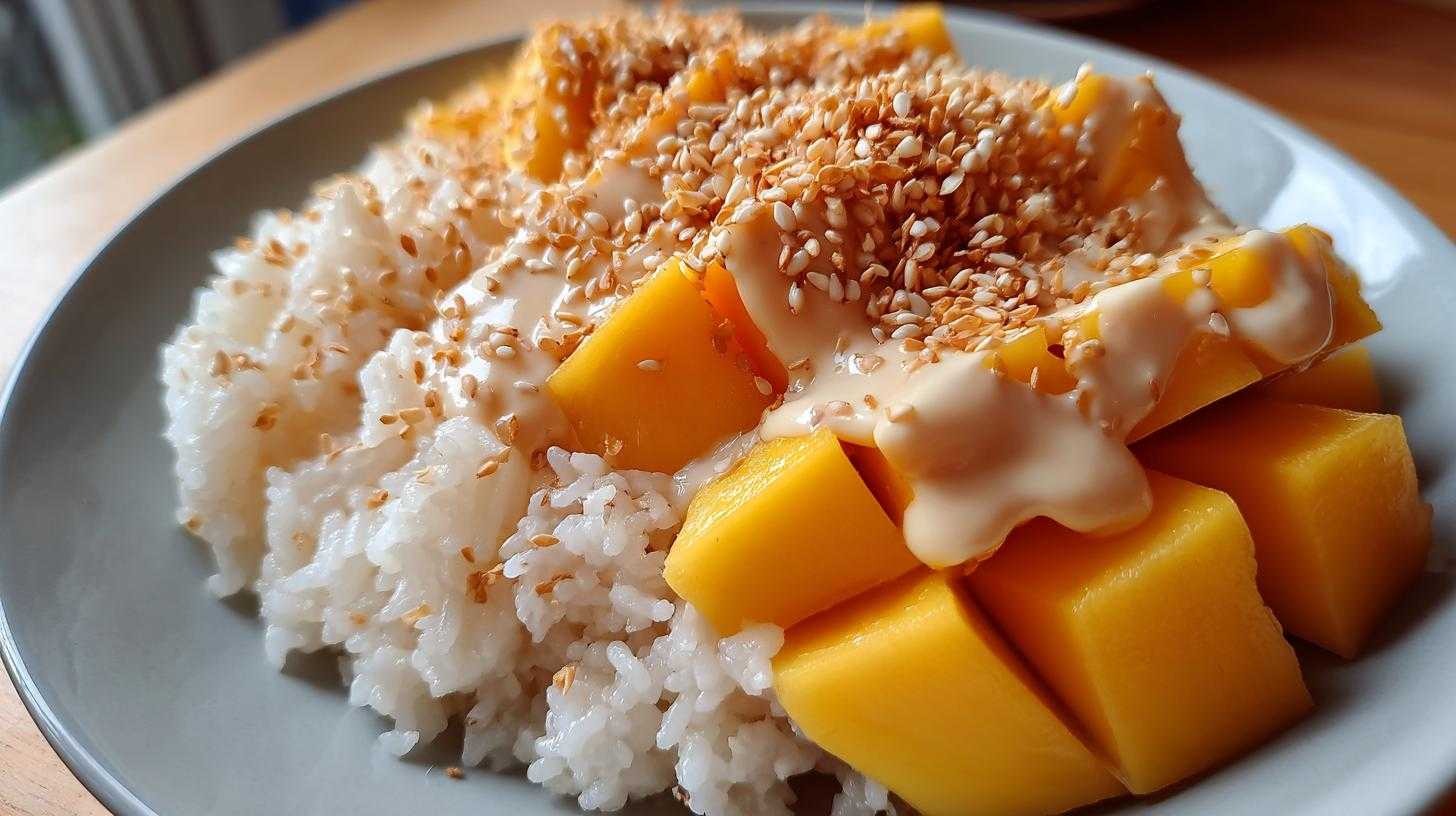
There’s a certain magic that happens when sweet, ripe mango meets warm, creamy coconut-infused sticky rice. It’s a simple combination, really, but oh my goodness, it’s pure bliss. My journey through food, sparked by my uncle’s Texas restaurant, has always been about chasing those moments of pure flavor joy. This Thai Mango Sticky Rice is one of those unforgettable tastes. It’s a dessert that feels both exotic and comforting, a true taste of Thailand that I can’t wait to share with you. Get ready for a sweet adventure!
The Allure of Thai Mango Sticky Rice: A Culinary Journey
My Texan roots are all about bold flavors and hearty meals. But my culinary explorations have led me far beyond barbecue pits and comfort food classics. That’s where dishes like Thai Mango Sticky Rice come in. It’s a dessert that whispers of distant shores and vibrant cultures.
This sweet sticky rice creation is a textural marvel. The slightly chewy grains soak up a rich, sweet coconut milk. It’s a comforting contrast to the juicy, tropical sweetness of fresh mango. For me, it represents a beautiful bridge between different food traditions. It reminds me of the joy my uncle found in sharing his food. This Thai Mango Sticky Rice is more than just a treat. It’s a delicious lesson in how simple ingredients can create pure happiness. It’s a taste of sunshine, really.
Gathering Your Ingredients for Perfect Thai Mango Sticky Rice
To make truly delicious Thai Mango Sticky Rice, we need to start with the best ingredients. Think of it like painting; you need good colors to create a masterpiece. I always try to find the freshest items possible. It really makes a difference in the final taste. Let’s get our pantry ready for this tropical delight.
Glutinous Rice Essentials
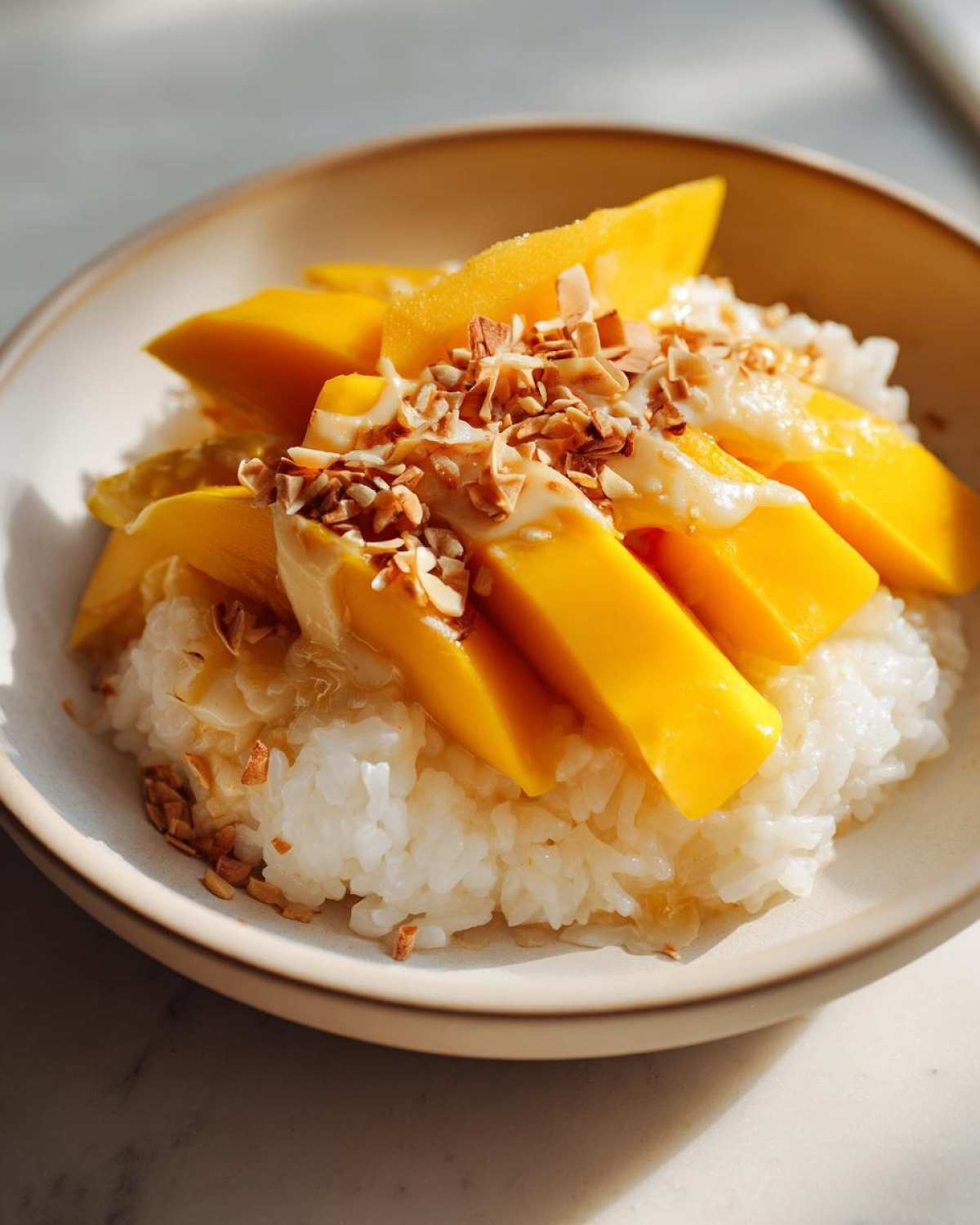
We need 2 cups of glutinous rice, also called sweet rice. This is key for that signature chewy texture. Regular rice just won’t do! Make sure to rinse it well. Rinse until the water is clear. Then, let it soak for at least 4 hours, or even overnight. This step is super important for cooking it perfectly.
The Creamy Coconut Milk Mixture
For the luscious sauce, we’ll use 1.5 cups of full-fat coconut milk. Don’t skimp here; the richness is what we want. Then, we add 0.5 cup of granulated sugar for sweetness. And just a pinch of salt, about 0.5 teaspoon, to balance everything out. Gently warm these in a pan. Stir until the sugar dissolves. But please, don’t let it boil. Just a gentle simmer is enough.
The Star: Ripe Mango
You’ll need one ripe mango. The sweeter, the better! Look for one that gives a little when you gently squeeze it. It should smell fragrant. Peel it carefully. Then, slice it into nice, neat pieces. This sweet fruit is the perfect partner for our sticky rice.
Optional Enhancements
Want to add a little extra flair? Toasted sesame seeds are a lovely optional garnish. They add a nice crunch and nutty flavor. They really do complete the whole Thai Mango Sticky Rice experience.
Crafting Delicious Thai Mango Sticky Rice: Step-by-Step Mastery
Now for the fun part! Turning those lovely ingredients into our star dessert. It’s a process that feels almost meditative. Each step builds on the last. You’ll see how simple cooking can be. Get ready to create some magic.
Preparing the Sticky Rice Foundation
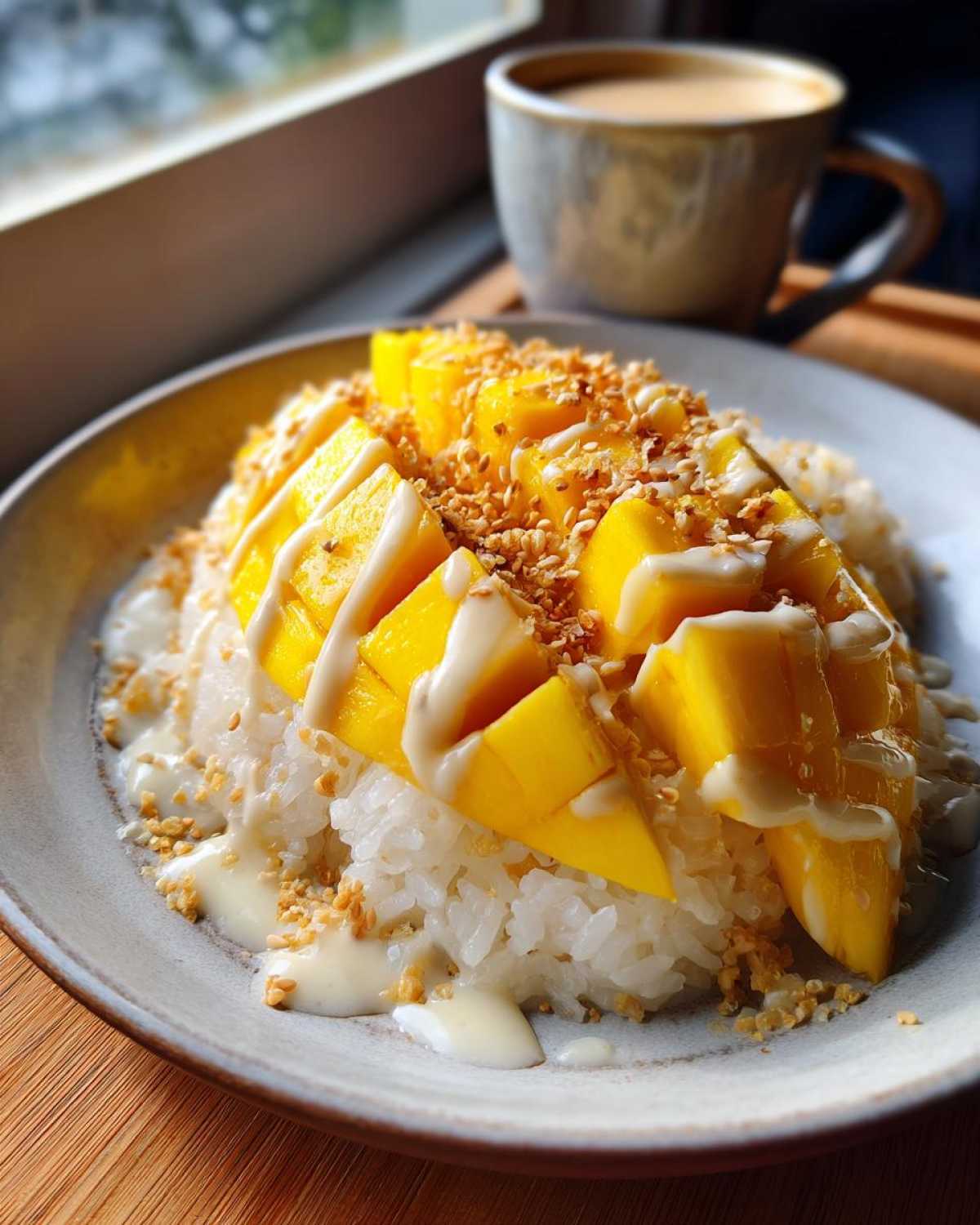
First, we focus on the rice. Rinse your glutinous rice thoroughly. Keep rinsing until the water runs crystal clear. This removes excess starch. Then, soak it in fresh water. Aim for at least 4 hours. Overnight is even better. This step is non-negotiable! It ensures the rice cooks evenly. After soaking, drain it really well. Now, it’s time to steam. Place it in a steamer. Steam for about 20 to 25 minutes. You want it tender and fully cooked. It should look plump and slightly translucent.
Infusing the Rice with Coconut Sweetness
While the rice steams, let’s make our coconut sauce. In a saucepan, combine the coconut milk, sugar, and salt. Gently heat this mixture over medium heat. Stir it constantly. You want the sugar to completely dissolve. Stop heating just before it boils. A gentle warmth is perfect. Once the sticky rice is steamed, transfer the hot rice to a bowl. Immediately pour the warm coconut milk mixture over it. Stir very gently. You don’t want to mash the rice. Just coat each grain. Cover the bowl tightly. Let it sit for about 15 to 20 minutes. This lets the rice soak up all that creamy goodness.
Assembling Your Thai Mango Sticky Rice Masterpiece
The rice is now perfectly infused and creamy. Next, prepare your mango. Peel the ripe mango. Slice it into beautiful, bite-sized pieces. Arrange the warm, sticky rice on serving plates. Place the fresh mango slices alongside the rice. It looks so inviting. This is where the dessert really comes alive. The colors are just beautiful together.
Flavorful Finishing Touches
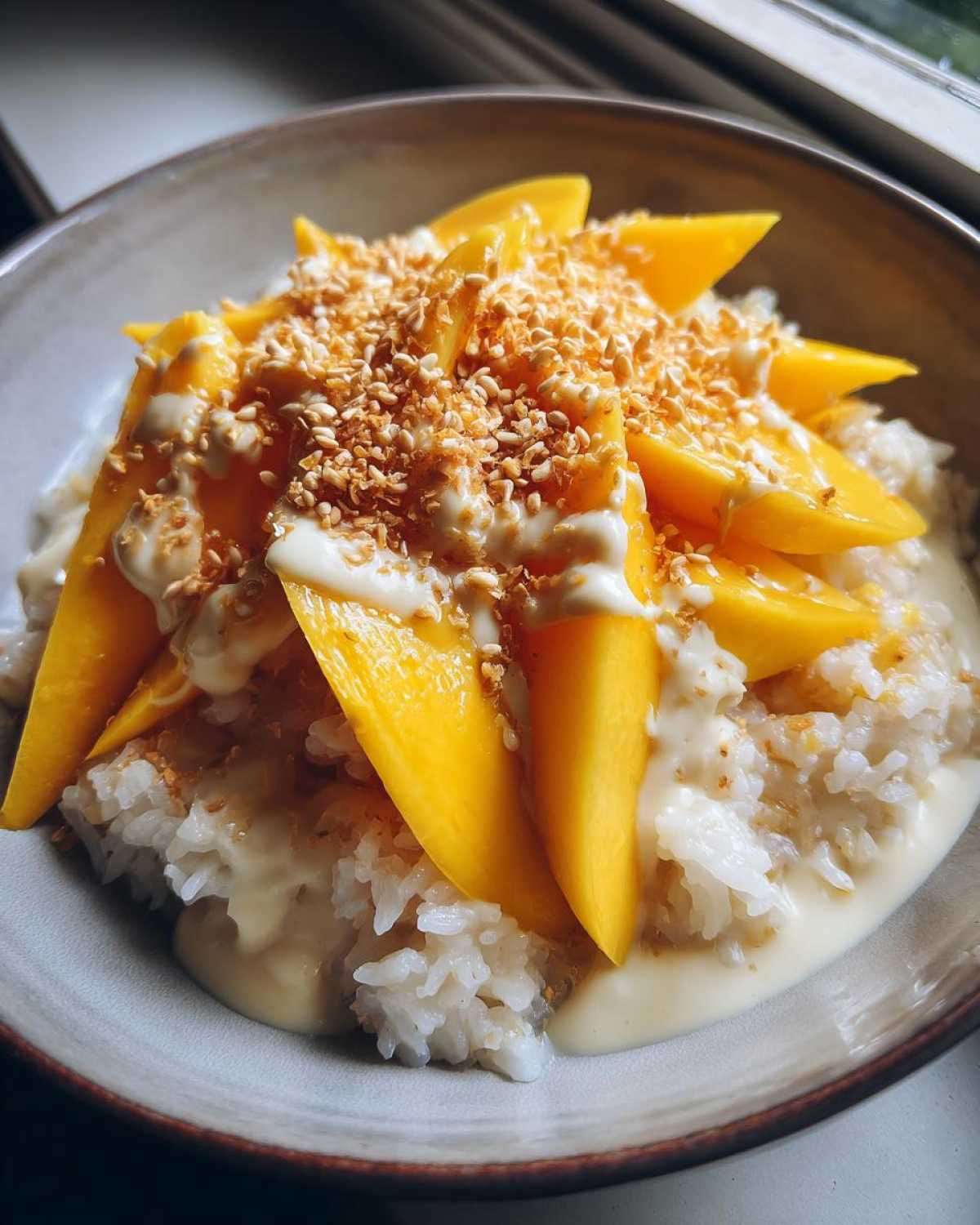
For that extra touch, sprinkle toasted sesame seeds over the top. They add a lovely crunch. They also give a hint of nutty flavor. This simple garnish really elevates the whole dish. It makes your beautiful Thai Mango Sticky Rice look even more special. It’s a small step with a big impact.
Tips for Achieving Authentic Thai Mango Sticky Rice Perfection
Making this Thai Mango Sticky Rice is a joy. But a few little tricks can make it truly spectacular. I’ve learned these from my own kitchen adventures. They help ensure you get that perfect texture and flavor every time. Don’t be afraid to experiment a bit. That’s part of the fun of cooking!
The Art of Soaking and Steaming
Soaking the glutinous rice is crucial for tenderness. Don’t rush this step. Over 4 hours is good. Overnight is even better. This helps the rice cook evenly. For steaming, make sure your steamer is hot. Use medium heat. This gives the best sticky rice texture.
Balancing Sweetness and Creaminess
Taste your coconut milk mixture before adding it to the rice. You can adjust the sugar. Some mangoes are sweeter than others. Aim for a balance that makes your taste buds sing. Don’t boil the coconut milk. Just warm it gently. This keeps its creamy texture perfect.
Frequently Asked Questions About Thai Mango Sticky Rice
Got questions about making this delightful Thai dessert? I get it! Cooking new things can bring up a few curiosities. Let’s clear up some common ones about our beloved Thai Mango Sticky Rice.
Can I use regular rice instead of glutinous rice for this mango dessert?
I really suggest sticking with glutinous rice, also known as sweet rice. Its starchy nature is what gives this Thai dessert its signature sticky, chewy texture. Regular rice won’t give you that same satisfying mouthfeel.
My sticky rice came out a bit too dry. What went wrong?
This usually happens if the rice wasn’t soaked long enough. Soaking helps the grains absorb moisture. Make sure you soak it for at least 4 hours, or overnight if possible. Also, ensure you steam it until it’s tender.
Can I make Thai Mango Sticky Rice ahead of time?
You can prepare the sticky rice a few hours in advance. Store it at room temperature, covered. However, it’s best served warm with fresh mango. Reheating the rice gently is okay, but the mango is always best fresh.
What kind of mango should I use for the best flavor?
Choose ripe, sweet mangoes! Varieties like Ataulfo or Honey mangoes work wonderfully. They should be fragrant and slightly soft to the touch. This ensures your mango sticky rice is bursting with tropical sweetness.
Understanding the Nutrition of Thai Mango Sticky Rice
Enjoying a sweet treat like Thai Mango Sticky Rice is a delight. Here’s a look at the estimated nutritional breakdown for one serving. Please remember these are approximate values. They can vary based on exact ingredient amounts and ripeness.
A typical serving contains around 350 calories. It offers about 15g of fat, with 12g being saturated fat. You’ll get roughly 50g of carbohydrates and 25g of sugar. Protein content is about 4g. It also contains around 2g of fiber and 100mg of sodium.
Share Your Thai Mango Sticky Rice Experience!
I’d absolutely love to hear from you!
Did you try making this Thai Mango Sticky Rice?
How did it turn out for you?
Please share your thoughts in the comments below.
Tell me about your mango picking adventures!
Your feedback means the world to me.
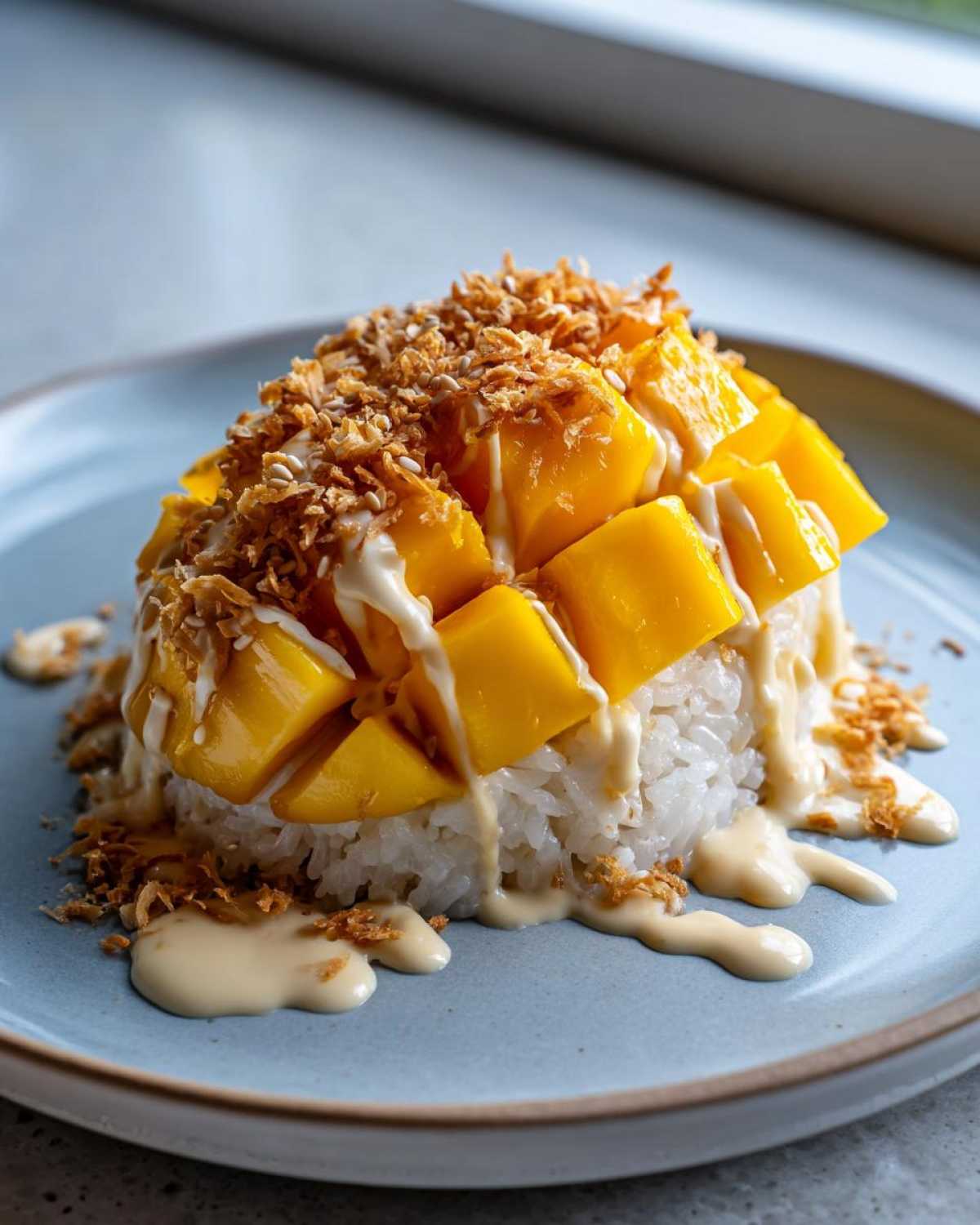

Amazing Thai Mango Sticky Rice in 30 mins
- Total Time: 4 hours 50 minutes
- Yield: 4 servings
- Diet: Vegetarian
Description
Enjoy a taste of Thailand with this delightful Mango Sticky Rice. It’s a sweet and creamy dessert featuring sticky rice infused with coconut milk and served with fresh, ripe mango.
Ingredients
- 2 cups glutinous rice
- 1.5 cups coconut milk
- 0.5 cup granulated sugar
- 0.5 teaspoon salt
- 1 ripe mango
- 2 tablespoons toasted sesame seeds (optional)
Instructions
- Rinse the glutinous rice until the water runs clear.
- Soak the rice in water for at least 4 hours or overnight.
- Drain the soaked rice well.
- Steam the rice for 20-25 minutes, or until tender and cooked through.
- While the rice is steaming, heat the coconut milk, sugar, and salt in a saucepan over medium heat until the sugar dissolves. Do not boil.
- Once the rice is cooked, transfer it to a bowl.
- Pour the warm coconut milk mixture over the hot rice and stir gently to combine.
- Cover the bowl and let the rice sit for 15-20 minutes to absorb the liquid.
- Peel and slice the ripe mango.
- Serve the warm sticky rice with the fresh mango slices.
- Garnish with toasted sesame seeds, if desired.
Notes
- Make sure to use glutinous rice (also known as sweet rice) for the best texture.
- Adjust the sugar to your preference.
- The mango should be ripe and sweet for the best flavor.
- Prep Time: 20 minutes (plus soaking time)
- Cook Time: 30 minutes
- Category: Dessert
- Method: Steaming
- Cuisine: Thai
Nutrition
- Serving Size: 1 serving
- Calories: 350
- Sugar: 25g
- Sodium: 100mg
- Fat: 15g
- Saturated Fat: 12g
- Unsaturated Fat: 3g
- Trans Fat: 0g
- Carbohydrates: 50g
- Fiber: 2g
- Protein: 4g
- Cholesterol: 0mg



Comments are closed.