
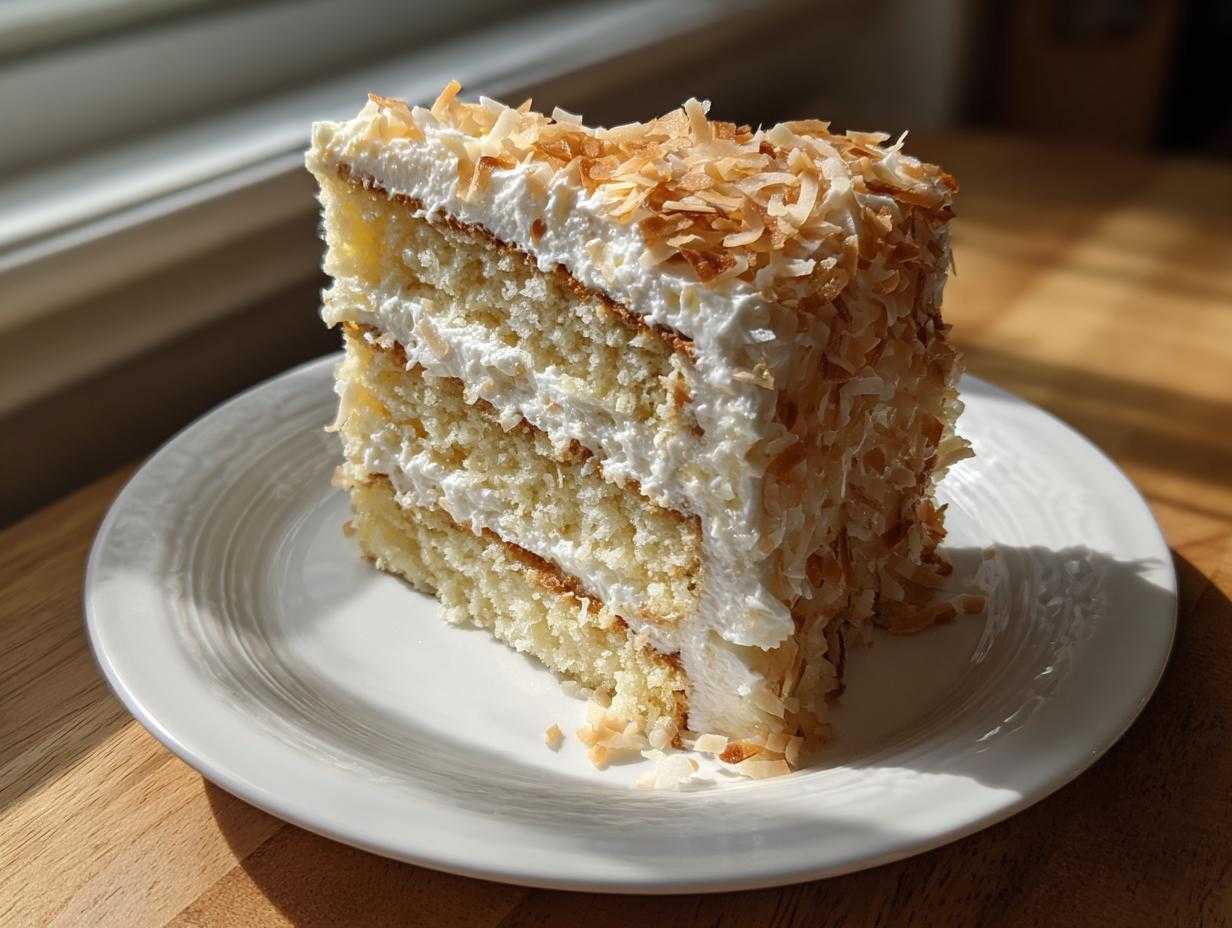
Honestly, if you think you have to go out and buy a bakery-style cake for a real celebration, you haven’t tried my absolute favorite coconut cake recipe yet. Forget dry, crumbly layers! I spent years trying to nail down that perfect, tender texture you only dream about when you see those gorgeous, snow-white Southern cakes.
This isn’t just *a* cake; this is my Southern Coconut Cream Layer Cake from Scratch. It’s fluffy, it’s ridiculously moist, and every bite is bursting with rich coconut flavor thanks to a couple of secret weapons I sneak into the batter. Seriously, the first time I nailed the frosting consistency—smooth, slightly tangy from the cream cheese, but overwhelmingly coconut—I knew I couldn’t keep it to myself anymore. You have to try this; the reward is truly unbelievable!
If you’ve already mastered the classics like my famous carrot cake, you’re ready for this next level of baking joy. Let’s get those layers stacked up!
Why This Coconut Cake Recipe Delivers a Moist Coconut Cake
You want to know the secret to getting a truly moist coconut cake? It’s all in the liquids and the method, trust me. We aren’t messing around with dry ingredients here! I specifically call for full-fat whole milk and, importantly, actual cream of coconut in both the cake and the frosting. That cream of coconut is pure magic; it’s sweeter and creamier than plain coconut milk, and it locks moisture deep inside those tender crumb layers.
We also build structure carefully. Unlike some delicate recipes, we use a slightly higher amount of butter and eggs for richness, which guarantees that tender coconut dessert feel instead of a spongey texture. It’s an investment in flavor, and you can taste the difference compared to an easy coconut cake recipe relying only on oil.
Achieving the Perfect Fluffy Coconut Layer Cake Texture
The fluff factor is crucial for a good fluffy coconut layer cake! Before we even add the wet ingredients, we cream that softened butter with the sugar until it’s actually pale and airy. This step physically whips air into the fat, creating millions of tiny bubbles. When those bubbles expand in the oven, that’s what lifts the cake and makes it light!
Our baking powder is key, too, but it acts gently because we aren’t using a ton of harsh chemicals. We want lift, not a towering explosion. It’s that careful balance between proper creaming and the right amount of leavening that gives you that gorgeous, melt-in-your-mouth crumb every single time.
Ingredients for the Ultimate Coconut Cake Recipe
Okay, no shortcuts here! If you want that true, show-stopping coconut cake recipe that tastes like it came from a high-end bakery, you need the right players on your counter. I’ve listed everything below, separated so you don’t accidentally put cream cheese in your cake batter—I may be chaotic, but I’m not *that* chaotic!
Remember, precision matters when you’re baking this kind of layered spectacular. Do yourself a favor and measure everything out before you start mixing. It makes the process so much smoother when you get to the fun part!
For the Tender Coconut Dessert Cake Layers
- 2 1/2 cups all-purpose flour
- 1 1/2 cups granulated sugar
- 1 tablespoon baking powder
- 1/2 teaspoon salt
- 1 cup unsalted butter, softened (this needs to be soft!)
- 4 large eggs
- 1 cup whole milk (the higher fat content helps so much!)
- 1 teaspoon vanilla extract
- 1/2 cup coconut milk (full fat—don’t skimp)
- 1 cup sweetened shredded coconut, toasted (yep, toast it first!)
- 1/2 cup cream of coconut (this is the sweet, thick kind, not milk)
For the Rich Coconut Cream Cheese Frosting Cake
This frosting isn’t just delicious; it’s what holds all those beautiful toasted coconut flakes onto the outside. Make sure your butter and cream cheese are nice and soft before you start whipping!
- 1 cup unsalted butter, softened
- 4 cups powdered sugar, sifted (sifting is non-negotiable here!)
- 1/2 cup cream cheese, softened
- 1/2 cup cream of coconut
- 1 teaspoon vanilla extract
- 1/4 cup milk or heavy cream (we use this to adjust the texture)
- 2 cups sweetened shredded coconut, toasted (for coating the whole beautiful thing)
If you ever need a refresher on making perfect cream cheese frosting, I always refer back to my tips on getting that smooth, tangy style, even though ours is sweeter for this cake!
Step-by-Step Instructions for This Southern Coconut Cake
Alright, time to put on our aprons! This is where the magic happens. Since this is a from scratch coconut cake recipe, we move methodically, but it’s actually much less fuss than you might think. Just follow these steps closely, and you’ll have a spectacular celebration cake recipe ready for the stand.
I always try to have my milk and coconut cream sitting out with the butter so everything is just slightly room temperature before mixing. This helps everything emulsify beautifully! If you want to see how I structure my baking time for other great recipes, check out my guide on making fluffy vanilla cake—the prep rhythm is similar.
Preparing and Baking the Fluffy Coconut Layer Cake
First things first: get that oven buzzing! Preheat your oven to 350°F (175°C). Now, tackle those pans. Grease them well—I always use a bit of leftover shortening—and flour them lightly. Tracing three 8-inch round pans with parchment paper on the bottom is my little insurance policy against sticking. Seriously, don’t skip that parchment!
In your biggest bowl, whisk together the dry stuff: flour, sugar, baking powder, and salt. Now, for the butter incorporation. Add your softened butter directly to this dry mix. Beat it on low speed until it looks rough, kind of like wet sand or coarse crumbs. This is the beginning of us building that fluffy texture!
In a separate bowl, mix the eggs, whole milk, vanilla extract, that rich coconut milk, and the sweet cream of coconut together. Whisk until they become one happy liquid family. Now, you add the wet mixture slowly into the crumbly dry mixture while the mixer is on medium. Just mix until it’s *almost* combined—don’t overdo it!
Finally, gently fold in that 1 cup of toasted shredded coconut. You want to be tender here, which is why we fold, not mix. Divide that gorgeous batter evenly between your three pans. Bake them for 25 to 30 minutes. Stick a wooden pick in the dead center; when it comes out clean, they are done! Cool them in the pans for just 10 minutes before flipping them onto a wire rack to cool completely. Crucial step: If you want that extra flavor boost, brush the still-warm layers lightly with a blend of a little extra coconut milk and sugar before they finish cooling!
Making the Creamy Coconut Cream Cheese Frosting
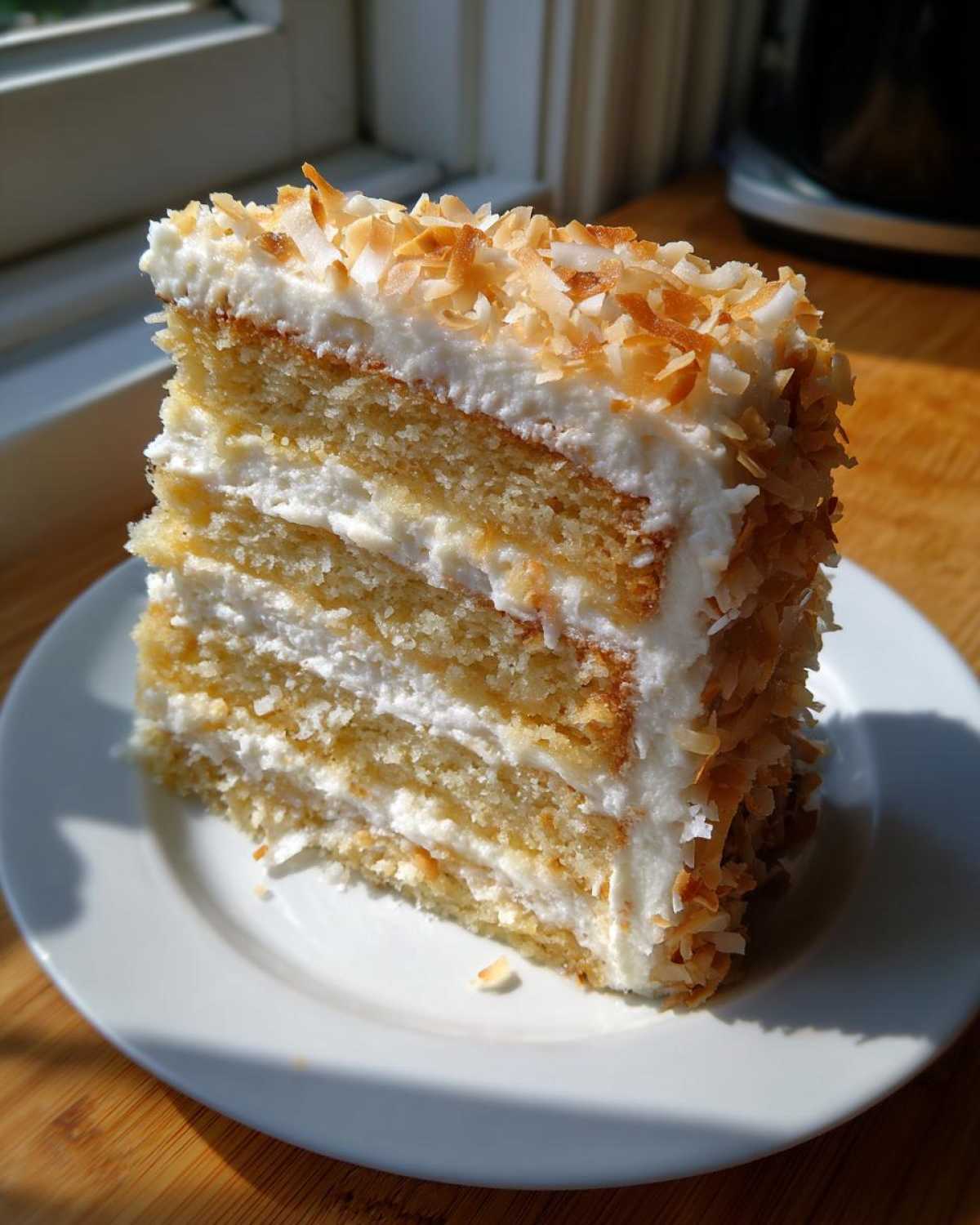
While those layers are happily cooling—and I mean *completely* cool, or you’ll have a melted mess—we conquer the frosting. This needs to be smooth, and that means beating the softened butter and softened cream cheese until there are absolutely no lumps left. Take your time here; this builds the body of the frosting!
Start adding your sifted powdered sugar gradually on low speed. Once it’s mostly incorporated, boost the speed and beat until it looks fluffy. Then, mix in your cream of coconut and vanilla extract. If the frosting seems a little too stiff, add milk or heavy cream just one tablespoon at a time until it’s perfectly spreadable. You are looking for that luscious, rich texture that screams coconut cream cheese frosting cake perfection.
Assembling Your Celebration Cake Recipe
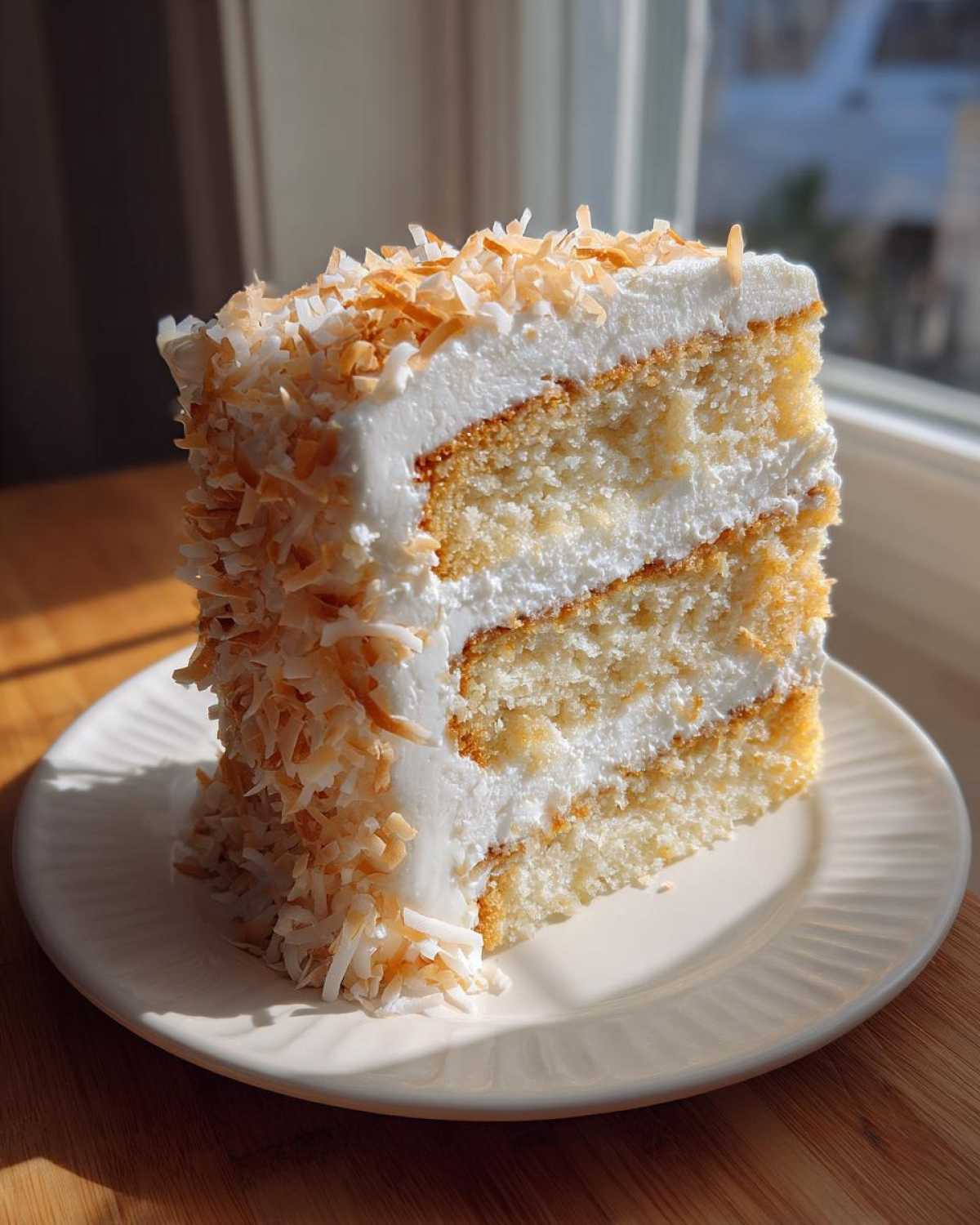
Time for the grand finale! Put your first layer down on your serving plate. Spread a generous, even layer of your beautiful coconut frosting over the top. Now, grab just a little bit of your toasted coconut and sprinkle it right over that frosting layer. Repeat this process with the second layer.
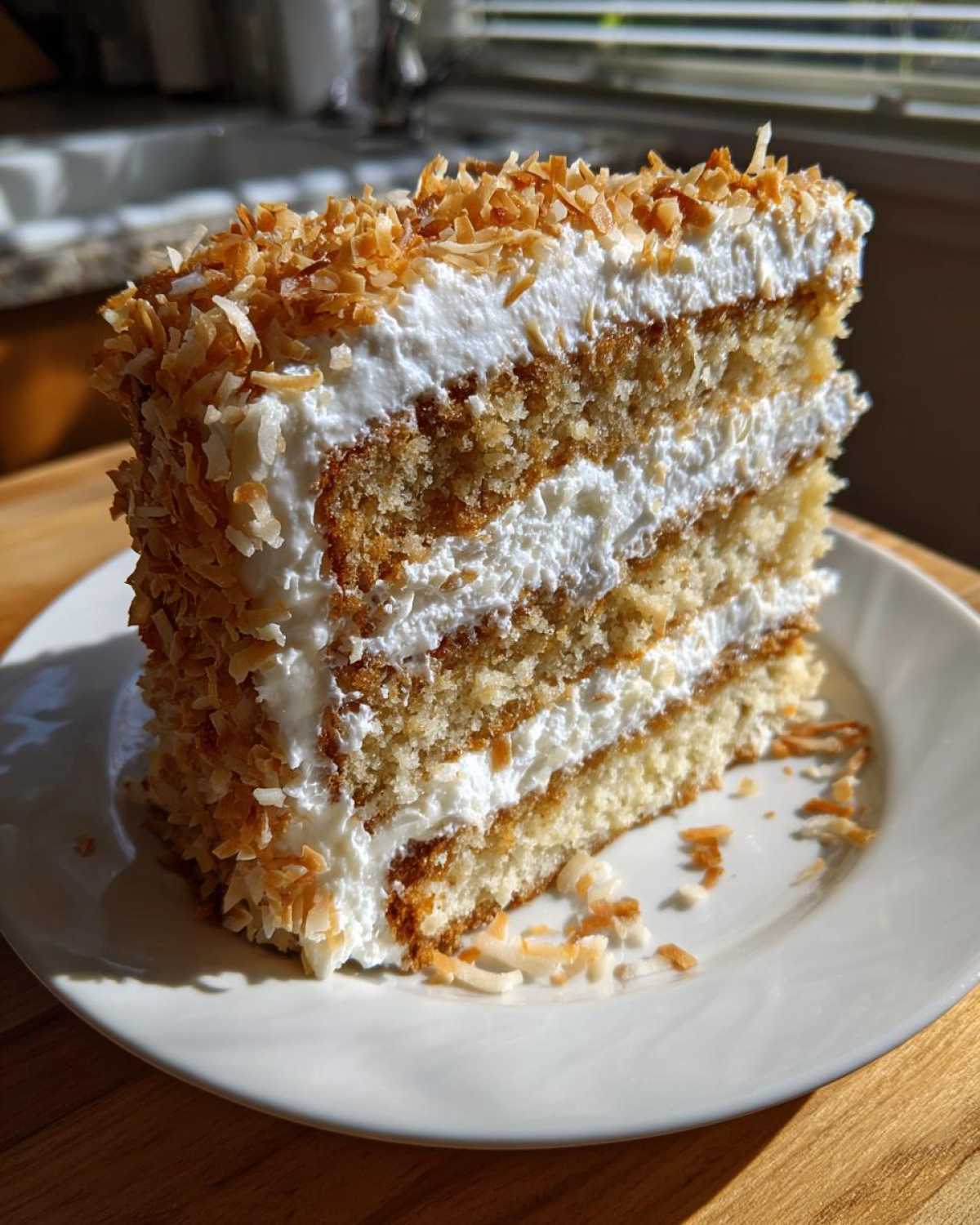
Once the third layer is in place, take the rest of your frosting and cover the top and all the sides completely. Make it smooth or give it a rustic look; either way, the final step is pure decadence: press the remaining 2 cups of toasted coconut all over the top and sides! I like to put the whole thing in the fridge for about 30 minutes before slicing. It helps those layers set up, giving you the cleanest cuts for your beautiful Southern coconut cake.
Tips for Success with Your Coconut Cake Recipe
Making a cake this spectacular requires a tiny bit of planning, but honestly, the effort is worth every single golden, flaky piece of coconut you put on it. Over the years, I’ve learned a couple of crucial habits that ensure this moist coconut cake comes out perfect, not just palatable.
The biggest mistake people make? Frosting warm layers. You absolutely cannot rush the cool-down process. If you frost a cake that’s even slightly warm, that beautiful butter and cream cheese frosting just melts into a slick, runny disappointment. Patience here is rewarded with sharp edges and a perfect finish!
Also, please, please don’t skip toasting the coconut! It makes such a huge difference in flavor depth. You want that slightly nutty, rich coconut essence, not just raw sweetness.
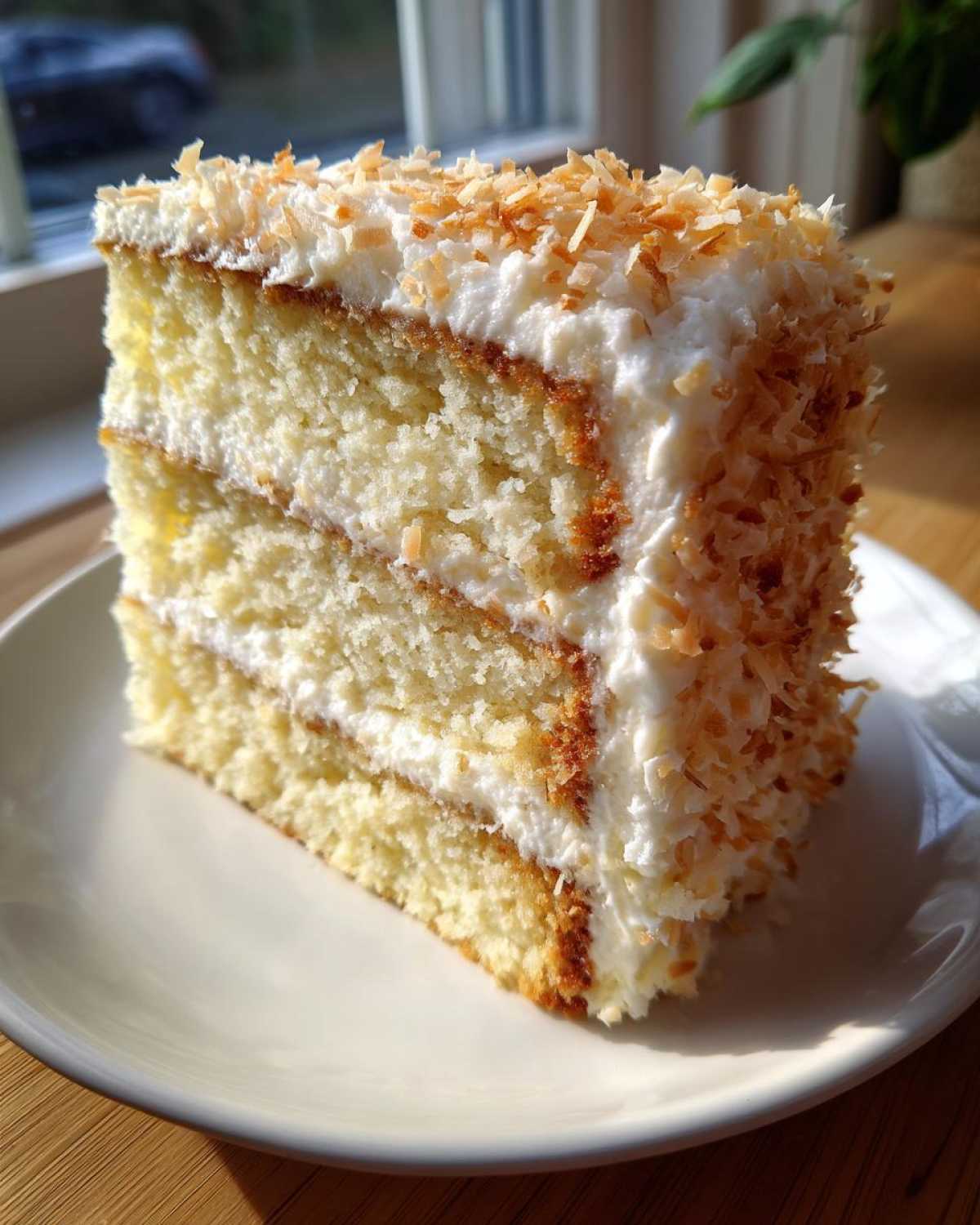
To get that perfect toast every time, you’re going to spread the sweetened shredded coconut in a very thin, single layer on a baking sheet. Pop it into the 350°F oven—the same temperature we used for the cake—and watch it like a hawk! Seriously, it goes from perfectly golden brown to charcoal black in about sixty seconds flat. Five to ten minutes is usually the sweet spot, but you need to check it every minute near the end. When it looks exactly like the beautiful coating we used on the sides of the cake, pull it out immediately. It will continue to toast slightly on the hot pan, even once you remove it.
For keeping things simple on the logistics front, I always keep a stock of parchment paper handy for lining pans, whether I’m working on this layer cake or just whipping up some honey bran muffins. It’s my number one defense against sticking, no matter how much butter I use!
Variations for This Coconut Cake Recipe
While I stand by this traditional, unbelievably moist recipe, I know sometimes you need to spice things up a little, especially if this isn’t the first time you’ve made it! Nobody gets tired of coconut cake, but a little twist keeps things exciting for the next holiday or party.
We’re keeping these simple, though, because the base cake itself is already so rich and perfect. We aren’t trying to rewrite history here; we’re just adding fun little flourishes!
The White Chocolate Coconut Cake Addition
If you love extra sweetness and a decadent vibe, this is for you. Right when the cake layers are cooling down (after the optional milk brush, remember?), you can melt about 6 ounces of good quality white chocolate. You want it nice and glossy.
You have two options here: either drizzle that melted white chocolate over the top of the still-warm layers before cooling completely, or try folding about a cup of finely chopped white chocolate chips right into the frosting before you use it. It adds a lovely textural element, though I have to warn you, it shifts the flavor profile slightly away from that pure, classic Southern taste.
Turning it into a Coconut Poke Cake
If you need something even more unbelievably soaked and easy to serve (maybe for a really casual family gathering?), you can absolutely turn this into a coconut poke cake. It’s amazing how much liquid these layers can handle!
Once the layers are fully cooled but *before* you frost them, grab a wooden skewer or a thin chopstick and poke holes all over the surface of each layer—I aim for about an inch apart. Then, instead of brushing them lightly, you pour a sweet glaze over the top. I usually whisk together 1/2 cup of the leftover cream of coconut, 1/4 cup of regular coconut milk, and two tablespoons of melted butter. Pour that mixture slowly over the poked layers! If you want the full deep-soak experience, you should check out my dedicated guide on making a truly spectacular coconut poke cake miracle—it uses a different soaking liquid, but the concept of soaking the layers first is the same!
After the soaking liquid has absorbed (give it about 20 minutes), then you proceed to frost and coat with the toasted coconut as normal. It’s unbelievably moist but requires a bit more planning time!
Serving Suggestions for a Classic Coconut Dessert
This cake is so rich and flavorful on its own, it practically demands a spotlight! But if you’re serving it after a big dinner—say, Christmas day or Easter lunch—you might want a little something on the side to cut through some of that beautiful richness. Don’t get me wrong, it’s perfect solo, but every classic coconut dessert deserves the perfect supporting cast.
I think the key here is contrast. We have sweetness, fat, and coconut earthiness in the cake. We want brightness or maybe a warm companion beverage to balance it all out. If you’ve just finished a huge spread, you might not want another heavy thing near it!
For cutting the sweetness, nothing beats fresh fruit. Since the cake already has tropical notes from the coconut milk, berries are just divine here. Think about serving a small scoop of this coconut indulgence next to a simple bowl of slightly macerated raspberries or perhaps some sliced strawberries tossed lightly with a tiny bit of lemon zest. The tartness really makes the creamy frosting sing!
If you’re looking for something that pairs well with coffee—because what holiday gathering doesn’t involve coffee?—I find that a slightly smoky flavor works wonders. While I usually focus on savory things like my honey garlic salmon more often, for dessert pairings, try serving this cake with a really good, strong cup of black coffee or maybe an iced latte. The bitterness of the coffee is the perfect counterpoint to that sweet frosting.
And listen, if you’re feeling extra fancy and it’s cold outside, a tiny scoop of vanilla bean ice cream barely melting onto the plate is always a winner. It doesn’t compete with the coconut flavor; it just enhances the overall creamy sensation. Honestly, just slice it thick and enjoy!
Storage and Reheating Instructions for Your Coconut Cake Recipe
When you make a beautiful, rich cake like this, you want to make sure it lasts! Since ours is packed with butter and cream cheese in that frosting, storage is slightly different than storing a simple sponge cake. You definitely want to handle the leftovers carefully to make sure every slice delivers that same, unbelievably moist coconut cake experience.
Since we are dealing with dairy in the frosting (hello, cream cheese!), the safest bet is the refrigerator. However, cold temperatures can firm up the butter and make the cake layers feel a little dense. This is a super common issue, even if you’re chilling something simple like leftover steak bites!
Here is my tried-and-true method for keeping this layer cake tasting bakery-fresh:
- Keep it Covered: Don’t just toss it uncovered into the fridge or it’ll dry out faster than you can blink. Once the cake has been frosted and set up (after that initial chill I suggested), cover it loosely but thoroughly with plastic wrap or place it under a big cake dome.
- Fridge Life: In the refrigerator, this cake will be perfectly good for about four days. It holds up seriously well because of the high sugar and fat content, but you need that chill time to keep the frosting stable.
- Bringing it Back to Life: This is the most important part! Never serve this right out of the fridge. About an hour before you plan on eating it, move the entire cake (still covered) onto the counter. Letting it sit on the counter at room temperature allows the butter and cream cheese to soften up again, bringing back that perfect, tender texture you worked so hard for.
What if you only want one slice later that night? If you have leftovers that have been refrigerated, you can absolutely reheat a single slice! Pop your slice onto a microwave-safe plate and give it a very, very gentle zap—maybe 10 to 15 seconds max—on 50% power. This just warms the fat slightly and rejuvenates that moisture. Don’t walk away, because you don’t want to turn that perfect cake into a rubbery disappointment!
Frequently Asked Questions About This Coconut Cake Recipe
I always get so many questions whenever I post pictures of this cake because people want to know exactly how to make it as good as the Southern bakeries do! Baking an intricate layer cake from scratch can seem intimidating, so let me clear up a few things that I hear frequently about achieving this perfect, fluffy result.
If you have tried my chicken fried rice, you know I take ingredient quality seriously, and this cake is no exception. Here are the answers to the most common worries!
Can I use store-bought cake mix for an easy coconut cake recipe?
Oh, I totally get the lure of the box mix—sometimes you just need that shortcut! But if you’re aiming for the absolute best coconut cake recipe, you really need to stick to the from-scratch method we’ve developed here. Store-bought mixes struggle to carry the weight of our rich additions like the cream of coconut and the extra eggs needed for that dense, yet tender coconut dessert structure.
Using the mix means you lose control over the final texture and moisture level. Trust me, the extra 30 minutes it takes to make this batter from scratch pays off tenfold when you taste that incredibly moist result. It will be miles better than the standard boxed version!
What is the difference between cream of coconut and coconut milk in this coconut cake recipe?
This is my number one question, and it’s so important to get this right! They are absolutely NOT the same thing, so swapping them will change your cake dramatically. Coconut milk is thinner, usually found in large cans in the baking aisle or near the dairy alternatives. It’s what we use for thinning the batter slightly.
Cream of coconut, on the other hand, is super thick, syrupy, and very sweet—it’s actually the base for things like Piña Coladas! This is our primary moisturizing and sweetening agent in both the cake and the frosting. If you try to use only coconut milk, your cake will be dry, and your frosting will be runny. Make sure you grab the sweetened, syrupy cream of coconut for that deep coconut flavor!
Nutritional Estimates for This Coconut Cake Recipe
I always include this information just so you have a rough idea of what you’re diving into when you serve up a massive slice of this decadent layer cake. Remember, baking is science, but desserts are indulgent, so these numbers are estimates based on the ingredients listed above. If you add extra frosting or use more butter, those numbers will definitely climb!
This calculation assumes you get 12 perfect slices out of the finished product, which is generous for a cake this rich, but sometimes you just need a big plate!
- Serving Size: 1 slice
- Calories: 480
- Sugar: 55g
- Sodium: 250mg
- Fat: 26g
- Saturated Fat: 16g
- Unsaturated Fat: 10g
- Trans Fat: 0.5g
- Carbohydrates: 60g
- Fiber: 2g
- Protein: 5g
- Cholesterol: 110mg
If you’re looking for lighter versions of my baking recipes—say, reducing the fat content—you can always look at alternatives like the lower-fat versions of my honey bran muffins, but for this specific, luxurious coconut dessert, I highly recommend sticking to the full-fat ingredients for that bakery texture!
Nutritional Estimates for This Coconut Cake Recipe
I always include this information just so you have a rough idea of what you’re diving into when you serve up a massive slice of this decadent layer cake. Remember, baking is science, but desserts are indulgent, so these numbers are estimates based on the ingredients listed above. If you add extra frosting or use more butter, those numbers will definitely climb!
This calculation assumes you get 12 perfect slices out of the finished product, which is generous for a cake this rich, but sometimes you just need a big plate!
- Serving Size: 1 slice
- Calories: 480
- Sugar: 55g
- Sodium: 250mg
- Fat: 26g
- Saturated Fat: 16g
- Unsaturated Fat: 10g
- Trans Fat: 0.5g
- Carbohydrates: 60g
- Fiber: 2g
- Protein: 5g
- Cholesterol: 110mg
If you’re looking for lighter versions of my baking recipes—say, reducing the fat content—you can always look at alternatives like the lower-fat versions of my honey bran muffins, but for this specific, luxurious coconut dessert, I highly recommend sticking to the full-fat ingredients for that bakery texture!
Print
Southern Coconut Cream Layer Cake from Scratch
- Total Time: 65 min
- Yield: 12 servings
- Diet: Vegetarian
Description
A recipe for a moist, fluffy, and tender layer cake featuring rich coconut flavor and a creamy coconut frosting, perfect for celebrations.
Ingredients
- 2 1/2 cups all-purpose flour
- 1 1/2 cups granulated sugar
- 1 tablespoon baking powder
- 1/2 teaspoon salt
- 1 cup unsalted butter, softened
- 4 large eggs
- 1 cup whole milk
- 1 teaspoon vanilla extract
- 1/2 cup coconut milk (full fat)
- 1 cup sweetened shredded coconut, toasted (for cake batter)
- 1/2 cup cream of coconut (for cake batter)
- For Frosting: 1 cup unsalted butter, softened
- 4 cups powdered sugar, sifted
- 1/2 cup cream cheese, softened
- 1/2 cup cream of coconut
- 1 teaspoon vanilla extract
- 1/4 cup milk or heavy cream (as needed)
- 2 cups sweetened shredded coconut, toasted (for coating)
Instructions
- Preheat your oven to 350°F (175°C). Grease and flour three 8-inch round cake pans. Line the bottoms with parchment paper.
- In a large bowl, whisk together the flour, sugar, baking powder, and salt.
- Add the softened butter to the dry ingredients. Beat with an electric mixer on low speed until the mixture resembles coarse crumbs.
- In a separate bowl, whisk together the eggs, whole milk, vanilla extract, coconut milk, and cream of coconut until combined.
- Gradually add the wet ingredients to the dry ingredients, mixing on medium speed until just combined. Do not overmix.
- Gently fold in the 1 cup of toasted shredded coconut for the batter.
- Divide the batter evenly among the prepared cake pans.
- Bake for 25 to 30 minutes, or until a wooden pick inserted into the center comes out clean.
- Let the cakes cool in the pans for 10 minutes before inverting them onto a wire rack to cool completely.
- Prepare the frosting: Beat the softened butter and cream cheese until smooth. Gradually add the sifted powdered sugar, beating until combined.
- Mix in the cream of coconut and vanilla extract. Add milk or cream one tablespoon at a time until you reach a smooth, spreadable consistency.
- Once the cakes are completely cool, place the first layer on a serving plate. Spread a layer of frosting and sprinkle with toasted coconut. Repeat with the second layer.
- Place the final layer on top. Frost the top and sides of the entire cake with the remaining frosting.
- Press the remaining 2 cups of toasted coconut onto the top and sides of the cake.
Notes
- To toast coconut, spread it in a single layer on a baking sheet and bake at 350°F (175°C) for 5 to 10 minutes, watching closely to prevent burning.
- For an extra moist cake, you can brush the cooled layers lightly with a mixture of 1/4 cup coconut milk and 1 tablespoon sugar before frosting.
- Chill the frosted cake for 30 minutes before slicing for cleaner cuts.
- Prep Time: 35 min
- Cook Time: 30 min
- Category: Dessert
- Method: Baking
- Cuisine: American
Nutrition
- Serving Size: 1 slice
- Calories: 480
- Sugar: 55g
- Sodium: 250mg
- Fat: 26g
- Saturated Fat: 16g
- Unsaturated Fat: 10g
- Trans Fat: 0.5g
- Carbohydrates: 60g
- Fiber: 2g
- Protein: 5g
- Cholesterol: 110mg



Comments are closed.