

Oh, honey, let’s talk about true American dessert royalty! When I think of show-stopping, pull-out-all-the-stops baking, nothing beats a slice of something truly decadent. Forget those skimpy little brownies; we’re talking about deep, dark chocolate layers smothered in that unbelievably rich, sticky, wonderful frosting. This recipe for the classic german chocolate cake is my absolute pride and joy because it delivers on moisture and authenticity every single time. I spent years chasing the perfect crumb until I realized that the secret wasn’t some fancy store-bought mix—it was all about the buttermilk and making that coconut pecan frosting totally from scratch. Trust me, once you master this, you’ll never look back!
Why This Homemade german chocolate Cake Stands Out
When you decide to bake a german chocolate cake from scratch, you deserve a payoff—and boy, does this recipe deliver! We skip the shortcuts because the magic is truly in the fundamentals. This cake isn’t just good; it’s the standard by which all other chocolate cakes should be judged. If you need one reason to pull out your mixer, it’s the frosting alone! Speaking of amazing toppings, if you ever need a different perspective on rich spreads, you can check out my tips on making the best cream cheese frosting, though nothing beats that pecan topping!
- Incredible Moisture: These layers stay soft for days, they never dry out on you.
- Authentic Flavor Profile: That deep cocoa flavor is balanced perfectly by those sweet, chewy, toasted nuts and coconut.
- The Signature Frosting: It’s thick, gooey, and everything you dream of when you order this classic dessert.
Achieving the Perfect Moist Chocolate Cake Layers
The real trick to battling dry chocolate cake is in the fats and the liquid we use. I rely heavily on that combination of vegetable oil and buttermilk. Oil coats the flour particles better than just butter, locking in moisture before it even goes into the oven. Trust me on this one: always make sure your eggs are actually at room temperature before you bring them into the batter. Cold eggs shock the mixture, and that stops everything from combining smoothly right from the start. You want silk, not lumps!
Essential Ingredients for your german chocolate Recipe
Okay, let’s get down to the very heart of this masterpiece: the ingredients! If you want that true, memorable german chocolate experience, you can’t just substitute willy-nilly. I’ve broken this down so you can see exactly what lives in the batter and what finds its way into that glorious topping. Laying everything out like this makes the whole process feel way less intimidating, I promise.
Here’s what you’ll need to gather:
For the Cake Layers
- 1 3/4 cups all-purpose flour
- 2 cups granulated sugar (Don’t try to cut this back, it’s needed for texture!)
- 1 teaspoon baking soda
- 1/2 teaspoon salt
- 1 cup buttermilk (The key to that slight tang and moisture!)
- 1/2 cup vegetable oil
- 2 large eggs
- 1 teaspoon vanilla extract
- 1 cup hot water (It needs to be hot to bloom the cocoa!)
- 1/2 cup unsweetened cocoa powder
For the Coconut Pecan Frosting
This is where the actual magic happens, folks. Make sure all your measuring cups are ready for this part!
- 1 cup chopped pecans (Make sure they’re toasted first for the best flavor!)
- 1 cup shredded coconut (Sweetened works best here for that classic vibe.)
- 1/2 cup butter (Use real butter, please—it makes a huge difference in richness.)
- 1/2 cup evaporated milk
- 4 large egg yolks (Yes, just the yolks for that thick, custardy texture.)
- 1 teaspoon vanilla extract
Step-by-Step Instructions for Classic german chocolate Cake
Alright, now that we have all our beautiful ingredients lined up, it’s time to actually bake this thing! I know getting through the steps can feel long, but I promise, if you follow these phases, you’ll have the most incredible german chocolate cake you’ve ever tasted. We’re breaking this down into mixing, baking, and cooling so nothing gets rushed or missed. Take your time; baking is supposed to be fun!
Mixing the Moist Chocolate Cake Batter
First thing’s first: get that oven preheated to 350 degrees F (175 degrees C) and grease and flour your two 9-inch round pans. This step stops all the heartache later! In your biggest bowl, grab a whisk and combine all your dry stuff: the flour, sugar, baking soda, and salt. Just whisk them really well so everything is evenly distributed—we don’t want pockets of soda!
In a separate bowl, mix those wet ingredients: the buttermilk, the oil, and the two whole eggs. Pour that wet mix right into your dry ingredients. Now, grab your mixer—but listen carefully—mix it only until it just comes together. Seriously, just combined! Overmixing develops gluten, and gluten turns our cake tough. We want fluffy, not chewy!
The next step is the secret to that deep color: take your hot water and whisk in that half-cup of cocoa powder in a smaller pot until it’s completely smooth. It will look thin, but that’s what we want! Pour this warm chocolate liquid right into the batter and mix one last time until it’s uniform. Make sure you scrape down the sides of the bowl! Then, divide that gorgeous batter evenly between your two prepared pans. Don’t forget to give your pans a little tap on the counter to knock out any huge air bubbles.
Baking and Cooling the german chocolate Layers
Bake those babies for about 30 to 35 minutes. You are looking for that sweet spot: a toothpick inserted right into the center should come out clean, or maybe with just a few moist crumbs clinging to it—no wet batter allowed! When they look done, pull them out immediately and let them cool right there in the pans for about 10 minutes. This initial rest lets the structure set up perfectly.
After those 10 minutes, it’s time to carefully flip them out onto a wire rack. Cooling completely on a rack is essential because if you leave them in the pan too long, the residual heat can steam the bottoms, making them sticky. If you want to check out a great method for baking cakes, check out my guide on how to make a fantastic carrot cake; some of those cooling tips apply here too!
You absolutely cannot frost these warm—I’ve tried! If you rush it, that glorious frosting melts right into a chocolate puddle. Patience is the hardest ingredient here, but waiting until those german chocolate layers are totally cool ensures everything stays firm and beautiful when you stack them up.
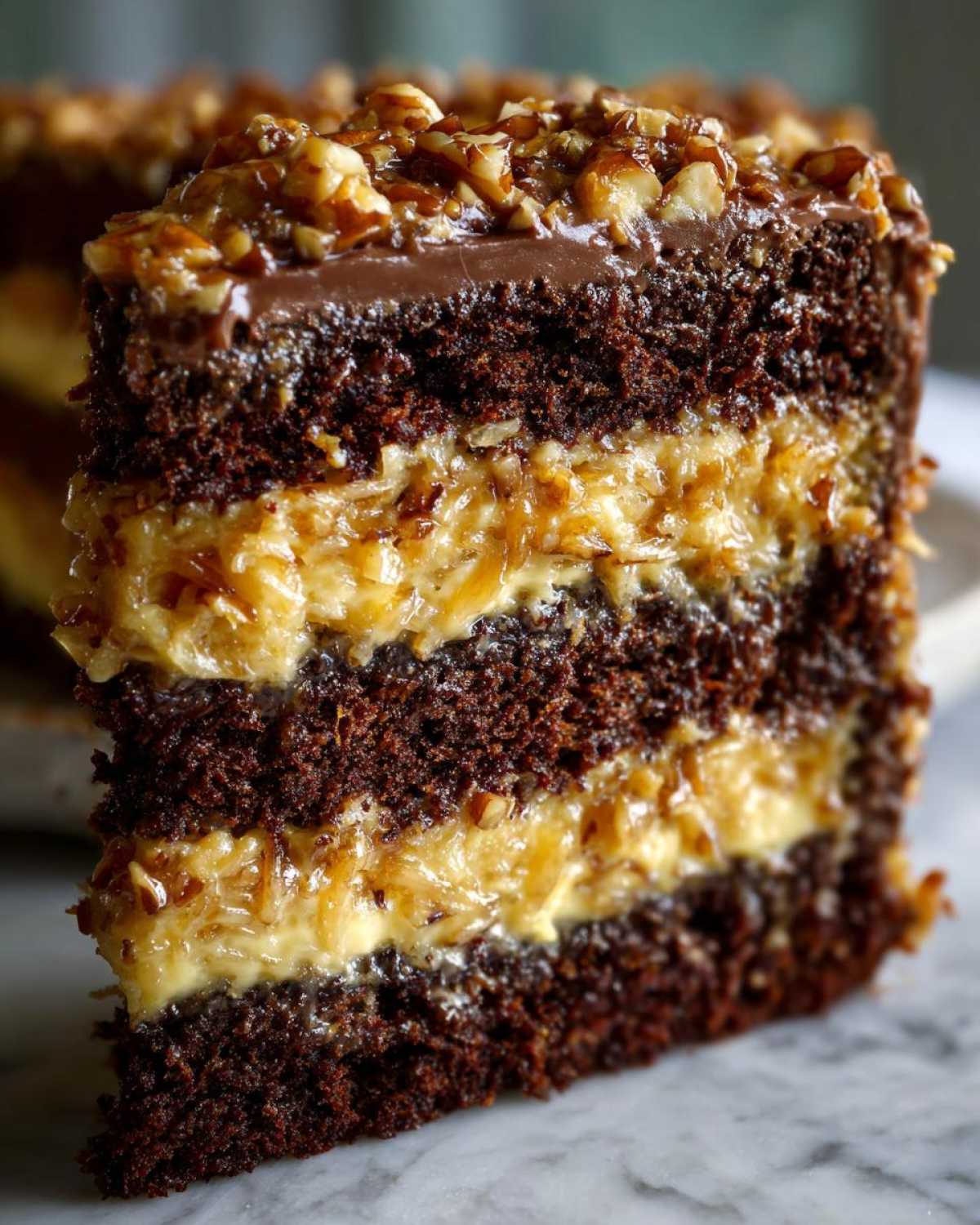
Crafting the Signature Coconut Pecan Frosting Recipe
Okay, we’ve done the hard part—the cake layers are cooling faithfully. Now, we tackle the star of the show: the Coconut Pecan Frosting Recipe! This isn’t your typical buttercream, folks. This is a cooked custard-style frosting, and it needs a little more respect and attention than just throwing everything in a mixer. If you love gooey goodness and sweet coconut with that textural pop of pecan, this stovetop process is everything.
If you also have a soft spot for sweet, spreadable toppings, you might want to peek at my notes on how to make flawless cream cheese frosting, but stick with me because this cooked custard is worth the saucepan time.
Cooking the Rich Buttery Frosting Base
Grab a small saucepan—nothing too big—and start by melting that half-cup of butter right over medium heat. Once it’s melted, stir in your evaporated milk and the sugar. We need to let this mixture bubble gently and cook down just a bit until it starts to thicken up. This process might take about five minutes. You’re aiming for a mixture that coats the back of a spoon slightly, but it won’t be super thick yet.
Now, listen close because this is where we earn our E-E-A-T stripes: take the pan OFF the heat! Slowly whisk in those four egg yolks, one at a time. You absolutely must whisk constantly *while* you add them, or you’ll end up with sweet, buttery scrambled eggs in your topping. Once they’re incorporated off the heat, put the pan back on low heat for just two more minutes. Stir constantly during this time; we need it warm enough to cook the yolks, but boiling will ruin everything! This results in the most luxurious, rich buttery frosting base you can imagine.
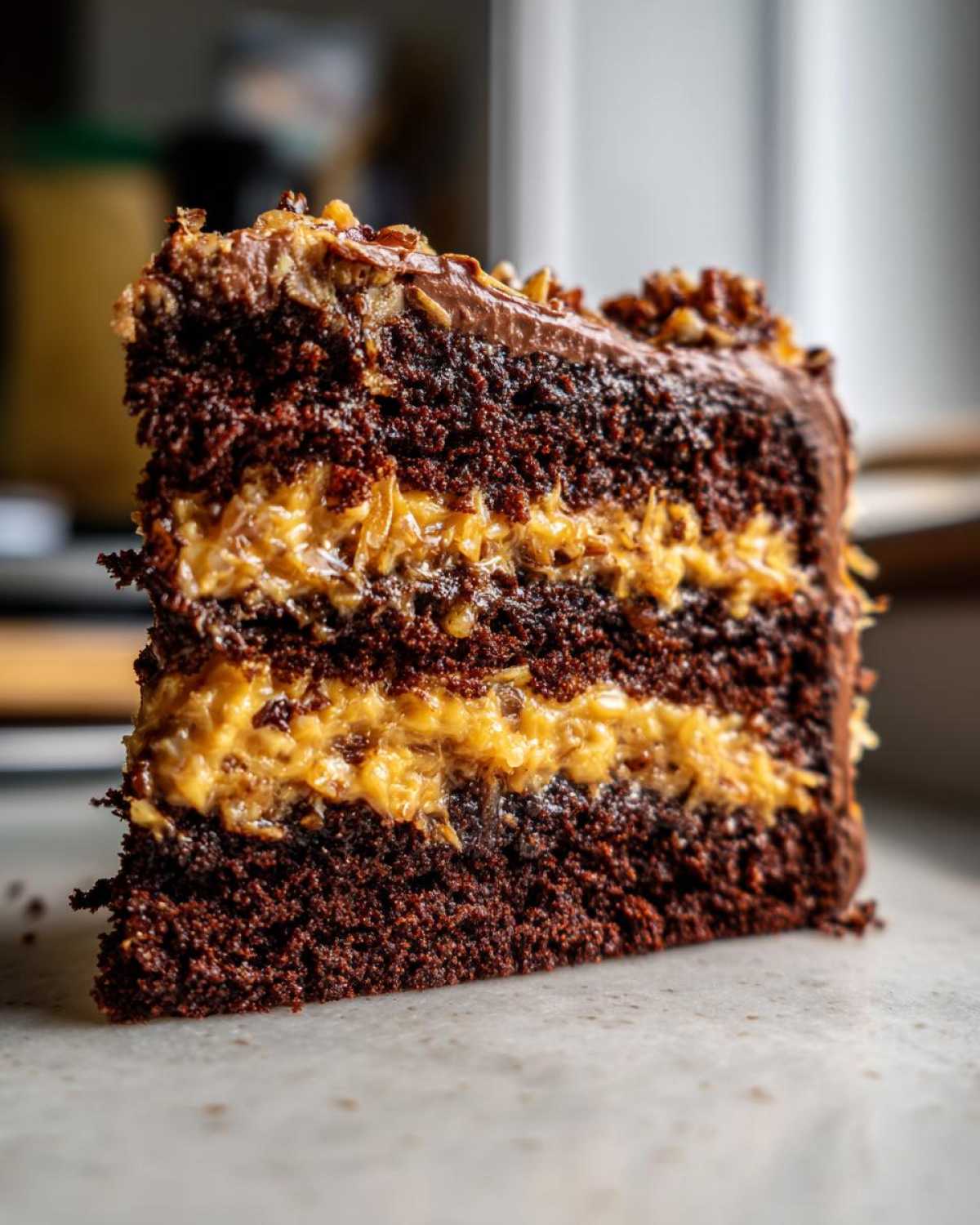
Folding in Coconut and Pecans for german chocolate Topping
Once you take the pan off the heat for the final time, stir in your vanilla extract. Now’s the time to add the good stuff: the chopped pecans and the shredded coconut. Mix them gently until they are evenly coated in that gorgeous custard.
The most important tip here—and please don’t skip this—is letting it cool until it’s thick enough to spread. If you try to put this warm, runny sauce onto your cool cake layers, it just runs right off the sides! I usually let it sit on the counter for about 30 minutes, stirring occasionally, until it cools down to a peanut-butter-like consistency. This sets up perfectly to hold everything together beautifully when you build your incredible german chocolate cake!
Assembling Your Decadent Chocolate Desserts german chocolate Cake
The moment we’ve been waiting for! Take one completely cooled cake layer and place it on your serving platter. Make sure you spread a generous, even layer of that dreamy Coconut Pecan Frosting right on top. Don’t be shy; this is what makes this german chocolate cake legendary. Gently place the second layer on top, and then use the rest of that incredible topping to cover the top and sides of the entire cake. For a really classic look, I gently press a few extra toasted pecans around the bottom edge. If you need any extra tricks for making sure your cake holds its shape beautifully before serving, check out my guide on making a perfect poke cake; the structural advice is transferable!
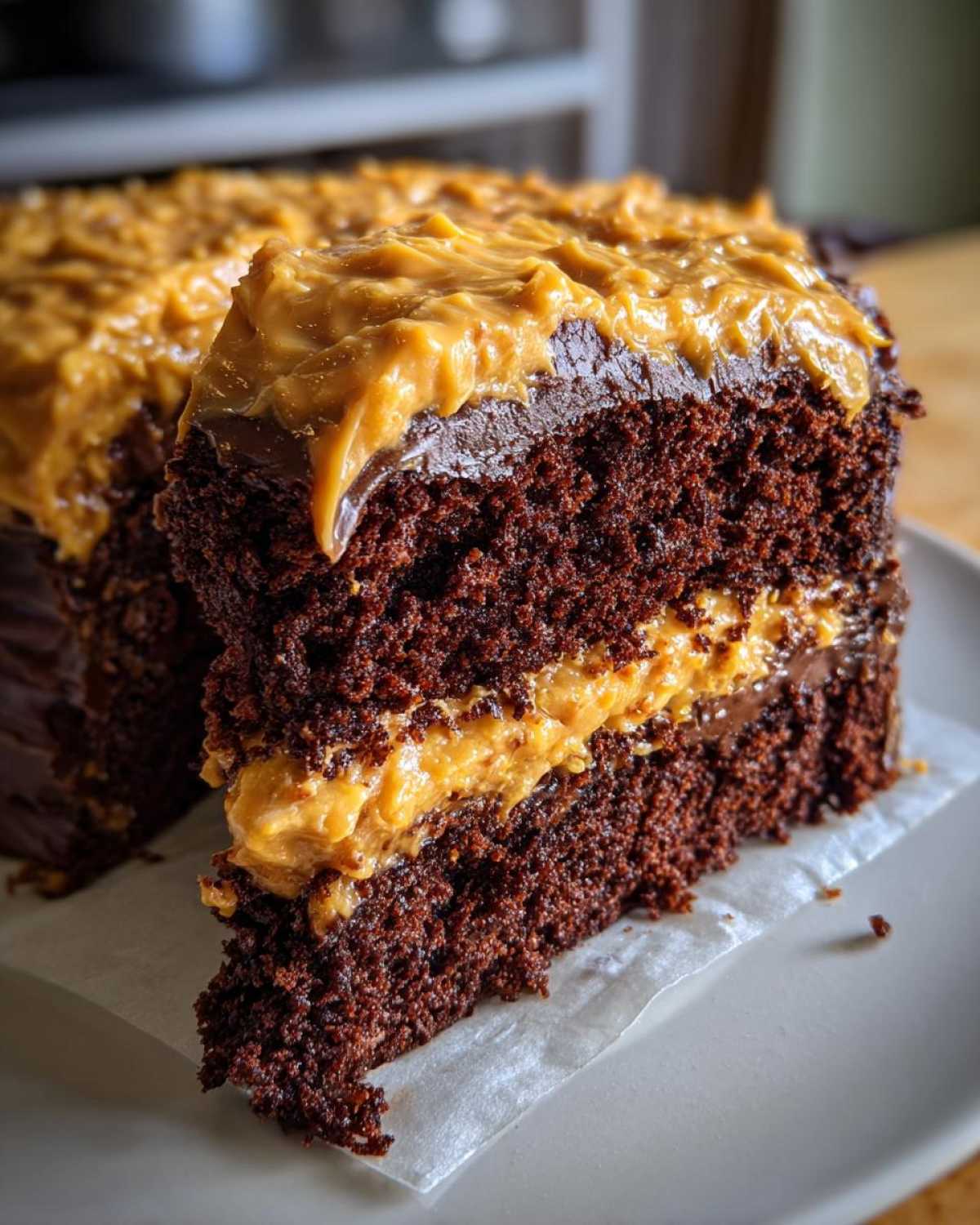
Tips for Baking german chocolate Perfection
Even with the best recipe, sometimes things go a little sideways in the heat of the moment! But don’t worry, this is my little section dedicated to troubleshooting and making sure your german chocolate cake is always perfect. Baking these classics is all about knowing the little secrets that elevate it from good to absolutely unforgettable. If you want more secret weapon tips, I share a bunch of them over in my guide on secrets for perfect chocolate chip cookies—many rules crossover!
Ingredient Substitutions and Flavor Boosts
We talked about using hot water to mix the cocoa, which is great, but if you really want to deepen that dark chocolate profile, try switching the liquid! Instead of hot water, use strong, freshly brewed coffee—cooled down slightly so it’s just hot, not boiling. The coffee doesn’t make the cake taste like coffee, I promise; it just magically amplifies how chocolatey everything tastes. It’s my favorite trick!
Now, about those pecans. I know not everyone loves them, or maybe you just ran out after making the frosting! If you need a swap, chopped walnuts work absolutely fine, or even slivered almonds if you want something a little different in the texture of your topping. But whatever you choose, make sure you toast your nuts lightly before adding them to the frosting. That little bit of extra time in a dry pan brings out their natural oils and makes them taste so much richer in the final german chocolate product.
Storage and Reheating Instructions for german chocolate Cake
You’ve just made the most beautiful, decadent german chocolate cake in the history of cakes, and now you have to deal with leftovers—the absolute best problem to have! Since that gorgeous coconut pecan frosting has a custard base due to the egg yolks we cooked in there, we do need to treat it with a little respect when it comes to storage.
You *can* leave the whole frosted cake out at cool room temperature for about half a day (say, during a party), but for longer storage, the fridge is your best friend. If you’re planning on keeping that beautiful german chocolate around for more than a few hours, cover it tightly with plastic wrap or stick it under a cake dome in the refrigerator. It usually stays moist and delicious for about three to four days this way.
If you want to store individual slices, that’s even easier! Wrap each slice securely in a piece of plastic wrap, and then maybe stick that wrapped slice into a small freezer bag. This helps keep any extra air away, which is crucial for keeping that cake layer from drying out.
Reheating? Honestly, this cake is best served cool or at room temperature, especially because of that gooey frosting. If you have a slice that’s stiff from the fridge, just let it sit on the counter for 30 to 45 minutes before serving. That allows the frosting to soften up to that perfect, spreadable texture we worked so hard to achieve. Avoid the microwave for whole slices; it tends to make the cake layers chewy and can sometimes cause the custard topping to separate a bit!
Frequently Asked Questions About german chocolate
I know when you bake something this special, you might have a few little panics or questions pop up! Don’t stress; it happens to all of us. I’ve gathered up the questions I get asked the most about keeping this german chocolate recipe foolproof. Get ready, because these answers will help you master this classic dessert!
Can I make this cake ahead of time?
Yes, absolutely! If you want to break up the work, you can bake the cake layers and store them tightly wrapped at room temperature for up to two days, or even freeze them for a month. The layers actually taste *better* the next day! However, I don’t recommend frosting the entire cake more than 12 hours ahead. That cooked custard frosting tastes freshest when it’s not sitting in the fridge for too long, plus you don’t want that pecan topping getting too soft. Do the frosting the day you plan to serve it for the best results!
What makes this a ‘german chocolate’ cake?
Isn’t that a funny name? You’d think it was from Germany, right? But no! This is totally American. It was actually named after an English chocolatier named Samuel German. He developed a type of dark baking chocolate for the Baker’s Chocolate Company back in 1852. When someone found a recipe using his specific chocolate and that creamy coconut-pecan topping, the name just stuck! So, it’s named after a person, not a country, but it certainly tastes international!
For those of you looking to shake things up without sacrificing that rich flavor profile, you might want to check out my guide on easy German chocolate variations; sometimes, a poke cake version is just easier for a weeknight treat!
How do I ensure I get a truly Moist Chocolate Cake?
That’s the million-dollar question for any chocolate bake! We used buttermilk and oil in the layers, which is a huge start. But here’s a non-negotiable tip: make sure you don’t overbake by even one minute. Use the toothpick test! If you bake it until the toothpick is perfectly dry, it’s already done and cooling down too much. You want that toothpick to come out with a few moist crumbs still clinging to it for the best final result. That little bit of residual moisture keeps the whole slice wonderfully soft, hitting that perfect moist chocolate cake texture we are aiming for.
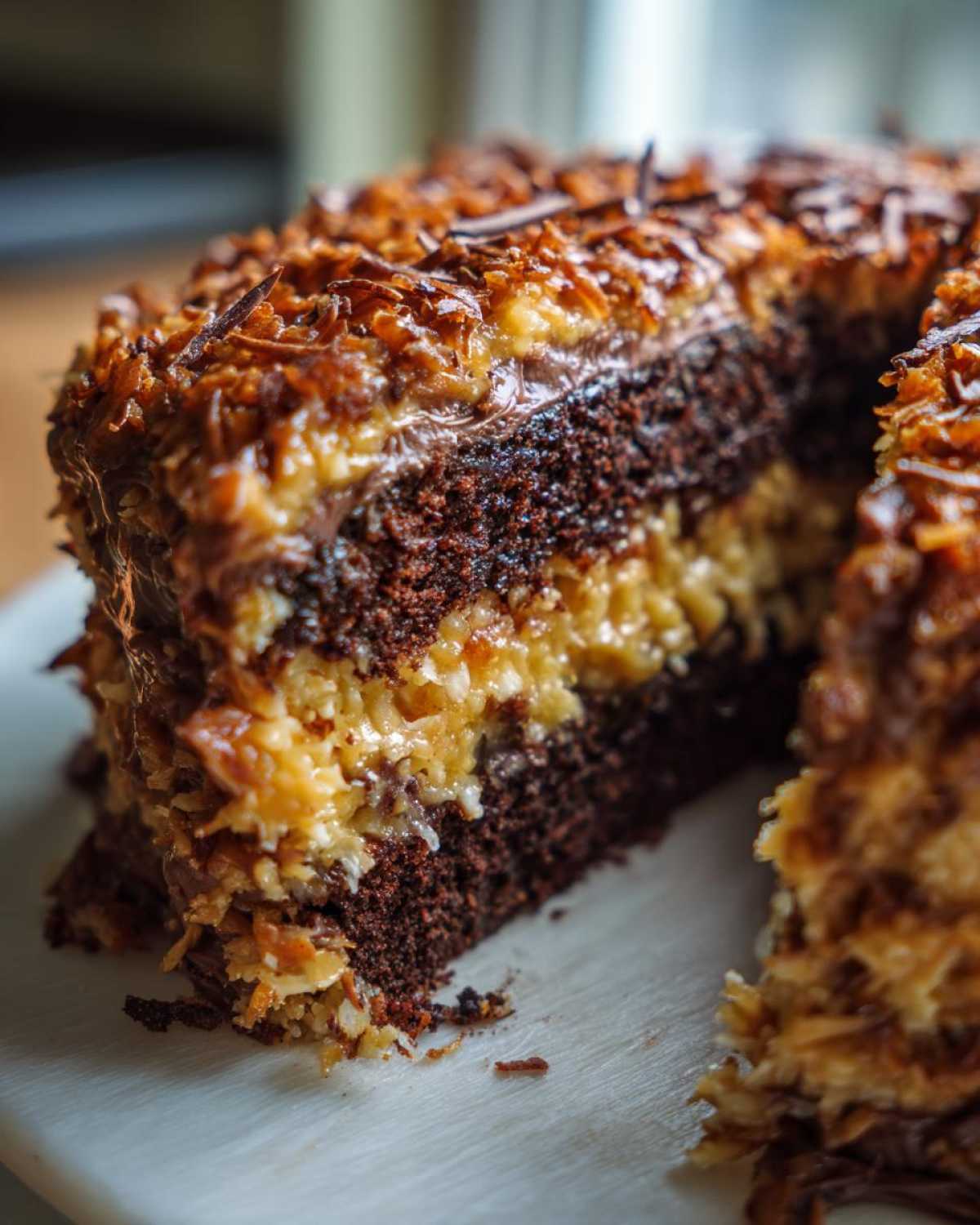
Estimated Nutritional Data for this german chocolate Recipe
Now, let’s talk numbers. I know many of you are curious about what goes into that absolutely incredible slice of rich, buttery goodness! I pulled the numbers straight from my testing phase, but I have to give you the standard baker’s warning: these values are just estimates, sweetie. Every brand of flour, every size of egg, and even how much frosting you sneak onto your own slice will change things a tiny bit!
These calculations are based on 12 generous servings of the classic layered cake. If you’re counting, take a peek below—but remember, balance is key, and a little indulgence now and then is better for the soul than stress!
- Serving Size: 1 slice (Trust me, one slice is usually not enough!)
- Calories: Approximately 450
- Fat: Around 25g total fat, with about 10g of that being saturated fat.
- Carbohydrates: We are looking at about 58g, which includes that natural sugar from the coconut and pecans.
- Sugar: Roughly 55g. This is high because we are using real sugar in both the cake and the custard topping!
- Protein: About 6g, thanks to the eggs and milk in that frosting!
- Cholesterol: This comes in near 110mg, mostly from the butter and egg yolks used in the topping.
If you find yourself wanting a slightly lighter take on decadent desserts overall, you really should check out my post on making easy cream cheese frosting recipes. Sometimes swapping out a butter-heavy topping for a cream cheese base can shave off a little richness, though you’d miss that signature chewiness this cake offers!
Print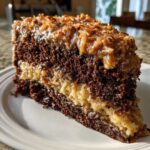
Classic German Chocolate Cake with Coconut Pecan Frosting
- Total Time: 60 min
- Yield: 12 servings
- Diet: Vegetarian
Description
Make a traditional, moist German chocolate layer cake topped with the signature sweet coconut and pecan frosting.
Ingredients
- 1 3/4 cups all-purpose flour
- 2 cups granulated sugar
- 1 teaspoon baking soda
- 1/2 teaspoon salt
- 1 cup buttermilk
- 1/2 cup vegetable oil
- 2 large eggs
- 1 teaspoon vanilla extract
- 1 cup hot water
- 1/2 cup unsweetened cocoa powder
- 1 cup chopped pecans
- 1 cup shredded coconut
- 1/2 cup butter
- 1/2 cup evaporated milk
- 4 large egg yolks
- 1 teaspoon vanilla extract
Instructions
- Preheat your oven to 350 degrees F (175 degrees C). Grease and flour two 9-inch round cake pans.
- In a large bowl, whisk together the flour, sugar, baking soda, and salt.
- In a separate bowl, combine the buttermilk, oil, and 2 eggs. Add this wet mixture to the dry ingredients and mix until just combined.
- In a small saucepan, combine the hot water and cocoa powder. Stir until the cocoa is dissolved. Pour this chocolate liquid into the cake batter and mix until smooth.
- Divide the batter evenly between the prepared pans. Bake for 30 to 35 minutes, or until a toothpick inserted into the center comes out clean. Let the cakes cool in the pans for 10 minutes before inverting them onto a wire rack to cool completely.
- Prepare the frosting: In a medium saucepan, melt the butter over medium heat. Stir in the evaporated milk and sugar. Cook, stirring constantly, until the mixture thickens slightly, about 5 minutes.
- Remove the pan from the heat. Whisk in the 4 egg yolks one at a time, mixing well after each addition. Return the pan to low heat and cook, stirring constantly, for 2 minutes, being careful not to scramble the eggs. Do not boil.
- Remove from heat and stir in the vanilla extract, pecans, and coconut. Let the frosting cool until it is thick enough to spread.
- Assemble the cake by spreading a layer of frosting between the two cooled cake layers and covering the top and sides of the cake with the remaining frosting.
Notes
- For a richer chocolate flavor in the cake layers, use strong brewed coffee instead of hot water.
- If you prefer a smoother frosting, strain the mixture through a fine-mesh sieve before adding the nuts and coconut.
- This cake tastes best when allowed to set at room temperature for at least one hour after frosting.
- Prep Time: 25 min
- Cook Time: 35 min
- Category: Dessert
- Method: Baking
- Cuisine: American
Nutrition
- Serving Size: 1 slice
- Calories: 450
- Sugar: 55g
- Sodium: 280mg
- Fat: 25g
- Saturated Fat: 10g
- Unsaturated Fat: 15g
- Trans Fat: 0g
- Carbohydrates: 58g
- Fiber: 2g
- Protein: 6g
- Cholesterol: 110mg


Comments are closed.