

When that first whiff of purple, green, and gold hits the air, you know Carnival season is officially upon us! Forget those dry, pre-made rings you find in the grocery store aisles—I’m here to tell you that making a truly authentic, soft, buttery king cake right in your own kitchen is easier than you think. This isn’t just a dessert; it’s the heart of the celebration, that sweet bread that brings everyone around the table until Fat Tuesday. Trust me, the smell of warm yeast and cinnamon filling my kitchen when I make this king cake is my absolute favorite part of the entire season. If you can make a great cinnamon roll, you are already halfway to mastering this showstopper; check out my guide for the best cinnamon roll recipe for proof!
Why This Homemade King Cake is the Ultimate Mardi Gras Desserts Staple
Listen, there’s no comparison between this homemade loaf and anything store-bought. This recipe is truly the best Mardi Gras dessert you can make! It stands up to the tradition beautifully.
- The texture is unbelievable—soft, rich, and slightly brioche-like because we handle the yeast correctly.
- You control the colors! No sad, faded icing here; we get vibrant, festive purple, green, and gold.
- The cinnamon swirl filling is always perfectly distributed, unlike commercial versions that sometimes miss the mark.
- It smells incredible while baking, instantly setting the perfect Carnival season vibe.
If you love a moist, rich bake, you might also adore my recipe for the super moist sour cream coffee cake.
Ingredients for Your Traditional King Cake
Okay, let’s talk ingredients. Getting the right stuff is half the battle, especially when you are aiming for that incredible soft yeast bread texture that makes a proper New Orleans baking masterpiece. Don’t skimp here; these simple things make all the difference! I’ve listed everything you need in order, just like it appears in my slightly stained family recipe book.
First up, we need the wet components for our beautiful dough:
- 1 cup warm milk (this needs to be between 105 to 115 degrees F—if it’s too hot, you kill the yeast, and we cannot have that!).
- 2 1/4 teaspoons active dry yeast (the little powerhouse!).
- 1/2 cup granulated sugar, plus 1 teaspoon reserved just for waking up that yeast.
- 1/2 cup unsalted butter, softened until it’s perfectly spreadable.
- 2 large eggs, make sure they are at room temperature—cold eggs slow down the yeast, trust me.
- 1 teaspoon salt to balance out all that sweetness.
Next, the dry magic and the ingredients for our spiced filling:
- 4 1/2 cups all-purpose flour, plus extra if you need to dust your counter later.
- 1/4 cup melted butter reserved just for brushing the dough layer.
- 1/2 cup packed light brown sugar for that deep caramel flavor in the filling.
- 2 tablespoons ground cinnamon for our classic swirl.
- 1/4 cup softened unsalted butter specifically for mixing into that filling.
And finally, the glorious topping that turns this into a true celebration dessert recipe:
- 1 cup powdered sugar, sifted if you want the icing extra smooth.
- 2 tablespoons milk for thinning out the glaze.
- 1/2 teaspoon vanilla extract—just a touch!
- Purple, green, and gold food coloring, or even better, the matching sanding sugars for that perfect shimmer.
If you are thinking about a cream cheese filling variation, you can grab the best recipe for that tangy topping later; I’ve got a great one that’s perfect for slathering on top, or you can check out my guide to the best cream cheese frosting for more details!
How to Prepare the Soft Yeast Bread for Your King Cake
This is where we transition from just baking something sweet to crafting a true piece of New Orleans baking history! People think soft yeast bread recipes are scary, but my trick is just being patient with the yeast and making sure my butter and eggs aren’t too cold. If you’ve made my soft, fluffy, buttery dinner rolls before, you’ll find these steps familiar, but this loaf is richer. We are aiming for a beautifully elastic dough that’s soft to the touch, not stiff or dry, which is what makes this king cake melt in your mouth.
Activating the Yeast and Mixing the King Cake Dough
We start by proving the yeast, which is basically convincing it to wake up and do its job! Mix your warm milk (remember, 105-115°F—test it with a finger first!) with that single teaspoon of sugar and the yeast. Give it five minutes; if it gets foamy on top, you’re golden. If it doesn’t foam, toss it out and start over, because the rise depends on happy yeast! Next, whisk in the rest of your softened butter, sugar, room temperature eggs, and salt. Now, start adding the flour gradually. Once it mostly comes together, dump it onto a lightly floured surface. You need to knead this dough hard for a good eight to ten minutes! Don’t be shy; kneading develops the gluten, giving you that perfect stretch needed for a strong, beautiful ring cake that won’t tear when you roll it up. You’re done when the dough feels smooth and springs back when you poke it—that’s elasticity!
First Rise and Filling Preparation for the King Cake
Once that dough is kneaded until it’s perfect, toss it into an oiled bowl, turn it once to coat, and cover it up tight. You need to let it rise in a warm spot—maybe near a sunny window, or even carefully inside an oven that’s turned off—for about an hour to an hour and a half until it’s doubled. This slow lift builds flavor!
While your dough is puffing up, it’s filling time! In a small bowl, mash together that 1/4 cup of softened butter with the brown sugar and cinnamon until you have a nice, crumbly mixture. If you’re feeling ambitious and want those popular cream cheese notes, you can quickly mix 4 ounces of softened cream cheese with a little powdered sugar before layering in the cinnamon mix. This gives you a fantastic secret filling layer. We won’t roll this dough again until it’s doubled, so don’t rush this cozy rising time!
Assembling and Baking the Festive Ring Cake
The dough has risen high, and now the fun—and most critical—part begins! Go ahead and gently punch down that puffy dough; we need the air out before we spread the filling. On a clean, lightly floured surface, roll that dough out into a big rectangle—aim for about a 12 by 18-inch shape. Think big because we want plenty of swirl in there!
Next, take that 1/4 cup of melted butter and just brush it lightly all over that dough surface. It acts like glue for our sugar mixture. Now, sprinkle that cinnamon-brown sugar filling evenly across the butter. It’s going to look heavenly! Roll this up tightly, starting from the long edge, to create a nice, thick log. You must pinch that seam closed where the dough meets itself—seriously, press it hard! If you don’t seal it well, all that lovely filling will ooze out while it bakes, and we want that cinnamon flavor locked inside our king cake.
Now, form the ring! Bring the two ends of the log together and pinch them firmly so you have a nice, beautiful circle. Place that ring on a baking sheet lined with parchment paper. Cover it loosely again and let it rest in a warm spot for about 30 to 45 minutes until it looks puffy again—that’s the second rise. Before you slide it in the oven, preheat to 350 degrees F. It bakes for about 25 to 30 minutes until it’s golden brown. Let it cool completely on a cooling rack before you even think about icing it, or you’ll end up with a melted mess!
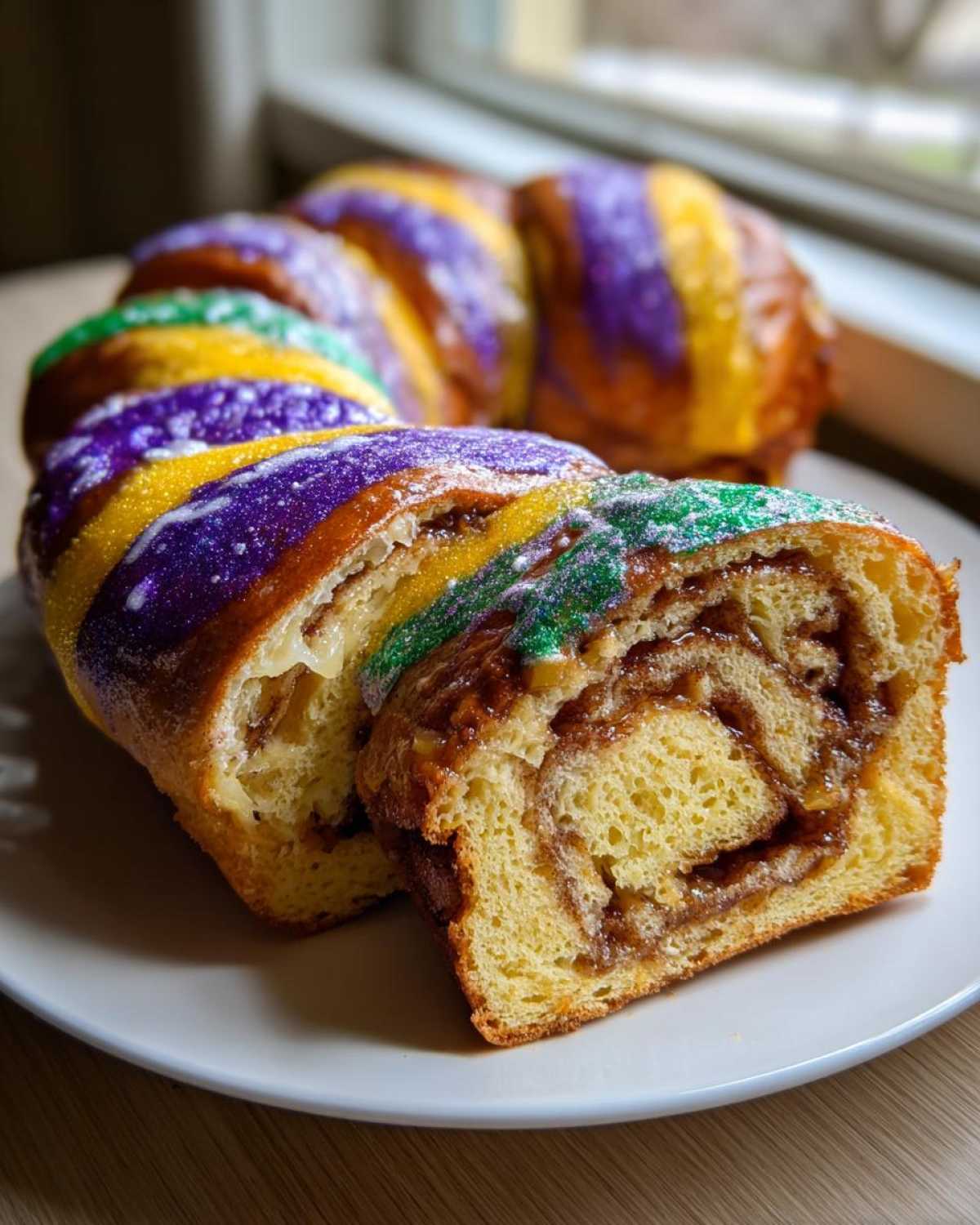
If you want to see how I make a simple brioche cake that shares some of these rich dough characteristics, check out that easy guide!
King Cake Decoration Ideas: Achieving Purple, Green, and Gold
Finally, the best part! You can’t have a proper Mardi Gras spread without that signature dazzling crust on your king cake. I know a lot of people use canned stuff, and look, if you’re in a pinch, that’s fine, but the homemade icing makes such a difference. Plus, coloring it yourself is way more fun!
First, make sure that cake is completely cool. I mean ice-cold. If you try to put icing on a warm cake, it just melts right into the dough and disappears. We don’t want that; we want those beautiful, thick stripes.
For the icing, it’s incredibly simple: whisk together your powdered sugar, the two tablespoons of milk, and that vanilla extract until it’s smooth. If it looks too thick, add milk just a teaspoon at a time. If it looks too runny—and this happens easily—add a tiny bit more sifted powdered sugar. I always end up hovering right around that sweet spot.
Now, divide that white icing evenly into three small bowls. This is where we bring in the royal colors of Carnival! Add just a tiny drop of purple food coloring to the first bowl, green to the second, and gold (or yellow) to the third. Mix each one until the color is uniform. If you’re using the sanding sugars rather than liquid coloring, you can keep this icing white and rely solely on the sugars for color, which gives a wonderful crunch!
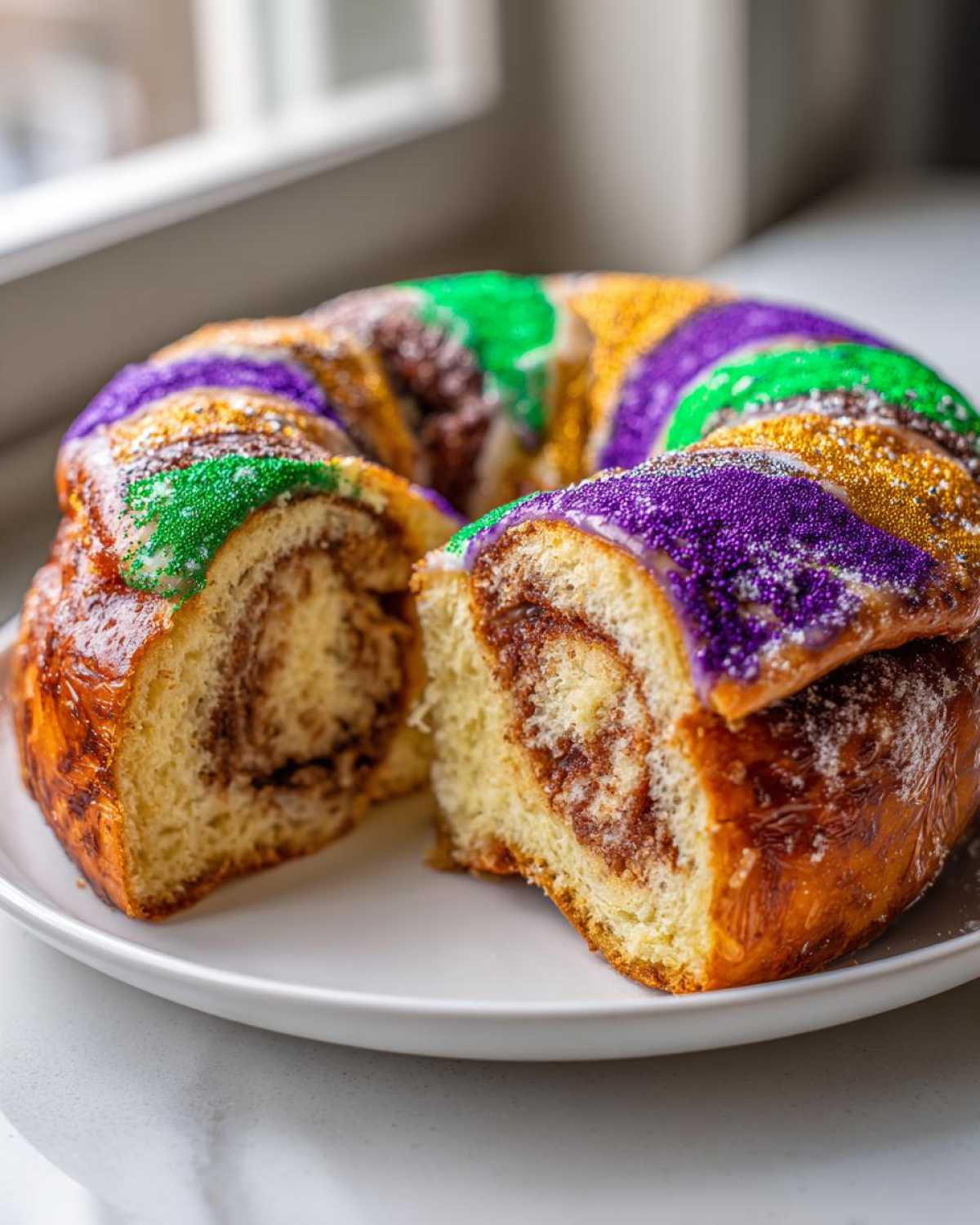
Take an offset spatula or even a butter knife and casually drizzle or spread the colored icings across the top of the cooled cake. Don’t stress about making perfect bands; messy is traditional! As soon as you’ve applied a color, sprinkle that corresponding sanding sugar generously over it before the icing has time to set up. Purple symbolizes justice, green is faith, and gold represents power, so make sure you use plenty of all three!
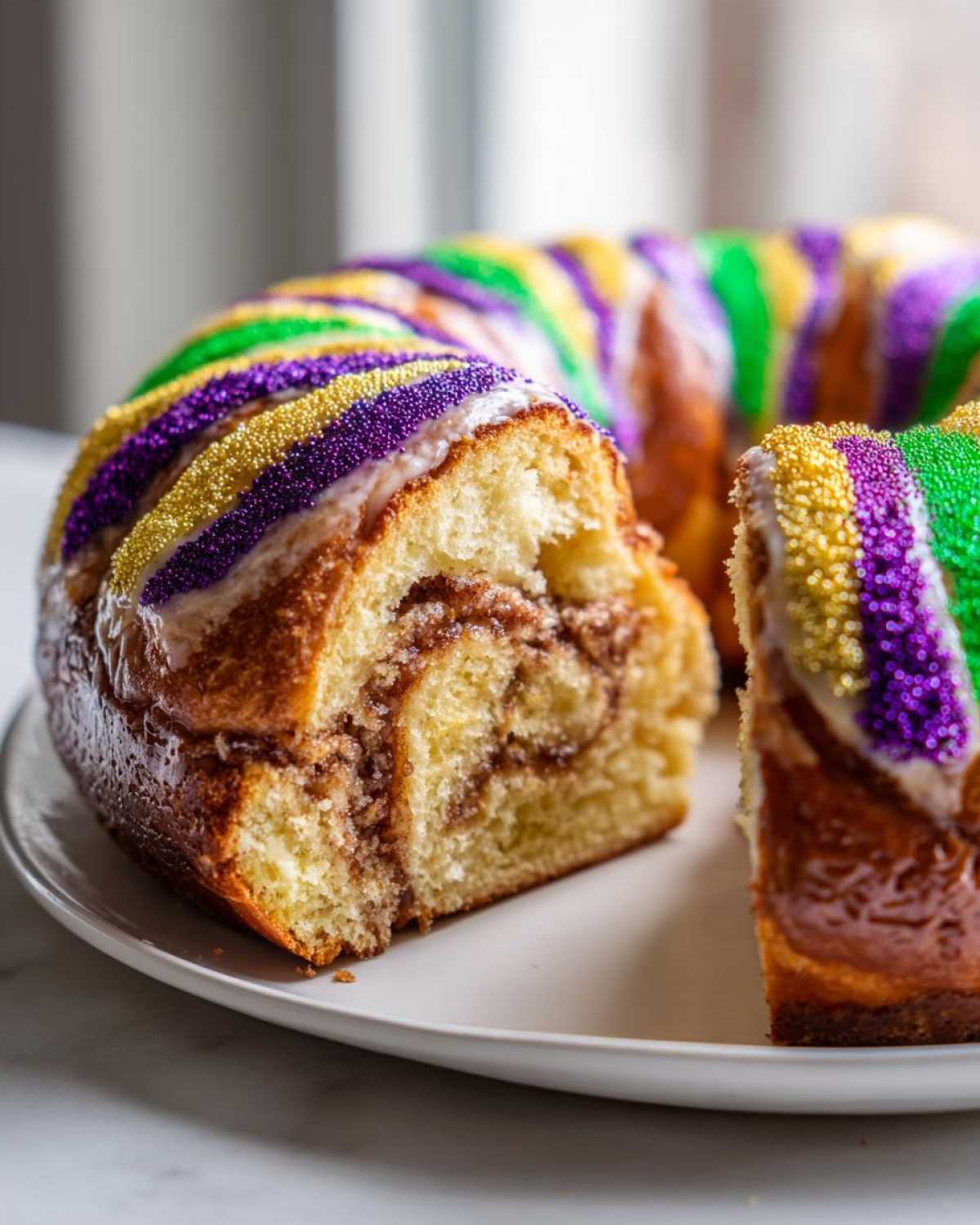
For a little extra something—and if you love vanilla like in my famous vanilla cupcake recipe—you can even add a few drops of citrus zest right into the icing bowls for a brighter flavor lift!
Tips for Success When Making a King Cake
We’ve covered the mixing and the decorating, but let’s wrap up with a few hard-won lessons from my kitchen regarding this showstopper cake. Making this king cake for your next party or Fat Tuesday treat is all about managing expectations and understanding the nature of yeast dough. If you follow these little pointers, you’ll nail that classic Louisiana dessert texture every single time.
- If your dough feels a little sticky during the initial mixing phase, resist the urge to dump in another cup of flour! This should be a soft, pliable dough. If it’s still sticking everywhere, add flour one tablespoon at a time. Over-floured dough is the enemy of a soft yeast bread!
- Remember that substitution note about flour? While all-purpose works great, if you want a texture nearing perfection—super soft and slightly chewier, almost like a high-quality brioche—try swapping out one cup of the AP flour for bread flour. It gives the dough great structure without making it tough.
- When you are cooling the cake before icing, do not leave it uncovered. Yeast doughs dry out fast. Keep it loosely tented with foil or a clean kitchen towel. But be warned: don’t put the icing on until it’s totally cool, or you’ll be sliding that colorful mess right off the pan!
- Never forget to pinch that seam when rolling your log into a ring. I know it sounds tedious, but if that seam separating, the melted butter and filling will bubble out and burn slightly onto your baking sheet, leaving you with a sad, deflated middle section.
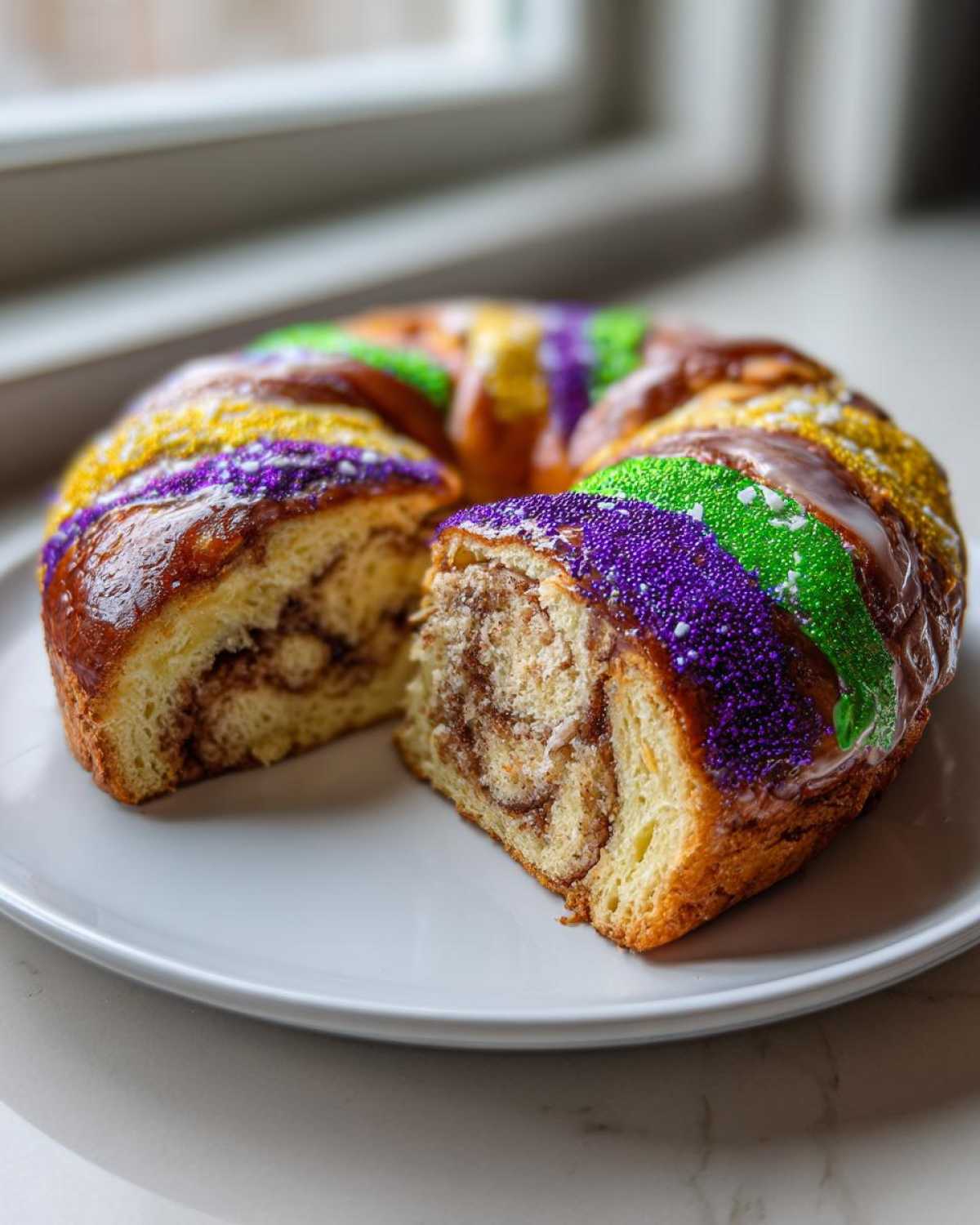
If you want to practice your general soft dough skills, these easy honey bran muffins use a similar base technique that is really forgiving!
Storage & Reheating Instructions for Your King Cake
Once you’ve survived the sugar rush from decorating, you might have leftovers! Traditional sweet bread like this holds up pretty well. Keep your leftover king cake covered tightly in an airtight container at room temperature for up to three days. Resist the fridge unless you absolutely have to, though, because it seems to dry yeast breads out faster.
If you’re reheating, don’t zap the whole ring! Just wrap a single slice loosely in a slightly damp paper towel—this traps the moisture—and microwave it for about 10 to 15 seconds. It comes out just as soft and satisfying as it was fresh out of the oven. I love having slices for breakfast with coffee, just like having a slice of date nut bread!
Frequently Asked Questions About This King Cake Recipe
I know when you’re tackling a big baking project like this, questions pop up! It’s totally normal, especially when learning how to make a King Cake that honors the Louisiana tradition. Here are some things folks ask me all the time about making these incredible Carnival season recipes.
Can I make the King Cake dough the day before?
Yes, you absolutely can, and I highly recommend it if you’re busy! Remember in the notes how I mentioned slowing down the rise? After you knead the dough and it’s coated in oil in the bowl, cover it tightly with plastic wrap and pop it in the refrigerator. It can hang out there overnight, letting the yeast have a very slow, long rise. This works wonders for flavor, kind of like letting soup simmer all day. Just pull it out the next morning, let it sit on the counter for about an hour to warm up slightly, and then proceed with rolling and filling! It’s a great trick for getting ahead on your Fat Tuesday treats.
What are the best King Cake filling ideas besides cinnamon?
Cinnamon is classic, and it’s my go-to for this traditional sweet bread, but having other King Cake filling ideas is fun! Since the dough is essentially a rich brioche, it holds a lot of filling nicely. If you’re looking for something richer, go for a cream cheese filling—I use the same cream cheese component mentioned in the notes, but I skip the cinnamon layer entirely and just use that creamy filling inside. Another popular option is finely chopped pecans mixed with a little brown sugar and maybe some melted chocolate chips. A sweet, buttery pastry bake really shines with a little variation, so feel free to test your favorites!
If you are looking for a great base dough recipe to compare against, you can always check out my guide for making easy crusty Italian bread, just so you see how different doughs behave!
Estimated Nutritional Information for This Celebration Dessert Recipes
Now, I will be the first to admit that when you’re having a party or celebrating Mardi Gras, you aren’t usually hunched over a calculator counting macros! This is a celebration dessert recipe, after all! But for those of you who like to keep track, here are the rough estimates for one slice of this fantastic king cake. Remember, this is just an estimate based on the recipe as I’ve written it, especially since how thick you slice it makes a huge difference!
- Serving Size: 1 slice
- Calories: 380
- Fat: 18g (with about 10g saturated)
- Carbohydrates: 50g
- Protein: 6g
- Sugar: 35g (Yep, eat it with your coffee!)
If you want to compare this to another rich holiday bake, you can always look over the nutrition for my classic carrot cake recipe! Enjoy the Mardi Gras moment!
Print
Classic New Orleans King Cake
- Total Time: 150 min
- Yield: 12 servings
- Diet: Vegetarian
Description
A recipe for a traditional, soft yeast King Cake perfect for Mardi Gras celebrations, featuring a sweet dough and colorful icing.
Ingredients
- 1 cup warm milk (105-115 degrees F)
- 2 1/4 teaspoons active dry yeast
- 1/2 cup granulated sugar, plus 1 teaspoon for yeast
- 1/2 cup unsalted butter, softened
- 2 large eggs, room temperature
- 1 teaspoon salt
- 4 1/2 cups all-purpose flour, plus more for dusting
- 1/4 cup melted butter for brushing
- 1/2 cup packed light brown sugar for filling
- 2 tablespoons ground cinnamon for filling
- 1/4 cup softened unsalted butter for filling
- 1 cup powdered sugar for icing
- 2 tablespoons milk for icing
- 1/2 teaspoon vanilla extract for icing
- Purple, green, and gold food coloring or sanding sugars for decoration
Instructions
- Combine warm milk, yeast, and 1 teaspoon sugar in a large bowl. Let stand 5 minutes until foamy.
- Add the remaining sugar, softened butter, eggs, and salt to the yeast mixture. Mix well.
- Gradually add the flour, mixing until a soft dough forms. Knead the dough on a lightly floured surface for 8 to 10 minutes until smooth and elastic.
- Place the dough in a lightly oiled bowl, turning to coat. Cover and let rise in a warm place for 1 to 1 1/2 hours, or until doubled in size.
- While the dough rises, prepare the filling: Mix the brown sugar, cinnamon, and 1/4 cup softened butter until crumbly.
- Punch down the risen dough. Roll it out into a large rectangle, about 12 by 18 inches.
- Brush the surface of the dough with the 1/4 cup melted butter. Sprinkle the cinnamon-sugar filling evenly over the buttered surface.
- Roll the dough tightly lengthwise into a long log. Pinch the seam closed.
- Shape the log into a ring by bringing the ends together and pinching them firmly. Place the ring on a parchment-lined baking sheet.
- Cover the ring loosely and let it rise again in a warm place for 30 to 45 minutes, or until puffy.
- Preheat your oven to 350 degrees F. Bake for 25 to 30 minutes, until golden brown. Let cool completely on a wire rack.
- Prepare the icing: Whisk together powdered sugar, milk, and vanilla extract until smooth. Divide the icing into three small bowls.
- Color each bowl of icing with one of the traditional colors: purple, green, or gold.
- Drizzle or spread the colored icings over the cooled cake in stripes or sections. Immediately sprinkle with matching sanding sugars before the icing sets.
Notes
- For a cream cheese filling variation, mix 4 ounces softened cream cheese with 1/4 cup powdered sugar and spread this over the dough before adding the cinnamon-sugar mixture.
- If you want a softer bread, use bread flour instead of all-purpose flour.
- You can make the dough the day before and let it rise slowly in the refrigerator overnight.
- Prep Time: 45 min
- Cook Time: 30 min
- Category: Dessert
- Method: Baking
- Cuisine: American
Nutrition
- Serving Size: 1 slice
- Calories: 380
- Sugar: 35
- Sodium: 250
- Fat: 18
- Saturated Fat: 10
- Unsaturated Fat: 8
- Trans Fat: 0.5
- Carbohydrates: 50
- Fiber: 1
- Protein: 6
- Cholesterol: 65


Comments are closed.